Skip to content

Negotiating the Borders of Intimacy and Imagination: Romance and Fantasy


Last week, I came across Jacqueline Lichtenberg’s Big Love Sci-Fi series of blog posts (part 1, part 2, and part 3). I had been thinking about how romance, sexual tension, and emotional intimacy is built and maintained in books, and so her suggestion that romance in fiction is actually a negotiation of the borders of intimacy particularly struck me. As I thought about it some more, I realized that in some ways the romance genre and fantasy are analogous. If romance derives its power from the borders of intimacy, then fantasy builds its sense of wonder from negotiating the borders of imagination.

Borders of Intimacy: A Framework for Thinking about Romance

Romance may well be the oldest genre in existence. Since before the written word, stories and myths were full of love, sex, and betrayal. And why not? It’s fun! It grabs our attention, focuses our minds, and gets our hearts racing. What’s not to like? Artists have known for millenia that sex sells, but the methods by which it’s portrayed are culturally dependent.

Jane Austen’s Pride and Prejudice manages romantic/sexual tension very differently from Laurell K. Hamilton’s Guilty Pleasures. 19th century readers had different standards of intimacy: the kind of hot-and-heavy sex scenes we take for granted today would have been off limits back then. Even more graphic 17th century romances like Eliza Haywood’s Love in Excess; or, the Fatal Enquiry (which was called pornographic when first published) lack the overtly-described throbbing body parts of today’s sex scenes. Despite the changing standards of intimacy, romances from Ovid to Danielle Steele engage us by bringing characters to an emotional precipice, and then having them finally plunge over it.

The Facets of Intimacy in Romance

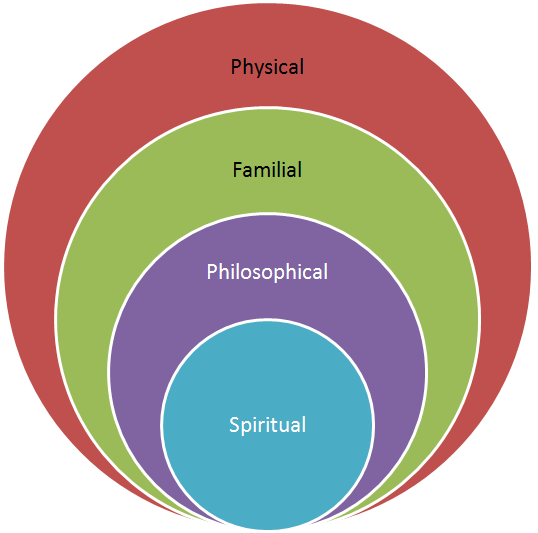
An overly-simplistic view of romance says that it’s just sex. But Jacqueline is exactly right when she says that a sex scene lacking emotional depth is just boring. In western culture, the physical act of sex has always been used as a proxy for other intimacies:

Aspects of Intimacy

Aspects of Intimacy

Marriage (which traditionally precedes sex) represents a type of familial intimacy: one person’s family opens up and accepts a new member, or two families join. Probably the best example of this is Shakespeare’s Romeo and Juliet. Of course, the two families alike in dignity reject that intimacy. But nonetheless, the underlying tension of that love story rests on Romeo and Juliet trying – and failing – to negotiate that familial intimacy. Here, death plays the role that sex often does: it represents the culmination and climax of their negotiation.

A different type of intimacy is the philosophical or worldview model that Austen nailed so perfectly: both Pride and Prejudice and Sense and Sensibility deal with the protagonists adjusting how they perceive other characters. This is a philosophical intimacy, where the climax is the moment of acceptance rather than the moment of marriage (let alone sex). For Austen, sex – of course preceded by marriage – is in fact the denouement, never shown but instead implied by her heroes’ betrothal.

Spiritual intimacy between characters can likewise be negotiated. Unfortunately, I had some difficulty thinking of romances that deal with this facet of intimacy, but ultimately I think Ayn Rand’s Atlas Shrugged is probably the most succinct example. Dagny Taggart’s relationships with Hank Rearden, Francisco D’Anconia, and John Galt all oscillate around her most fundamental spiritual values. While Rand might well have spit nails to see those values described as spiritual, there is no change in Dagny’s philosophy over the course of her relationships. Instead, the climax of these relationships is her finding her idealized counterpart, the impossible superman who personifies her ideals. If we were to swap Rand’s Objectivism for any religion, the relationships would still function the same way (though the plot’s MacGuffins would not).

The Borders of Imagination and the Fantasy Spectrum

If the core of romance is characters negotiating the borders of their intimacy, then I suspect the core of fantasy might be negotiating the borders of the reader’s imagination. Love titillates us because it speaks to something deep within our hearts, touching on our innermost desires, exciting us with the promise of fulfillment. But intimacy doesn’t lurk alone in the deep, dark corners of our soul. It shares those caverns with our imagination.

A romance hinges on the borders of intimacy between the story’s characters. Typically, that intimacy is indelibly linked to the story’s plot. For example, the plot of Romeo and Juliet would fall to pieces without the Capulets and the Montagues. But fantasy’s relationship with imagination tends to be slightly more removed from the story’s plot, and it does not need to rely so heavily on proxies the way intimacy often does.

The Borders of Imagination

The Borders of Imagination

Fantasies make us look at reality sideways, utilizing evocative imagery, secondary worlds, strange creatures, and magical powers to broaden our understanding of our own reality. Superficially, elves, monsters, and wizards are cool plotting devices that let us tell entertaining stories. Who doesn’t like magic and monsters? But beneath that surface level, they give us a new lens through which we can see an oblique picture of the world.

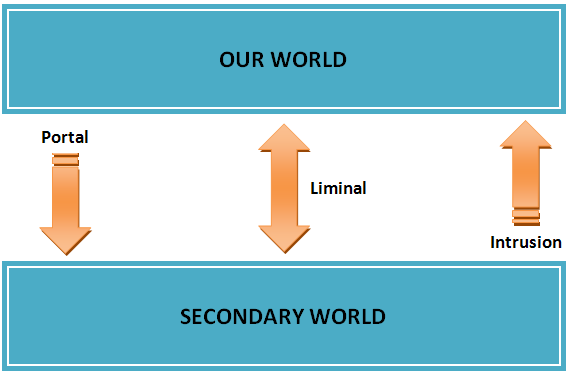
Imagination operates on a spectrum that describes a relationship between the story’s characters, the reader, and their environment. At one extreme we have our world, in all its mundane glory. It is at this end that we find mainstream literary fiction, where the world operates according to the real-life rules that govern our everyday existence. The range of plot options or the focus of characterization at this end of the spectrum is nearly limitless: we can deal with a plot-driven mystery, or a character-driven rumination. The focus can be narrow, internal, psychological or just as easily societal, philosophical, or spiritual.

At the other extreme we have a secondary world, where anything goes. A secondary world does not even need to have human characters – consider Edwin A. Abbott’s Flatland. Immersive fantasies – which force the reader to suspend disbelief and to accept the prima facie rules that govern the secondary world – operate at this level. Just as with mainstream literary texts, their range of plotting options and focuses is nearly limitless. However, unlike mainstream literary fiction, immersive fantasies have the ability to use different rules of existence and their accompanying imagery to cast a different light on aspects of our reality.

Portals and the Broad World Perspective

If we start in our real world, then we can gain access to the rich imaginative vocabulary of the secondary world. But to do that, we have to take our characters from our world and bring them to the secondary world, typically through the use of a portal of some kind. In her excellent Rhetorics of Fantasy, Farah Mendlesohn conflates the portal fantasy with the quest fantasy, and while this works at the level of plot, it does little to explain how portal fantasies interact with the reader’s imagination. That’s because we can have an immersive quest fantasy that takes place in a completely secondary world (think Tolkien, Brooks, etc.), but the thematic, plot, and character focus tends to be different if we start in our world.

The moment our characters go through the portal, everything in their new reality is contrasted to our world. Whether it is in Stephen R. Donaldson’s Lord Foul’s Bane, C.S. Lewis’ The Lion, the Witch and the Wardrobe, or Rowling’s Harry Potter and the Philosopher’s Stone, by starting the story in mundane reality we establish the reader’s (and characters’) initial state. Whatever imagery follows can then be related back to our real life, and can be interpreted as a thematic symbol. From a plotting standpoint, the secondary world is often thinned and ultimately by the climax of the book, comes back to some sort of eucatastrophe that leads to its restoration.

Intrusions and Narrow Focus

Intrusion fantasies – where the secondary world inserts itself into our reality – are the mirror image of portal fantasies. Consider Shirley Jackson’s The Haunting of Hill House, Emma Bull’s War for the Oaks, or China Miéville’s King Rat. Here, the secondary world is dark, dangerous, and forbidding as a general rule. Its intrusion into our own world tends to be frightening, disorienting, and leaves our heroes struggling to find their own place in the world.

Just as in the portal fantasies, the fantastical elements can be interpreted as thematic symbols. But the mood tends to be darker, and the focus of the story narrower. While portal fantasies tend to focus on the world at large and build towards eucatastrophe, intrusion fantasies focus on the narrower, private world of the principle protagonists. Rather than building towards a climactic eucatastrophe, they instead build towards a moment of personal climax/realization/rejection.

Liminal Fantasies: Philosophical by Design

Liminal fantasies either dance on the border between two worlds (like John Crowley’s Little, Big) or ambiguously hint at the existence of a secondary world (Graham Joyce’s How to Make Friends with Demons). In these cases, fantastical imagery is often used allegorically and the reader’s position relative to the events of the text is always ambiguous. Reading these books, we wonder if we are – in fact – operating within a fantastical reality? Or are we instead merely using allegory to highlight and comment upon philosophical, emotional, and spiritual considerations?

Understandably, the focus for such liminal fantasies is always narrow, focusing on the values of the protagonist. Their emotional climax typically lies not in picking a side: choosing our “real” world or the secondary world. Instead, it rests in becoming comfortable with that middle ground between the two. Acceptance on an emotional, philosophical or spiritual level, as opposed to the more conflict-oriented eucatastrophe or resolution.

Symbols, Imagination, Plot, and Emotion

While fantasy makes it possible to use a rich palette of imagery, fantasy is not merely symbolic: sometimes, a talking tree is just a talking tree. Plot is just as important as the underlying themes of a story, and images are used not just to represent values and thoughts in the real world. They can just as easily be used to evoke certain emotions, to raise tension and the like. What specific imagery we utilize should tie into our goals for a particular scene, whether those goals are emotional, thematic, or both.

And of course, part of the fun is when we combine aspects of romance (negotiating the borders of intimacy) with aspects of the fantastic (negotiating the borders of imagination). Fantasy and romance are genres that can contain multitudes, after all.

REVIEW: Graphs, Maps, Trees by Franco Moretti and a Critical Wish List


Title: Graphs, Maps, Trees: Abstract Models for Literary History
Author: Franco Moretti
Pub Date: July 21, 2005
Chris’ Rating (5 possible): 1 point 1 point 1 point 1 point
An Attempt at Categorization If You Like… / You Might Like…
A stimulating model for literary criticism.

So I’ve got a bit of a confession to make: I’m a critical theory nerd. I love the philosophical debates that arise from Russian formalism versus post-structuralism, and I get a twisted masochistic enjoyment from reading Derrida’s mysticism-disguised-as-science. If I’m not reading genre fiction, odds are my nose will be buried in a critical text. But despite this guilty pleasure, it is the rare work of theory that changes how I think about the written word. But that’s exactly the kind of reaction I had to Franco Moretti’s Graphs, Maps, Trees: Abstract Models for Literary History.

A Criticism of Critical Theory and the Application of Science

Even at its most basic “Spot runs” level, the key to effective writing has always been communication. Which is why I’ve always found it mystifying that the lions of critical theory forget this basic tenet. It is a shame that in the practical world of academia, a book as lucid, well-reasoned, and communicative as Farah Mendelsohn’s impressive Rhetorics of Fantasy will spawn far fewer doctoral dissertations than the jumbled arguments of Derrida’s Of Grammatology. This just makes me sigh.

I suspect it is because my background – for the most part – lies in market research, computer sciences, statistical linguistics, economics, and mathematics. My brain is wired to work in an analytical fashion more commonly found in the hard sciences. In those fields there is zero room for the ambiguity and fuzziness present in critical theory. If a mathematician were to try to publish a paper whose equations were as muddled as the majority of critical theory texts, she would be laughed right off the top of the ivory tower. Ultimately, beneath the rhetoric of their presentation lies objective science.

However, objective need not mean uncontested or incontroversial. Consider today’s economic debates about the “right” solution to the Greek debt crisis. There’s a joke that says if you put two economists into a room, you’ll have three opinions. Yet since the early 20th century, the critical theory establishment has eschewed a rational, scientific approach to literary analysis and instead has gone down the rabbit hole of spurious semantic navel-gazing. And while that has done a lot to further the peer-reviewed publication credits of many theorists, I’d argue it hasn’t done terribly much to move our understanding of literature forward. And it also limits the critical debate to the in-crowd who grok Derrida and Foucault.

A New Formal Science for Literary Analysis: Macro versus Micro

Which is why Moretti’s Graphs, Maps, Trees is so refreshing. First, his argument has a clarity to it that most critical theorists lack. He lays out a logical case, and presents his arguments in a reasonably accessible fashion.

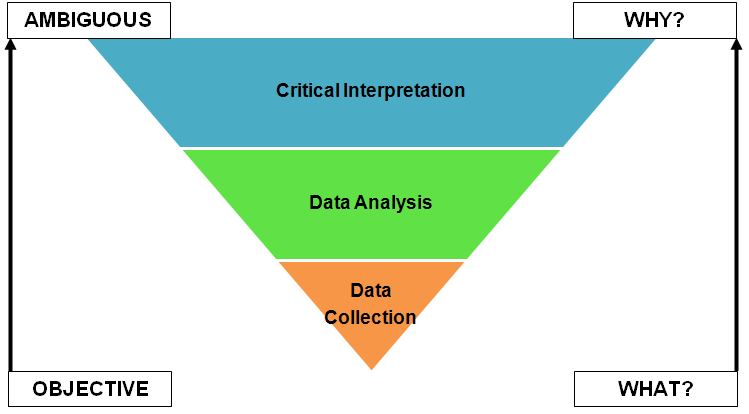
Fundamentally, Moretti is trying to bring the science back into critical theory. In one sense, he is updating the early 20th century’s formalism with the computational tools available to us in the 21st century. And that means that he’s mixing oil and water: words and numbers. Moretti’s underlying claim is that the close reading that forms the foundation of post-structuralism, New Criticism, most contemporary brands of Marxist criticism, etc. is a shibboleth: its propononents risk missing the forest for the trees. He argues that we can learn more about literature by applying statistical techniques across and within multiple texts. He proposes a separation between data collection and its interpretation, which is how economics, mathematics, physics, and literally every hard science in existence has operated for centuries.
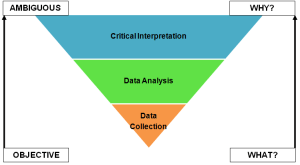
A Framework for Quantitative Literary Theory

A Framework for Quantitative Literary Theory

Comparing it to the dismal science (economics), Moretti’s approach is to close reading what macroeconomics is to microeconomics. Moretti argues that we now have the tools to analyze literature at a macro-level, thus enabling us to notice aspects that close reading’s micro-approach would not spot.

Perhaps unsurprisingly, this approach is controversial. Most of the folks I’ve met in the humanities self-select as “bad at math.” So a theoretical framework that relies on statistics and charts is likely to be scary: it is quite literally a new critical vocabulary, requiring an entirely different set of skills. Yet this vocabulary can be particularly compelling, and offer new insights to our understanding of genre and literature.

Moretti’s Critical Toolkit

In Graphs, Maps, Trees, Moretti explains three independent tools that can be applied to literary analysis. He devotes an entire section to each of these three techniques, and the they can even be read separately without losing much of his over-arching argument.

State of the Genre: Graphs

Of the three, the first section (graphs) is the most compelling, most understandable, and most readily applicable. A picture is worth a thousand words, and I don’t need to be in the business of data analysis (which in my day job I am) to know that graphs can communicate information more succinctly than pages of text. The statistics that Moretti employs are as simple as they get: there are no formulas, no equations, no actual math is ever shown. All Moretti does is visualize data on publication history. That’s the kind of charting we all learned back in fourth grade, but which has so rarely been applied to literature.

Once that data gets visualized, Moretti is absolutely right that certain basic trends jump out at us and demand explanation. Which is where the critical aspect comes into play. Data by its nature is an observation: it tells us “what” but not “why”. And so Moretti attempts to explain the observed behavior of the data, providing some interesting insights into the periodicity and lifespan of genres in 19th century British texts. His critical conclusions – as he himself states – are not new. Others had made similar observations before. But by visualizing an extensive set of data Moretti is able to make a stronger – less anecdotal – case. In one sense, it is like particle physicists seeking empirical proof for the Higgs-Boson. The theory supporting its existence is not new: but there’s a lot of data crunching needed to prove it.

In speculative fiction, genre fragmentation is a very real trend. We’ve got hard SF, soft SF, zombie, splatterpunk, cyberpunk, sword and sorcery, steampunk, etc. And because our minds are statistical supercomputers, we perform quantitative analyses like Moretti’s every day when we say “Vampires are so over!” or “Hard SF is dying.” We base statements like that on a fuzzy sense of what’s being published, but we generally lack the hard and fast numbers to back up such hyperbolic statements. This is just as true for critics as it is for consumers, authors, publishers, and booksellers. By looking at actual data on published texts, we can lay to rest these debates about the health of different sub-genres and perhaps identify incipient trends that are just beginning to percolate. If I were a genre publisher, or a bookseller, I would be running these kinds of analyses once a quarter to have a more scientific handle on what’s going on in the marketplace: what my competitors are publishing and what my consumers are reading. Note that this analysis has nothing to do with the quality of what is being done: merely an observation of what is happening.

State of the Book: Maps

In his second section, Moretti dives into a deeper analysis of particular texts. Rather than try to put together graphs, he draws maps based on the events, characters, and locations of the texts he is analyzing. His argument that visualizing the relationships within a book may provide us with insights into its themes and characters is extremely compelling.

Unfortunately, the science in this section of the book begins to break down. While his maps are thought-provoking, he fails to provide us with an explanation of how they were generated. In the hard sciences, nothing can be proven if a given result cannot be replicated independently. Yet Moretti fails to provide an explanation for process by which his maps were derived. Are they based on actual observed/collected data? Or are they instead conceptual diagrams meant to symbolically represent relationships within and between texts?

If the former, then a further and more precise explanation of his methods would be necessary. Such an explanation would allow other critics to replicate, test, refute, and expand on Moretti’s findings. If the latter, then a discussion of the principles and approach by which he designed the maps would also be helpful for the same reason. While this opens the door to interpretative ambiguity, it would be helpful to give other critics insight into this tool.

I would love to apply Moretti’s mapping concepts to fantasy fiction in particular. Think of the classic fantasy texts that rely so heavily on location: Alice in Wonderland, Little, Big, Peake’s Gormenghast books, or the Lord of the Rings. Speculative genres – which rely so fundamentally on world-building – are particularly conducive to this kind of analysis, and I believe we can gain much deeper insight into their themes and techniques through its application.

Relationships Between Books: Trees

In the third and final section, Moretti describes trees as a tool for analyzing the relationship between different texts. Again, this tool is less a statistical one than it is a way of visualizing large amounts of information. Essentially, trees present a certain hierarchy: they have a flow to them from one point (or set of points) to another. We’ve seen these kinds of trees many times before: flowcharts, genealogies, or folders on our computer.

But by visualizing literary works in a tree-like structure, we are able to notice relationships and trends that might otherwise get drowned out. This is particularly interesting as we examine the evolution of genres. Moretti is well aware of this, applying this technique to the mystery genre. In particular, he uses trees to visualize how Arthur Conan Doyle and his contemporary mystery writers used clues in their stories. He makes a claim that Doyle’s use of clues is why Sherlock Holmes and the rationalist mystery has survived into the present day, while his contemporary competitors have been forgotten.

His argument is compelling, and it would be far more difficult to communicate if he did not have diagrams and pictures that made it easier to follow his argument. This is another tool that I would love to see applied to speculative fiction. For example, I would love to represent the presence of invented languages in speculative fiction using these tools, and then juxtapose that against their sales statistics. Whether we learn anything that publishers, booksellers, or authors can apply is uncertain: but the results would certainly be interesting.

Doing What It Means To

At its core, Moretti’s Graphs, Maps, Trees: Abstract Models for Literary History does what it sets out to. It describes a set of techniques that can – and should – be utilized in the world of literary analysis. It shows how those techniques can be used to derive new insight into literature and genre, thus giving us a greater understanding of how written art functions.

At first glance, these techniques may seem scary. But in reality, they’re not that terrifying. Moretti’s techniques don’t use, or even any math that goes beyond an elementary school level. If he uses that kind of math, it is hidden beneath his accessible charts. If you know how to plot a simple graph, then you can begin applying his techniques. For teachers of critical theory, they offer a powerful tool to make theory accessible. Ultimately, one of Moretti’s pictures is worth ten thousand of Derrida’s words…if only because it is so easy to grasp.

From a scientific standpoint, this book is not perfect. It lacks some of the detail that would be laudable or expected in the hard sciences. But Rome was not built in a day, and had Moretti included that level of detail, I imagine that many critical theorists would be even more frightened by his ideas. I hope that more theorists – and especially genre theorists – look at Moretti’s work and try to apply some of its insights to speculative fiction.

With that in mind, here’s a short wish list of analyses I would love to see. These are really just a list of charts/diagrams that would then be wide open to interpretation and further analysis, but I think they would be really interesting and thought-provoking:

  • Graphs:
    • Number of Genre Texts Published in Hardcover vs Softcover by Sub-genre over Time
    • Unit/Dollar Sales of Genre Texts by Sub-genre over Time
    • Median Advances by Sub-genre over Time
    • Median Length of Texts by Sub-genre over Time
  • Map Analyses:
  • Trees:
    • Plot Tropes in Hard SF over Time
    • Gender Characteristics by Sub-genre over Time
    • Economic Systems by Sub-genre over Time
    • Usage of Neologisms by Sub-genre over Time

Golly…I wish I didn’t have to work for a living and had easy access to the archives of Bookscan / Amazon.com data to do even a quarter of those analyses. Anyone in the publishing industry want to pay a peer-reviewed, internationally published market researcher to put together some of this research?

Flirting and Writing Good Dialogue


I love exposition: flowing sentences, tight action, enveloping description. Prose is great. But for the past couple of weeks, I’ve been wondering what makes dialogue tick.

Well-written dialogue is not conversation. Have you ever listened to the way people speak? Our conversations (regardless of our erudition) are almost always inane. Want proof? Spend an hour or two in a cafe listening to the conversations around you. Are they interesting? Do they raise tension? Do they give us deeper, subtle insight into the speakers? Only marginally. We waste words, meander around topics, count on body language to fill in gaps, and stutter over halting words like “Umm” and “Uhh” and “Well”. It’s a signal-to-noise problem: in our everyday discussions, there is far too much noise to isolate a clean narrative signal. Well-written dialogue may not be conversation, but I think of it as a particular type of conversation: flirting.

Writing Dialogue with Game

It’s a great feeling when our game is on, and every exchange is tantalizing, enticing, teasing, and provocative. Our goal in flirting is always to draw someone in deeper: into our heart, our head, or – fine – our pants. Sure, there’s a functional level to it: on the surface, we might be talking about where to get dinner that night. But we all know what’s really going on, and odds are it doesn’t have much to do with oysters on the half-shell.

Conceptual Diagram for Good Dialogue

Functional versus Emotional Dialogue

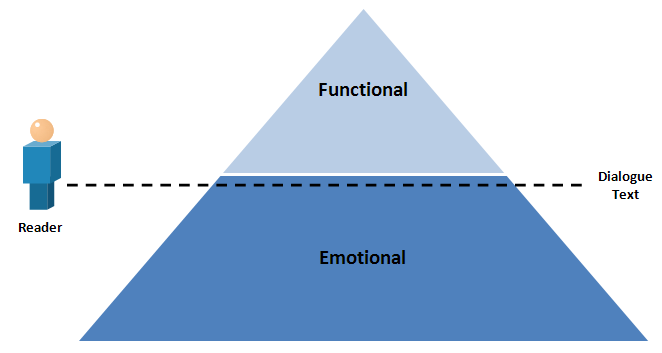
Good dialogue works the same way. Superficially, information needs to be exchanged and decisions need to be made to either move the plot forward or lay the groundwork for doing so later. That’s the functional level of dialogue. But as the writer, we use that exchange to flirt with the reader. Below that functional level, we want to draw them in, heighten the underlying tension, and make them care deeply about the characters involved. So how can we do that?

Less is More: Make Every Word Count

When I have been particularly flirtatious (not that it happens often, but it has happened…once…I think), I feel like every sentence, every word I uttered made the other person dig me more. That’s not because my every utterance was gold. It’s because everything I said was just enough and not too much to accomplish my functional and emotional goals.

Imagine you’re trying to ask someone out to dinner. Your functional goal is for them to share a meal with you. Your emotional goal is for them to want to. If you come at them with a multiple-paragraph emotion-laden monologue, at best you’ll be shot down. At worst, out comes the pepper spray. In that conversation, you want to give them just enough to want more – more conversation, more shared experiences, more of you. Brevity – in this instance – is your friend. Of course, you don’t want to just bark “Yo! Dinner?” That’s probably going a little too far in the opposite direction. It has no emotional resonance, no hidden layers of private meaning.

Probably the best tool I’ve found to find the happy medium is the comic book panel. As I’ve talked about before, panels are the basic building block of sequential art. Each panel uses both art and dialogue to manage the reader’s experience. But here’s the thing: a panel is a limited space. If we want the art to do its job, then the panel naturally constrains the amount of dialogue it can contain.

A good rule of thumb is for panels to not exceed twenty-five words of dialogue. That previous sentence has fifteen. Now we’re up to twenty.

There. That paragraph directly above is the amount of dialogue that will typically fit comfortably in a panel. That doesn’t leave a lot of room for wasted clauses, wasted words, wasted feelings. It needs to be absolutely tight: one sentence, two sentences, maybe three. It may be an exchange, or in that one panel one person may be the only one speaking. But thinking about dialogue in terms of twenty-five word panels within a scene really helps me to pare my characters’ dialogue to the bare essentials.

What did you say? Making Every Word Clear

Clarity’s another important factor. When flirting, if every other sentence is “What? What did you say?” odds are it’ll be quite a turn off. The same holds true for dialogue. We want our readers to instantly understand the surface level of dialogue so that they can internalize the underlying emotional level.

This is why I’m always nervous about dialect in dialogue, especially in genre fiction. One of the defining characteristics of speculative literature is the use of neologism to signify new concepts. The creation of new terms and new concepts is so important that Istvan Csicsery-Ronay dubbed it science fiction’s “first beauty” in his excellent The Seven Beauties of Science Fiction. We use new words and alien languages as a world-building tool, to defamiliarize the user and transport them to a reality where our fantastical story can take place. But before we can grok Valentine Michael Smith’s dialogue, we need to grok the word itself.

Like so many aspects of writing, this is a balancing act. And one that even experienced and skilled authors can get wrong. For example, I have loved China Miéville’s writing since his first novel, King Rat. Yet I found myself unable to enjoy his more recent Kraken because I found that it took so much effort to understand what the characters were saying on a superficial level, that I lacked the energy to get emotionally invested. Were the dialogue there slightly clearer, no doubt I would have loved the characters and the story as much as his other books.

Coming at Dialogue From the Side

Flirting is as much about what is left unsaid as what is stated. Good dialogue is the same. Sol Stein describes it as obliquity in Stein On Writing, and I think that’s a pretty good description of both flirting and writing good dialogue. Consider the following two exchanges:

DIRECT “What would you like to do tonight?” John asked.

“I want to eat a garden salad, have two glasses of red wine, and engage in coitus with you,” Jane said.

OBLIQUE “What would you like to do tonight?” John asked.

“A little of this, a little of that,” Jane said.

The first is painfully direct and clinical. It leaves nothing to either John’s or the reader’s imagination. The second does not – in fact – answer John’s question. It leaves the entire answer to the imagination. The entire experience – and its emotional significance – is left for our reader to find between the lines.

In some cases, the direct approach is smart. Used in counterpoint to oblique dialog, it can be used to drive the point home. Consider a slightly modified direct approach:

DIRECT “What would you like to do tonight?” John asked.

“Have sex,” Jane said.

Here, the frank approach to the underlying subject matter stands out against more oblique dialogue. If every exchange read like this one, the book would turn monotone. And if every exchange were perfectly oblique, the book would be abstruse. When focusing on principal characters and particularly meaningful scenes, I try to go beyond the merely functional and lean towards obliquity. But with judicious application, a little directness adds extra spice.

Blending Prose and Dialogue

In one sense, comic books have it easy. Sequential artists have an extremely expressive medium (art) to place the dialog in context. They can communicate tone, setting, attitude in fractions of a second. Those of us laboring in prose have exposition to do the same, but text is by its nature less expressive than illustration. So how do we intersperse prose into dialogue for best effect?

Just about any good writing book or teacher will tell you to avoid active reporting clauses (he said/she said). It’s still like flirting. If someone were trying to flirt with us and they screamed every statement, growled every question, and sighed every punctuation mark, odds are we’d remember a pressing engagement elsewhere pretty quickly (unless both people involved are angsty teenagers, in which case they might not even notice). But that does not mean we’re limited to the factual he said/she said.

We can also play with placement. Consider our earlier oblique passage. What would happen if we moved the reporting clause elsewhere in the second sentence?

ORIGINAL OBLIQUE “What would you like to do tonight?” John asked.

“A little of this, a little of that,” Jane said.

MODIFIED OBLIQUE “What would you like to do tonight?” John asked.

“A little of this,” Jane said, “a little of that.”

Moving the reporting clause to the middle of the sentence introduces a beat that the reader won’t even consciously notice. Instead, they’ll pause for a half-second as they read it and fill that pause with meaning. Maybe they’ll picture Jane winking, or giving a mischievous little smile.

We can also substitute actions for the reporting clauses, though this may be a slippery slope. Consider:

ORIGINAL OBLIQUE “What would you like to do tonight?” John asked.

“A little of this, a little of that,” Jane said.

MODIFIED OBLIQUE “What would you like to do tonight?” John asked.

“A little of this,” Jane said, “a little of that.”

ACTIVE OBLIQUE “What would you like to do tonight?” John asked.

Jane took his hand. “A little of this, a little of that.”

ACTIVE DIRECT “What would you like to do tonight?” John asked.

Jane took his hand. “Have sex.”

By prefacing Jane’s statement with a simple action, we can help put it in context. It’s like a marker guiding the reader to the conclusion we want them to reach. This should be used sparingly however, because it can otherwise lead to problems. For example, if a character says something while “spinning” many readers will imagine them twirling like a top while speaking…which is probably not the effect you were going for.

The Transparency of Great Dialogue

I’ve never heard a book described as “having great dialogue but really lousy prose.” (though the opposite is unfortunately common). The reason for that is that truly great dialogue is utterly transparent: its effects on us are palpable, but indistinguishable from the those of the book as a whole. We can’t truly say whether we’re invested because of the dialogue or the prose. What we know is that the dialogue supplements the prose and gives us pulls us deeper into the story. If the prose is an attractive person spotted across a dance floor, then the dialogue is the test of whether they’re nice. And can hold a conversation.

REVIEW: Supernatural Noir ed. Ellen Datlow


Title: Supernatural Noir
Editor: Ellen Datlow
Pub Date: June 22nd, 2011
Chris’ Rating (5 possible): 1 point 1 point 1 point 1 point
An Attempt at Categorization If You Like… / You Might Like…
Excellent storytelling, though slightly more supernatural than dark.  


First, let me start by saying that I love noir fiction and film. Give me a good hard-boiled detective story, and I’ll lap it up – typically not looking for much beyond entertainment. I also love dark fantasy and horror, and so the thought of blending them in a new anthology fittingly titled Supernatural Noir sounded great to me. Throw in one of the best editors working in the business today – Ellen Datlow – and I am definitely there. Having read a digital review copy, I can say that Dark Horse’s Supernatural Noir delivers as advertised, even if it may lean closer to dark fantasy than I would have liked.

With Datlow’s editorial pedigree, this should come as no surprise. On my shelves at home, I have over fifteen anthologies edited by Datlow (often with excellent collaborators like Terri Windling). I admit, I’m a bit of a fan. Historically, her anthologies have demonstrated a particularly consistent ability to showcase top-flight authors and stories, and to assemble them into collections unified along whatever dimension is relevant to a particular book. The table of contents for Supernatural Noir is no different in this regards.

The authors read like a “who’s who” of dark fantasy (more so than noir): Gregory Frost, Melanie Tem, Paul G. Tremblay, Laird Barron, Jeffrey Ford, Joe R. Lansdale. Sixteen authors contributed original short stories for the anthology, and all of them come from a dark fantasy / supernatural / horror background in their writing. This is not a complaint, but it should be an indicative fact: the authors selected for this book skew by experience towards the “supernatural” part of the anthology’s title, so it should not be surprising that their stories lean in that direction. If you are looking for horror stories written by hard-boiled mystery writers, you won’t find them here. Instead, this collection offers dark fantasists’ spins on the hard-boiled crime story. Which – I would argue – is just as fun, although it means the noir elements might get a little de-emphasized in some places.

A large number of stories (either explicitly or plausibly/implicitly) are set in the time period from the late ’40s to the late ’70s. Considering noir‘s roots in the late ’40’s and ’50’s, this makes sense to me: the square-jawed hero (or stalwart heroine – more on this in a sec) in a worn trenchcoat is emblematic of the post-War period. But the difference in tone between the stories set in this post-War period and the stories set in a contemporary (or vaguely futuristic) setting is striking. The stories set closer to WWII – like Richard Bowes‘ “Mortal Bait”, or Joe R. Lansdale’s “Dead Sister” – tend to employ a greater number of noir tropes. The later a story is set, the less prevalent noir‘s emblematic elements become. What does this say about modern society and the evergreen qualities of noir as a sub-genre? Is noir possible in a world with mobile information and instant access? Judging by the excellent contributions from Melanie Tem (“Little Shit”) and Nick Mamatas (“Dreamer of the Day”), the tropes of traditional noir fiction need to be adjusted and updated to operate in our modern reality: the tropes that worked in the days of vacuum tube televisions may not work any longer.

The second stand-out was the number of female and queer heroes featured. In many ways, this is representative of noir‘s original values: it should be only natural for a genre typified by a frank treatment of violence and sex to grow beyond the “haunted square-jawed hetero male detective” trope. The variety of heroes employed in these stories was encouraging, although at times it stretched some bounds of credulity. For example, while I thought Caitlin R. Kiernan‘s story “The Maltese Unicorn” was great fun, I was haunted by an inability to completely buy its heroine in 1935 New York.

Coming to it looking for fantastical noir, the anthology will be reasonably satisfying. If you come to it looking for noirish dark fantasy, I suspect you will be more satisfied. All of the stories here are competently executed. Some including Jeffrey Ford’s “The Last Triangle” and Elizabeth Bear‘s “The Romance” (which snuck up on me delightfully) will stay with me for a long time. Others, like Laird Barron’s “The Carrion Gods in Their Heaven” just didn’t suit my own tastes, although I recognize their quality. Only two stories (Joe R. Lansdale’s “Dead Sister” and “Mortal Bait”) didn’t work for me for critical reasons: in both cases, they featured characters/voices that did not stand out, and plot structures that I found predictable. Interestingly, both were among the stories that adhered most closely to traditional noir structures. I believe their weaknesses highlight the single greatest challenge in modern noir: crafting a hero and voice that is distinctive and interesting. Most of the stories in this anthology – even those that did not particularly appeal to me – manage to get it right.

If I have one complaint to register, it’s a relatively minor (and inordinately geeky) one. I really enjoyed reading this anthology for its entertainment value. But I would have loved to see one or two critical essays discussing noir and its long relationship with the fantastic (and the Gothic). While I would have loved to see that, I freely admit to being a the kind of dork who likes reading literary analysis.

I recommend Supernatural Noir for fans of hard-boiled detective fiction who want to dabble in the fantastic, or for fans of dark fantasy/horror who want a touch of hard-boiled crime. And that recommendation really says it all: Supernatural Noir delivers as advertised.

Apologies for the Delay


I’m sorry today’s post is going to be delayed ’til tomorrow. I’m currently travelling by train from Warsaw to Prague and my laptop is being singularly uncooperative. This apology may or may not get posted depending on my phone’s ability to connect to the interwebs from somewhere in the Silesian hinterlands.

In honor of the fact that I’m in Poland on business at the moment and lacking the GPRS connection to post what I originally intended, here’s a link to some fun news about Poland’s most famous SF author, Stanislaw Lem: there is a new (direct from Polish) translation of Solaris available as an audiobook.

This matters because previously the only English translation was actually an English language translation of a French translation of the Polish original, which apparently (according to Lem) really doesn’t do the material justice. Unfortuneately, the new version is (so far) only available as an audiobook. In the next couple of weeks I’ll give it a listen and share how I think it compares to the original (ha! Bet you didn’t know I’m fluent in Polish!)

Hopefully I’ll get to do a more complete post tomorrow from Prague. Let’s hope my cell phone manages to post this…

Some Assembly Required: Building Pacing and Emotional Flow with Legos


The other week, I pulled a sentence at random out of John Crowley’s classic Little, Big. I used it to illustrate a point about narrative voice, but a couple of days later I had an epiphany: the same sentence can also illuminate pacing and a story’s emotional flow.

Legos Tell Stories

When I was a kid, I spent just about every waking moment building adventures out of Legos. Back then (despite my fiancée’s assertions, dinosaurs did not roam the earth), Legos lacked variety. There were blocks…and blocks. A handful of different sizes, and that was about it. But despite their limited palette, I could tell just about any story my five year old self could imagine using those blocks. I built castles, and spaceships, and horses, and windmills. Fantasy, science fiction, monsters: I was only limited by my imagination.

Handful of Standard Lego Bricks

Lego Color Bricks, via Wikipedia

Fast forward a few years, and you’ll still find me playing with building blocks. Only now, I use words, sentences, and paragraphs to tell stories instead of little plastic bricks. At its most basic, a story is composed of letters. Those letters build up words, which in turn comprise sentences, then paragraphs, then chapters, then acts, then books, then series, and so on. But those letters are not necessarily our story’s real building blocks: instead, think of them as the long-chain polymers that make up our true Lego pieces. And the specific mix of Legos will differ across stories and media.

Literal Building Blocks: Panels, Scenes, and Shots in Visual Mediums

Jumbo Comics #1 (September 1938) “Hawks of the Sea” by Will Eisner, via kirbymuseum.org

It’s easiest to see these building blocks at work in visual media like sequential art (comics, graphic novels) and film. Some people might argue that dialog is key to these media, but I disagree. Dialog doesn’t frame the story: dialog is what gets framed.

For sequential art, Scott McCloud1 and Will Eisner2 both explained brilliantly how the page is the medium’s real building block. Each page is composed of one or more panels that depict some action occurring in time. The composition of each panel and its relationship to others on the page establishes tension and moves us from one state to another. The page frames a finite emotional progression, while the panels that make up that page control our sensation of time (the story’s pacing) throughout the journey.

The same paradigm works for film. A screenwriter’s scenes function the same way as a comic book page, where each scene represents a finite emotional arc through which the audience and characters travel. Each scene takes us from an initial point A to a subsequent point B, and the director uses one or more shots to get us there. Shots structure and control the flow of time and tension throughout the encapsulating scene, just as sequential panels structure the flow on a comic book page.

Visual media impose structural constraints by their very nature, which helps make their building blocks easier to spot. But when writing prose, those constraints go right out the window.

The Building Blocks of Prose Pacing: Sentences

The structure of our prose affects how we perceive the flow of time. Hemingway’s short declarative sentences communicate speed. Proust’s meandering sentences, with their convoluted clauses and tangential commentary, establish a more laconic feeling. Short paragraphs and short chapters read faster than longer ones. But it is their relationship to emotion that determines the real pace of the story.

In Little, Big, Crowley uses the sentence as his primary building block. Practically every sentence in that book takes the reader on its own miniature emotional arc:

Sentence #1: “Then an expectant silence, followed by a firmer start, and the station wagon backed warily out into the drive, making two soft and delible marks in the wet leaves.”
Sentence #2: “That there was such a house in the world, lit and open and empty, became a story in those days; there were other stories, people were in motion, stories were all they cared to hear, stories were all they believed in, life had got that hard.”
Sentence #3: “But life is wakings-up, all unexpected, all surprising.”
John Crowley, Little, Big, 1982

Even the utilitarian sentences that describe an almost-incidental action contain an emotional arc. If Little, Big is composed of Legos, then they are sentence-shaped.

The sentence length, structure, punctuation, and emotion-laden words control the story’s pace. Each sentence demands that we pause and savor what it has done to us. Without those miniature emotional arcs, the text would be meandering, dull, and lifeless. But by employing brilliant tricks of emotional association, Crowley’s manipulation of our emotional state becomes transparent and, like Smoky Barnable, we find ourselves enraptured in the liminal fairyland of Edgewood.

Paragraphs as Building Blocks

Compare this to G.K. Chesteron’s The Man Who Was Thursday. While his individual sentences lack the emotional depth of Crowley’s, we remain moved by his paragraphs (again, selected at random):

Paragraph #1: As the wood grew first thinner and then smaller with distance, he could see the sunlit slopes beyond it and above it; and across these was still moving the square black mob like one monstrous beetle. In the very strong sunlight and with his own very strong eyes, which were almost telescopic, Syme could see this mass of men quite plainly. He could see them as separate human figures; but he was increasingly surprised by the way in which they moved as one man. They seemed to be dressed in dark clothes and plain hats, like any common crowd out of the streets; but they did not spread and sprawl and trail by various lines to the attack, as would be natural in an ordinary mob. They moved with a sort of dreadful and wicked woodenness, like a staring army of automatons.
Paragraph #2: Syme’s laughter at all this had about it a wild weakness of relief. He laughed at the idea of the paralytic Professor being really a young actor dressed up as if for the foot-lights. But he felt that he would have laughed as loudly if a pepperpot had fallen over.
Paragraph #3: At first the large stone stair seemed to Syme as deserted as a pyramid; but before he reached the top he had realised that there was a man leaning over the parapet of the Embankment and looking out across the river. As a figure he was quite conventional, clad in a silk hat and frock-coat of the more formal type of fashion; he had a red flower in his buttonhole. As Syme drew nearer to him step by step, he did not even move a hair; and Syme could come close enough to notice even in the dim, pale morning light that his face was long, pale and intellectual, and ended in a small triangular tuft of dark beard at the very point of the chin, all else being clean-shaven. This scrap of hair almost seemed a mere oversight; the rest of the face was of the type that is best shaven—clear-cut, ascetic, and in its way noble. Syme drew closer and closer, noting all this, and still the figure did not stir.
G.K. Chesterton, The Man Who Was Thursday: A Nightmare, 1908

Taken individually, the sentences are utilitarian. Most are solely descriptive, with no emotional imagery employed to direct our mental state. Yet in each paragraph, certain imaginative descriptions are employed with laser precision to manipulate our emotions (a “staring army of automatons”, “wild weakness of relief”, or “deserted as a pyramid”). Each sentence is just a sentence, but with his paragraphs Chesterton increases and decreases tension like a sound engineer mixing in a recording studio.

Still other authors use scenes or whole chapters as their basic building block. While I won’t quote entire chapters here, I recommend taking a look at how Steven Erikson or Yasunari Kawabata manage it (particularly in Gardens of the Moon and The Master of Go, respectively).

Picking Legos out of the Box

So enough theory: what practical conclusions can we draw from this? If each story has a set of natural building blocks, then we have to identify it. The set will depend on the story’s medium, its audience, and the emotions we want to evoke. I suspect a spy thriller is unlikely to use sentences as its building blocks: to get an emotional response from individual sentences would slow the action too much to work within spy thriller conventions. By contrast an introspective memoir might luxuriate in the kind of sentence-level emotional manipulation that Crowley executes.

While this may just be my own idiosyncrasy, I find that once I know what the basic building block of a story is, it becomes much easier to write. If I know that I start a [sentence / paragraph / scene / chapter] at emotional point A, and need to get to point B by its end, the amorphous task of writing becomes easier. It’s not just a question of knowing where to go: that’s just plotting. Instead, it’s grokking the space I have to operate in. While I’m not a painter, I imagine it’s like understanding the bounds imposed by a piece of canvas. Within those bounds, I am limited solely by my imagination. But by figuring out which Legos I’m really using, it lets me have fun building stories.

In Conclusion: Some Fun Lego Constructions

And to conclude with the Lego metaphor, here are some fun Lego projects that some amazingly talented people have constructed:

10,000-piece Sandcrawler

Functional Antikythera Mechanism

REVIEW: Cowboy Angels by Paul McAuley


Title: Cowboy Angels
Author: Paul McAuley
Pub Date: January 11th, 2011
Chris’ Rating (5 possible): 1 point 1 point 1 point
An Attempt at Categorization If You Like… / You Might Like…
High-concept, hard SF alternate history with a spy-thriller edge.

I first came across Paul McAuley’s work sometime in the mid-to-late ’90s with his genetic cyberpunk (genepunk? I’ve always thought this should be a term) masterpiece Fairyland. Since then, I’ve always kept my eyes open for new McAuley novels and have found far more hits than misses among them. While his books span a variety of sub-genres (space opera, alternate history, genepunk, etc.), they share that high-concept imagination that underpins the best in science fiction. It was that same high-concept approach to alternate history which attracted me to his new novel, Cowboy Angels.

Books employing the many worlds interpretation of quantum physics are a dime-a-dozen, and so that on its own isn’t really enough to grab me. However, in Cowboy Angels, McAuley asks a question: what if the United States had found a way to travel between alternate versions of Earth at the height of the Cold War? In our real history, the Cold War was characterized by the domino theory, containment, détente, and proxy wars fought all over the world (Central America, Afghanistan, Southeast Asia, South Asia, etc.). A downright fascinating time period in history, with the all-too-real primacy of the CIA, KGB, Mossad and other espionage agencies. McAuley’s brilliant concept is to introduce parallel worlds as a new front in this Cold War, which to my history-loving mind made me sit up and say: “Right on, this is going to be awesome!”

Cowboy Angels follows one Adam Stone, a retired special operations agent for the CIG (Central Intelligence Group). He has made his career as a spy working to spread US-style democracy across alternate versions of America. We first meet Adam Stone at the end of an era: American policy is changing with the election of the “peacenik” President Carter, and the nature of the Company’s missions is evolving. Adam Stone is comfortable with this change, having grown disillusioned by the manifest destiny ideology that had put him in moral quandaries in alternate Americas. But not all of his fellow agents are as comfortable with their country’s shifting values, and the book’s plot explores the lengths some people will go to in service of their ideology.

The novel’s plot is structured like a spy thriller, with Stone being called out of retirement to track down his friend and former partner, Tom Waverly. Waverly has gone on a killing spree across multiple alternate realities – killing the exact same woman over and over again. Neither the local authorities in those realities nor the Company know why. And so Stone gets reactivated to try and bring his friend in. What follows is a spy-thriller, but rather than have us jet off to exotic locales, McAuley takes us to exotic versions of the United States. Stone’s hunt for Waverly takes us to a kleptocratic New York decimated by nuclear war, to a United States that had been leveled in an apocalyptic World War III, and to a version of history very much like our own.

This is not a James Bond-style spy caper, where our hero gets to enjoy the good life in sunny Macao, Monaco, or other fancy places that begin with the letter “M”. While some of the alternate realities our hero visits seem bucolic, even pastoral “untouched” realities have their gritty undersides. And McAuley artfully exposes us to that, using blood and sinew to temper the novel’s escapism.

In terms of general concept, Cowboy Angels gets ten out of ten points for me. The idea of Kennedy-era expansionist/messianical foreign policy applying across alternate worlds practically begs to be written. Once again, McAuley’s ability to identify and execute on a particular concept is compelling.

However, for me, the book relied too heavily on this (admittedly awesome) concept to carry it. There were three weaknesses that detracted from my enjoyment of the book. Successful execution of both the novel’s concept as well as its spy-thriller plot structure requires distinctive settings, and the concept enables for some fascinating alternate versions of our world. While we get tantalizing glances into some fascinating settings (Nuclear Winter America, an American government-in-exile in Cuba, etc.), the majority of the book takes place in settings only slightly different from what we know. The settings we explore are different enough to remain distinct, but I think there was a wasted opportunity to explore some really interesting alternate versions of America. With so much of the book’s backstory dealing with the Cold War and the fight against Communism, it struck me as particularly odd that at no time did our hero venture into a Communist version of the USA.

The second, less significant, issue I found lay in some aspects of McAuley’s characterization. In particular, Stone’s romantic interest (which serves as a significant motivator through much of the book) struck me as particularly under-developed. Overall, I bought the character: I felt Stone was believable, and engaging. But I was unable to shake that arms-length disconnect and engage enough with the character enough to lose myself in his world(s). It was close – almost nailed just right – but I found that I just didn’t feel enough of Stone’s motivation. The solid plotting and awesome concept were enough to carry me over this weakness, but I wasn’t close enough to the character for McAuley’s gears and cogs at work to disappear.

The third, and least significant, problem I came across lay in the book’s pacing. Please don’t get me wrong, this is a fast-paced book, and it reads very quickly. However, the pacing is relatively unvaried throughout the text. This is an issue I often find in spy-thrillers: too often, I suspect their authors and editors believe readers equate escalating, no-respite events with being a page-turner. This leads to a go-go-go pacing which can be tiring if not offset and balanced against the emotional arc of the story. Just yesterday, Ursula K. Le Guin posted a great essay on this very subject. By giving his character – and the reader – room to catch one’s breath, McAuley could have deepened my emotional connection to the character and the story. By slowing down the story in a couple of places, the overall result would have been more emotionally powerful.

Cowboy Angels Cover by Sparth

Cowboy Angels Cover by Sparth

Visually, the novel is attractive and stands out nicely. The cover was designed by Jacqueline Nasso Cooke and features an illustration by Sparth (aka nicolas bouvier). The cover really communicates the novel’s feel, contrasting futuristic Turing Gates against the decidedly-less-futuristic trains emerging from them.

Much as I enjoyed Stone’s adventure, my own personal tastes would likely have preferred to see the book’s backstory moved to the front. The transition from “manifest destiny” to “peace and reconciliation” and how that transition unfolds amongst the Company’s agents would be a really fascinating story, and one particularly relevant in today’s geopolitical environment. McAuley has set up a fascinating universe with infinite potential for clever, high-concept, and emotionally powerful stories. I would love to see a prequel set in this same universe exploring the Church Committee’s investigations into the Company’s clandestine operations.

Cowboy Angels is a very enjoyable book. The underlying concept is strong enough to overcome the minor weaknesses in setting, characterization, and pacing. That concept was enough to get my imagination firing, and often that’s exactly what I look for in SF. If you enjoy a good spy thriller, or get a kick out of playing with alternate histories, this book is definitely worth your time.

Representing Genres at BookExpoAmerica 2011


So last week was pretty fun, what with BEA 2011 and the Book Bloggers Convention (BBC) both taking place in New York. This was my second year attending BEA, although my first as a blogger. While I did manage to post some brief thoughts last week, I wanted to take a little time to discuss a disconnect I noticed during both events.

Genre, Genre Everywhere…

Everywhere I turned at BEA and at the BBC, genre was plainly visible. Whether it was mystery, thrillers, horror, science fiction, fantasy, paranormal romance, steampunk – every major publisher was promoting the heck out of genre titles. Even those who traditionally keep their toes out of genre waters seemed to dabbling, with “magical realism” or “magical romance” offerings.

Particularly noticeable was the degree to which young adult and middle-grade publishers were aligning their publicity machines with speculative sensibilities. While there are few YA/MG publishers who specialize within science fiction, fantasy, or horror, almost all of the galleys handed out at BEA had some fantastical element – however sleight. Many of these galleys were riding the post-apocalyptic/dystopian wave currently cresting, but nonetheless it was clear that publishers feel that kids read books about monsters, fairies, and ghosts.

…and Not a Home for It

Despite the ubiquity of science fiction, fantasy, and horror titles, there was a noticeable absence of niche booths. The major publishers had consolidated their imprints’ such that niche-market imprints were exhibited under their corporate umbrella. This trend was universal across the major publishers, and I would argue that it failed to serve the niche imprints well. As a general rule, it made it harder (though not impossible) to find people at the booths who could cogently discuss either the galleys being handed out, or the niche imprint’s other speculative titles. Don’t get me wrong – the Javitz floor was full of niche imprint editors, publicists, salespeople, and authors. But they had other things to do there than man their imprints’ booths, and so the folks stuck “back at base” ended up getting mobbed.

There are – of course – notable exceptions. Prometheus Books in particular stands out for how they handled their PYR imprint. Not only was the PYR side of the booth well-supported, but even PYR’s non-fiction cousins were well-prepared to talk about PYR’s list. That ability to cross-promote books across imprint lines was unique on the Javitz floor, at least from what I could see.

A Lack of Genre Programming…

Equally startling – from my perspective – was the lack of science fiction, fantasy, and horror programming. While there were some “author buzz” sessions, outside of the YA and middle-grade segment, there was a startling lack of BEA sessions devoted to discussing trends in SF/F/H. Instead, just about every session focused on one aspect or another of digital publishing.

Are booksellers and librarians no longer interested in learning about trends in particular genres? Or has BEA gone astray by focusing too heavily on promoting individual books and particular authors? I for one suspect the latter: while it’s great to hear about author X and their new genre book Y, there is clearly a place for a discussion of the aisles that by some counts, are the most frequented in any bookstore/library. Is BEA that place? Judged by the conversations on the floor with booksellers and librarians: certainly. Judged by the programming set up by BEA’s organizers? Not so much.

…Especially at the Book Blogger Convention

Even more startling was the paucity of niche programming at the second-annual Book Blogger Convention. Don’t get me wrong, this was an excellent event – and one which I cannot recommend strongly enough to anyone who wishes to attend next year. As a relative newcomer to the world of book blogging, I walked away from the one-day BBC with insights and relationships just as valuable as those I developed during the four-day BEA. But the genres represented at the BBC both within the audience and on the BBC’s programming were surprising.

First, the BBC’s audience struck me as primarily focused on romance and YA. That probably shouldn’t come as a big surprise, considering the size of the romance and kidlit blogospheres respectively. And while my own speculative predilections might bias me, I think the SF/F/H genres generally don’t slouch when it comes to online representation. Heck, just a couple of weeks ago I mentioned the awesome list of SF/F review blogs curated by Grasping for the Wind. Were so few speculative bloggers able to attend BBC? For whatever reason, we were thin on the ground in the audience on Friday. Perhaps as a consequence of this skewing of the BBC’s audience, speculative fiction didn’t get much representation in the programming. For example, the “niche blogging” panel had one speculative fiction representative, compared to four YA bloggers. And during the (incredibly valuable) publicist panels, only mainstream or YA publishers were represented.

Representing Speculative Fiction at BEA and the BBC

Despite all of this, both BEA and the BBC were useful for different reasons. BEA remains a great place to get new galleys and chat with industry professionals about books and the industry. Plus, it’s always fun to meet authors and get books signed. The BBC was useful because it allowed me to learn more about book blogging, to share techniques and best practices with other book bloggers who’ve been at it for longer than I have. Would both events have been better for more speculative programming? Overall, yes. Consolidating for cost purposes makes sense, but ultimately it’s a balancing act between being penny wise and pound foolish. Hopefully, they’ll nail the balancing act next year.

Bill Willingham and Down the Mysterly River


I’ve been a fan of Bill Willingham’s writing since the first issue of Fables, so I’ve been looking forward to his prose novel Down the Mysterly River for quite awhile.

Here are some of the things he said today:

  • biggest difference between comics and prose, [time] commitment needed to write a novel much greater than for a comic script
  • “Villains should be villainous.”
  • Motivation for writing prose is to have complete control over the story.
  • “The need to shut up [in expository writing] is much greater in prose [than comic scripts].”

Google eBooks Session


Forgive me for the editing of this post, but I’m typing it on my phone at Google’s eBook session.

Listening to: Scott Dougall, director, product management, from Google

  • Google positioning Google eBooks as “all about choice”.
  • 15 million Google Books
  • 3 million free Google eBooks
  • cross-platform accessibility
  • eBook sales tripled @ Google over last year
  • 7k publishers
  • 4 mln books found – 100 mln pgs read = 25 pgs read per book on avg?
  • most eBooks found via web, read within apps
  • Google Bookstore becoming destination and mobile store gaining traction at cost of search
  • 250 resellers in the US
  • indie booksellers getting creative: bar codes and purchasing within store to mobile apps
  • “higher priced” nonfiction (eg medical texts) outselling fiction among Google eBooks
  • in-store events to promote eBooks
  • affiliate program for bloggers slated for this year
  • bundling (digital/print) not in the works
  • hinting at book rental play (Netflix model)