Skip to content

Posts tagged ‘criticism’

Super Hero Narratives and Our Re-discovered Love for Them


NOTE: Sorry for posting this a bit late. The only excuse I’ve got is that I was busy at the movie theater doing more research for this blog post (honest!).

Despite the fact that the comic book industry bemoans its sad state on average once every nanosecond (more frequently than the book industry, believe it or not!), they must be doing something right if mass market narratives like Marvel’s The Avengers can just elide backstory, origins, or explanations and expect audiences to accept their characters as given. Captain America, Iron Man, Thor, the Hulk, Superman, Batman, Spider-man (note the sustained and sad preponderance of the male adjective in there) have become so integrated into Western culture that their mythos are omnipresent. But why? Why do we love super heroes and why – after two decades in the weeds – are super heroes flying off movie screens and DVD racks?

Super Heroes as Archetypes Embodied or Applied

There are a great many different kinds of comic books, from the spandex-clad super heroes we think of by default, to fictional slice-of-life stories, to crazy experiments in form and narrative. For the purposes of this discussion, I’m going to focus on the super hero genre – the others operate within entirely different conventions.

Let me start with a disclaimer: My name is Chris, and I am a lapsed comic book reader. As a kid, I must’ve spent a small fortune in birthday and couch cushion money at my local comic book shop. Every X-book, all the Spider-man books, the Batman line, Superman, Image’s early stuff, Alan Moore, Frank Miller, etc. etc. The list of books I inhaled uncritically is kind of embarrassing (and my bagged and boarded long boxes are still taking up space in my parents’ basement more than a decade after I moved out). It wasn’t until I got a lot older (and abandoned the super hero genre due to the fact that it generally did not and does not care about quality writing) that I started to really think about why certain comics appealed to me more than others.

Like any fictional conceit, super heroes are concretized metaphors. This applies just as much to Superman as it does to the X-Men. Only some metaphors are more transparent than others. It doesn’t take a doctorate in semiotics to label the archetypes that some characters represent: Superman, Batman, the Hulk, Captain America, Daredevil are idealized symbols for our collective imagination. These characters embody a particular ethos, and we enjoy their stories because they allow us to vicariously partake of a Nietzschian ideal.

Other heroes – Moore’s Watchmen, Spider-man, the X-Men, or the Fantastic Four – do not so much embody an archetype as provide a lens to examine its aspirational application. Through Peter Parker’s struggle to balance his heroic aspirations against his family life, we can examine what happens when one strives towards the archetype in a more realistic world.

At their core, this is what gives certain super heroes staying power within our culture. And story arcs that tap into this core are those that will resonate and stay with us. But that is the deeper, unspoken truth about comics and about super heroes. It speaks to our psychology as an audience, and to the creators’ philosophy as artists. But identification and concretized metaphor does not explain why audiences shelled out over $300 million to see spandex-clad divas smack each other around.

The answer lies in a dirty word: escapism.

Escapism Can Be Our Friend

That’s right. I said the e-word. I think of it as dirty because it is how “serious fiction” sidelined speculative fiction for decades. But escapism is a powerful narrative tool. It is a release valve for societies, and it is one that Marvel’s The Avengers employs flawlessly.

Regardless of whether it is in sequential art or film, ensemble narratives like The Avengers, or the Justice League, or the X-Men cannot possibly focus on their characters’ underlying archetypes: there are too many characters playing upon too many archetypes for that kind of narrative to hold together (despite the industry’s love of over-played crossover arcs). Instead, they tap into the audience’s yearning for entertainment and the abrogation of responsibility.

As human beings we like to have someone else do the work. We work hard all day long, we are stressed, we take tough phone calls, and we have difficult conversations. Most of us don’t need to fight giant robots or aliens or monsters, but we all struggle anyway. And there is something cathartic about watching someone else do the struggling for a little while.

This is the same desire that makes us appreciate eucatastrophe in fiction when executed well. I’ve mentioned before that I don’t much like (or really believe in) eucatastrophe as a narrative device, but when done well it is satisfying for the same reason: it places the hard choices on someone else, someone “extraordinary” with whom we can never wholly identify.

Come Away with Me, oh Human Child

Ensemble super hero narratives rely on Othered saviors rescuing us from Othered villains. Though in a more focused narrative the villains might well play archetypal roles, they are simply external threats which we (collectively) are not responsible for.

Sure, Magneto is responding to anti-mutant bigotry. But we, the enlightened audience, are never responsible for that: we like the mutants…or why would we buy their books? And Lex Luthor might be a product of capitalist laissez-faire society, but hey…he’s one egomaniacial super-genius. And Loki…well, he’s a demi-god, an alien, and crazy to boot. And lest we forget, if something goes wrong in comic book land you can bet the Government (or its sunglass-wearing agents) had a hand in it somewhere.

Ensemble super hero narratives are summer blockbusters, meant to briefly entertain, not change the world. And they do so by presenting us with problems that are not ours, and then parachuting someone else in to fix them.

Why are they resurgent now?

Yes, yes, I know that comic books as a medium are struggling for a host of economic reasons. And while I personally think that’s because it is hard to grow an audience solely by focusing on art with scant attention to writing, it is fair to say that the super hero genre is doing better today than it ever has.

Could a movie like The Avengers have been as successful twenty years ago? No. Because we as society were not in the mood for it then. Today, that kind of escapism is in the air. It is something we need.

Thirty years ago, Moore’s Watchmen showed us that heroes and villains need not be archetypal or aspirational. That they can be flawed, and human, and with all of the ugliness and beauty that entails. What followed was three decades of increasing grit, and darkness, and hard-edges…perhaps a counter-reaction to the Cold War’s end and the ensuing economic, technological, and social boomtimes of the ’90s.

But today is a very different world, beset by very different problems – environmental, political, social, economical, and diplomatic. And over the course of the last decade, it seems to me that the super hero pendulum has been swinging back in the direction of greater escapism: to offer a soothing balm to the challenges of our real world. In real life, there are no heroes able to step up and deal with these very real problems on our behalf.

And when – as these days – we see our leaders failing to do so, when we see our neighbors failing to do so, and when we see ourselves failing to do so, it is only natural that we should fantasize about a group of different people, with different backgrounds, different beliefs, and different skills doing the impossible.

In the United States, at least, we mythologize our cultural heroes. Whether it is the revolutionary militias camped at Valley Forge, the Founding Fathers in a hot Philadelphia State House, the pioneer settlers pushing west, or the Greatest Generation, we expect someone in our society to step up and fight the hard fight. Only for our generation, nobody is really doing so. Which is why we need it in our fiction.

In The Avengers, Maria Hill at one point asks Nick Fury why the heroes would come back to save the day. And Nick Fury’s answer is poignant, relevant, and sad: “Because we’ll need them to.” That is the dream and the yearning that drives super hero narrative, and which underlies our fascination with the archetypes it exposes.

Because we always need heroes. And today, in our world, it has become awfully difficult to spot them (at least among our supposed leaders). And we need heroes today, in places of great power, on local street corners, and in our schools. Because Cap and the Avengers, Supes and the JLA, are just stories. And they won’t save the day, no matter how much we may need them to.

Railing against Consensus Taste: Why We Complain about Literary Awards


Awards season is in full swing: we’ve got the Hugos, the Nebulas, the BSFAs, the Aurealis, the Bram Stokers. It seems that every week a different shortlist gets announced or a different grand prize is given out. And this year, just as in previous years, these awards have become a good excuse for folks (e.g. Christopher Priest, James at Big Dumb Object, Larry at The OF Blog, and plenty more) to wring their hands about competing tastes and the biases inherent in awards’ selection processes. And with this award kvetching as the backdrop, Sherwood Smith over at the Book View Café posted a thought-provoking essay about literary versus commercial writing which got my brain cells ticking.

One of Smith’s key points is that assessments of literary as opposed to commercial merit are ever-changing in line with our tastes. What the “tastemakers” might consider commercial trash when first published, with time might migrate into the “classic” column…and vice versa (consider how critics routinely panned Wodehouse or Doyle). Tastes and standards change with time. That’s pretty obvious. And yet, in a real sense, the awards that we bestow give us a snapshot of where our cultural priorities are in any particular year. And when we grouse about the shortlists and the winners, what we really rail against is the consensus taste that they imply.

Here are the five most common award criticisms I was able to come up with (What are some other ones? Please let me know what I missed!)

Criticism Translation
1 The award played it safe / ignored the cutting edge. The award selection process favored accessibility over innovation/complexity.
2 The award favored elitist “literary” writing over the fun stuff. The award selection process favored innovation/complexity over accessibility.
3 The award is biased in favor of/against [insert noun here]. Either:

  • The award selection process evidenced our society’s continuing discrimination against [noun], or;
  • Not enough books by/about/for [noun] were published/met award criteria.

4 The same people always win the award. The award selection process is inequitable/excludes the interests of [noun].
5 The award is irrelevant for the audience that matters. The award selection process failed to account for the interests of [noun].

Literary vs Commercial : Accessible vs Complex

I see the first two complaints most frequently, often about the exact same award. The reason for that is that they most readily tap into what we as readers consider our preferences. It is the rare reader (and yes, the rare critic) who is able to divorce their assessment of quality from their personal preferences. It’s only natural. And, as Smith points out, we naturally expect everyone else to share our (obviously wise) tastes. When they don’t, it is only natural for us to get defensive…and in some cases, offensive.

But what this unending see-saw really represents is the constant tug-of-war between accessibility and literary complexity. This is particularly relevant for speculative fiction, which by definition estranges the reader from their most accessible experiences. Readers of speculative fiction are, by definition, boundary pushers. Every fantasy or every space opera we read is pushing against the boundaries of the real world, against the literary boundaries of mimesis. But different readers want to push in different directions, and at different rates. This process is the grease that leads reader tastes to evolve, which in turn drives a further evolution of the genre.

A more interesting question, I think, than whether an award skewed too literary/not literary enough is why it skewed the way it did. There is no easy answer for this question, and to even approach an explanation necessitates an awareness of both the genre and the selection process. Whether the Hugo nominees push the envelope or not is less important than what their selection tells us about fandom, about the genre, and about the tastes of readers. Whether the Clarke Award shines a beacon on the future of science fiction does not matter. What matter is what its nominees tell us about our industry and culture today, as filtered through the prism of the jury whose opinions were deemed authoritative enough to select them.

The Thorny Question of Bias in Awards

Bias – positive or negative, and for/against any [noun] – is probably the second most frequent award criticism I see. And it is a more difficult issue, because the identification of bias is inherently associated with the (rightful) condemnation of the discriminators. But the identification of bias is, unfortunately, clouded by two issues that vary from one award to the next: the criteria for consideration, and the award selection process.

Consider the Hugos, which are selected by a ballot of the members of that year’s and the preceding year’s Worldcon. The awards are routinely criticized for favoring male over female writers. And yes, I happen to believe that those criticisms are valid and accurate. And yet, that is a criticism that can only be levied at an aggregate level: if we get into the weeds of any particular category, we get into a discussion of the relative merits of title X by male writer Y as opposed to title Z by female writer Q. That is a discussion that I am happy to have. And yet, taking the award to task for gender bias misdirects our criticism.

Bias in any award slate shows that as a society we still have work to do. The award slate is a snapshot of our cultural values, and if in a particular year the shortlist skews for/against any particular group, it demands an exploration of why it does so. It may do so because the award selection process fell prey to the bias inherent in our society, or because that year’s crop of titles “just worked out that way.” Ultimately, I believe that in most cases it is an unanswerable question and a discussion which will never (and should never) end. Hence its thorniness.

But does that mean we have lived and fought in vain? No. Because that never-ending discussion moves our society forward, shapes our cultural awareness, and shines a light both on the dark corners of our cultural judgment and on the clouded stars who deserve more recognition.

The Nepotism Argument

When people criticize an award as being for the “in crowd,” that really represents an exploration of the process by which that award is given. Every award is a contract which says “The titles which have earned this award were selected in good faith and through due process.” It is that due process which bestows upon an award its legitimacy. In a small community like speculative fiction, it is certainly possible that the same suspects will show up on multiple shortlists every year or two. But for the awards to retain their relevance and legitimacy, they require a process that is both transparent and that clearly enables competition.

In many cases, the gripe that the “same people” win every year is just a gripe. But each time it arises, it demands of us an examination of the process. As a community of readers, and critics, and award selectors it is our fiduciary duty to ensure the legitimacy of our awards. When in extreme cases the justice of that due process is called into question (as it was in last year’s British Fantasy Awards), it may necessitate a re-examination or re-design of the award’s entire process. Any legitimate award must have processes and procedures in place to support this, if for no other reason, than to keep itself honest. And for its own good, that honesty should be periodically called into question.

The Irrelevance Argument: Who really matters?

Like the bias critique, the irrelevance argument is thorny. In actuality it centers around an unstated facet of the award: who is the award’s audience? And does the awarding body identify the same audience as the awards’ critic?

The best example of this that I am familiar with is the Newbery Medal, which every year is awarded to the author of the most distinguished children’s book as selected by a jury of librarians through the auspices of the American Library Association. Someone always complains that the ALA picks books which appeal to adult librarians, irrespective of their appeal to children. But the audience for the Newbery Medal, I suspect, is not the same as for a given book.

In the case of the Newbery Medal, the award’s stated goal is to select the book that the librarians feel is most important for children. As such, the implied audience isn’t the kids themselves. Instead, it is those adult individuals (parents, teachers, and yes, librarians) who can help put such important books into children’s hands. The logic underlying the award is that – left to their own devices – kids will favor highly accessible, entertaining books over more challenging but meaningful ones, and so adults need a useful pictorial medal to draw attention to those which are worthwhile.

Is this logic correct? I don’t know (though, to be fair, I suspect it is). But is this the only way to do it? Is this the best way to do it? Here, I am less certain. But to meaningfully discuss such questions mandates an exploration of an award’s audience as compared to the literature’s audience, and the economic process which takes books from the slushpile and ultimately puts them in reader’s hands. And at the end of the day, I think those are some of the most interesting, relevant, and important discussions we can have about books.

What do you think? I’d love to know whether my way of looking at the criticism of awards makes sense to anyone other than me. What is it about awards that makes them interesting and important to us as readers, as writers, and as critics? Why do they – or why should they – matter? And how can we foster intelligent, meaningful discussion about them?

REVIEW: The Fantastic: A Structural Approach to a Literary Genre by Tzvetan Todorov


Title: The Fantastic: A Structural Approach to a Literary Genre
Author: Tzvetan Todorov
Pub Date: 1970 (French)
1975 (English)
Chris’ Rating (5 possible): 1 point 1 point 1 point 1 point 1 point
An Attempt at Categorization If You Like… / You Might Like…
A relevant exploration of a narrow sub-genre within fantasy, applicable beyond its borders.

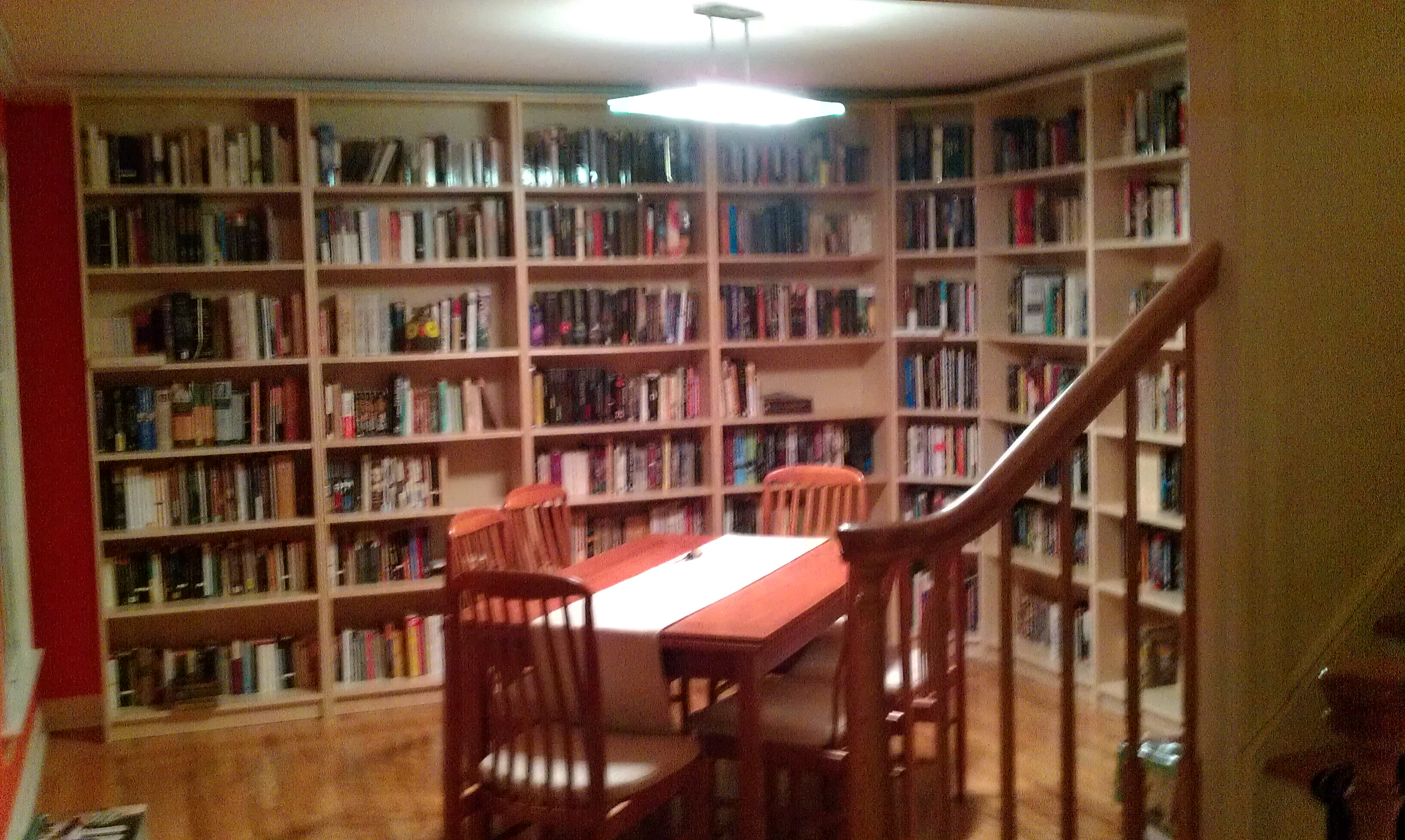
Happy New Year! Now that the formalities are out of the way, I thought I’d take a few moments to share with you what I did between Christmas and New Year’s: In addition to remodeling our library, and turning our dining room into a library annex, I also spent the week slowly and carefully reading Tzvetan Todorov’s classic book of genre criticism, appropriately titled The Fantastic: A Structural Approach to a Literary Genre.

Our Library Annex (aka the Dining Room)

Our Library Annex (aka the Dining Room)

Of course, I’d read about Todorov many times before. I’d even read a couple essays he’d written (I particularly recommend his typology of detective fiction). But I figured that it was best to see for myself what he had to say. And though in the end I was very satisfied, this book really defied my expectations.

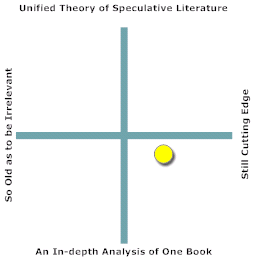
The book’s title is misleading. From the adjective-cum-noun “Fantastic” it is a short leap to the modern genre of “fantasy” – and so when I first bought the book, I expected to find a master critic expressing his own Unified Theory of Fantasy, like a Northrup Frye or a Wayne Booth for the speculative genre (for two excellent analyses more in this vein, I recommend Farah Mendelsohn’s Rhetorics of Fantasy and Brian Attebery’s Strategies of Fantasy). Instead, Todorov uses a much narrower interpretation of fantasy, placing it on a spectrum between stories where ostensibly supernatural events are explained through rational means (which he calls the “uncanny”) and stories where supernatural events are shown to actually be supernatural (which he calls the “marvelous”).

Todorov's Spectrum of the Supernatural

Todorov's Spectrum of the Supernatural

To put it another way, Todorov’s uncanny stories are Scooby Doo episodes: during the action, the characters and reader experience events which are ostensibly beyond mortal ken (ghosts, monsters, strange worlds, etc.). But by the end of the story, all of the ostensibly supernatural experiences are explained away in a naturalistic and rational fashion, thus erasing the supernatural from the story. It’s like Old Man Withers being unmasked by the gang. On the opposite end of the spectrum, Todorov’s “marvelous” stories are Buffy episodes: during the action, the characters and reader experience events which are beyond mortal ken, but by the end of the story, all of the ostensibly supernatural experiences can only be explained by an acceptance of their supernatural reality. Todorov’s “fantastic” genre, however, is the Twilight Zone: neither the characters nor the reader is ever really certain whether the supernatural events are to be accepted.

This is a much narrower definition of “the fantastic” than “fantasy” would imply. It excludes almost all secondary world fantasy, and almost all science fiction. Even most wainscot fantasies would fall into Todorov’s “marvelous” camp. Which is a shame, because anything beyond his narrowly defined borders gets brushed off as beyond the scope of his analysis.

The first half of The Fantastic is an interesting, if dry, exercise in critical philosophy and semantic hair-splitting. He defines what he means by the fantastic, and provides a definite set of criteria for use in its identification. Given my (incorrect) expectations, the book initially frustrated me. I wanted to gleam sweeping insights with applicability across a broad swathe of fantasy titles and sub-genres. Todorov’s painstakingly detailed definition of “hesitation” or what I would call ambiguity: the uncertainty felt by the character and the reader as to their implied frame of reference for experiencing the story. According to Todorov, if a story has no ambiguity, then by definition it falls outside the bounds of his fantastic. Now, I love ambiguous stories. But most fantasy, and most science fiction, eschews the degree of ambiguity described by Todorov. Let’s face it: there are few Chronicles of Thomas Covenant, the Unbeliever or There Are Doors out there.

Yet once Todorov establishes his definitions, he begins to dissect his ambiguous stories in much more painstaking detail, parsing their themes and structures. And here, The Fantastic becomes a treasure trove of insight. The conclusions Todorov draws regarding the fantastic are not, in fact, particularly interesting. They may be thought provoking, but they have limited applicability beyond his caged genre, and furthermore I suspect his reliance on the psychoanalytic school of criticism ignores too many other factors. Yet the techniques that Todorov applies, independent of the genre against which they are applied, are quite impressive.

In a very real sense, Todorov draws the treasure map to a very narrow sub-genre. But by doing so, he shows us how to draw such maps for any other genre in existence. I wish that Todorov had taken the trouble to do the same for both his uncanny and marvelous genres. But the process of structural analysis that he applied to his ambiguous stories can just as readily be applied to secondary world fantasy, portal/quest fantasies, wainscot fantasies, liminal fantasies, intrusion fantasies, and all the rest. And that is why this book remains significant: on the one hand, it adds to our critical toolkit, and by using much-analyzed “classic” texts of the Gothic age, it helps to bring the tools of genre criticism into the “respectable” light of academia.

In that sense, later critics like Farah Mendlesohn or Brian Attebery both benefited from Todorov’s work. On the one hand, they apply to a broader body of work the universal techniques that Todorov pioneered. And on the other hand, they benefit from the fact that Todorov dragged ghosts and demons into the light of critical respectability.

All in all, this is a book on criticism well worth reading. But not for its conclusions: more for its methods.

Why bother with science fiction, fantasy, or horror?


Article first published as Why Bother with Science Fiction, Fantasy, and Horror? on Blogcritics.

“That stuff’s for kids.”

“Elves and trolls and aliens are silly.”

“None of it’s real, anyway.”

“It’s all escapism.”

“Those are boy books.”

Many people wouldn’t be caught dead holding onto The Hobbit, or Stranger in a Strange Land, or The Haunting of Hill House. Of course, everyone’s entitled to their own opinions. Not everyone is going to enjoy SF, some people won’t get a kick out of fantasy, and others may shudder at the very thought of horror. That’s a question of taste, and really who am I to argue with individual’s tastes? But saying that a particular genre isn’t to your taste is very different from blithely discounting the entire oeuvre. The latter is like a toddler insisting that they don’t like a dish they’ve never tasted before.

Many grown-ups wave genre fiction away by saying that it’s for kids. I get it: it’s an easy argument, really. Society’s perception already pigeon-holes it, so playing to that misconception is an easy out. And history – genre’s roots in the pulps, the Victorian fairy tales for children, etc. – all lend it credence. But on closer examination, this argument falls apart on several levels:

On the one hand, it is factually inaccurate. No one can seriously argue that Ursula K. Le Guin’s The Dispossessed: An Ambiguous Utopia, Frank Herbert’s Dune, or John Scalzi’s Old Man’s War are books for children. Thoughtful kids might get some enjoyment out of the adventure, but the themes these books wrestle with are definitely of concern to adults. This applies across the genres, where at least since the 1950’s the majority has been written with an adult audience in mind.

On the other hand, this argument forgets that kids are much more discerning readers than adults. Consider how easily kids see through weak plots, how quickly they stop caring about milquetoast characters, how they lose interest when the pace sags. When was the last time you saw a ten-year old enjoy a Saul Bellow book? If the purpose of literature is to entertain, and to broaden our understanding of the human condition, then I think we’d be hard-pressed to find books that execute better than middle-grade and YA fiction. Consider Madeleine L’Engle’s A Wrinkle in Time, or A.A. Milne’s Pooh books, or J.M. Barrie’s Peter Pan. They’ve sure got some fantastical elements to them (teleportation to alien planets, talking animals, and Never Never Land respectively), don’t they? But they employ fantasy as entertainment and to highlight themes that speak to our hearts. Kids books – and all genre books, whether targeted to kids or not – use fantastical elements as tools to highlight their themes. Bear in mind that kids see right through pretension, and have no patience for it.

One can argue that elves and ray-guns and monsters are silly, unrealistic, and as a result offer no value. They might be entertaining, but who cares about entertainment? All of us, I’d wager. We read books, watch TV, listen to music to be entertained. Sure, we also want to have our horizons broadened but first and foremost we want to be distracted from the concerns of daily life. One can sneer at such escapism, but escapism relaxes us and makes us more productive. How is that a bad thing?

I’ve seen folks denounce genre fiction to a room full of fans as “mindless entertainment” – strangely enough, I’ve never seen anyone say the same about watching football at a sports bar. Entertainment in and of itself has value, and genre fiction simply employs a bigger toolkit than “mainstream” fiction. Using monsters to provide a concrete visualization of humanity’s dark side is a time-honored storytelling tradition that dates back to the first fireside ghost stories. If we reject genre for employing such tools, then so too must we reject classic myths, legends, and folk tales.

Sure, it’s not real. And there are plenty of people out there who don’t like fiction. Fine: if you only like reading non-fiction, more power to you. But if we accept that fiction of any kind has inherent value, then so too must all flavors of fiction. Why would realistic fiction have value and fantastic fiction not? Do George Orwell, Aldous Huxley, H.G. Wells have nothing to add to our understanding of humanity? All three wrote plenty of realistic fiction as well as speculative fiction. What are they remembered for?

The last argument I find most pernicious, since it continues to consistently crop up in circles where it shouldn’t. Just several days ago, Ginia Bellafante published a review of HBO’s ‘Game of Thrones’ in the New York Times. Putting aside her comments on the actual show, she patronizingly fobbed off George R.R. Martin’s bestselling Song of Ice and Fire series (and all of fantasy) as “boy fiction”. I guess twelve year old boys have much greater buying power than I thought. After all, the latest installment (A Feast for Crows) debuted at #1 on the New York Times Bestseller list. Such misogynistic disdain for genre fiction is equivalent to saying that only women enjoy romantic comedies. I’m a red-blooded, steak-eating, bacon-enjoying American male, and like many others I enjoy a good rom com with the best of ’em!

Science fiction, fantasy, and horror is enjoyed by people of all ages, all genders, all religions, all backgrounds. Yes, it is entertaining. But like Whitman, it contains multitudes. There’s something for everyone’s tastes on the genre shelves: Looking for Jane Austen-esque comedy of manners? Check out Jo Walton’s Tooth and Claw, or Mary Robinette Kowal’s Shades of Milk and Honey. Looking for beautiful magical realism? Check out Jorge Luis Borges’ Labyrinths or Italo Calvino. In the mood for fast-paced quasi-corporate thrillers? Take a look at William Gibson’s cyberpunk (Neuromancer, Idoru). Want some light-hearted parody? Pick up some Terry Pratchett (any of the Discworld novels) or Douglas Adams (The Hitchhiker’s Guide to the Galaxy). Want blistering social satire? Pick up James Morrow’s City of Truth or Walter Tevis’ Mockingbird. Want political intrigue? Pick up George R.R. Martin’s Game of Thrones. In the mood for some thoughtful, soul-searching philosophical musings? Read some Samuel Delany, or Ursula K. Le Guin.

The science fiction, fantasy, and horror genres do as much as the mainstream literary genre. Yes, mainstream literary is a genre. In many ways, its reliance realism as a storytelling tool is one of its defining characteristics. Mainstream literary fiction and speculative fiction have the same job: to entertain and to elucidate. Rejecting the fantastical genres just because they have a greater variety of screwdrivers and hammers in their narrative toolbox is silly.

Would you do the same when hiring a plumber?