Skip to content

INTERVIEW: Jonathan Case and Steven Padnick


A couple of weeks ago, I had the pleasure of reviewing Dear Creature by Jonathan Case, a new graphic novel out from Tor Books. As the review probably made clear, I love this book – both as a story, and as a work of sequential art. So I invited Jonathan Case (its creator) and Steven Padnick (his editor at Tor) to join me for an hour or so to talk about comics, storytelling, and what went into bringing us Dear Creature.
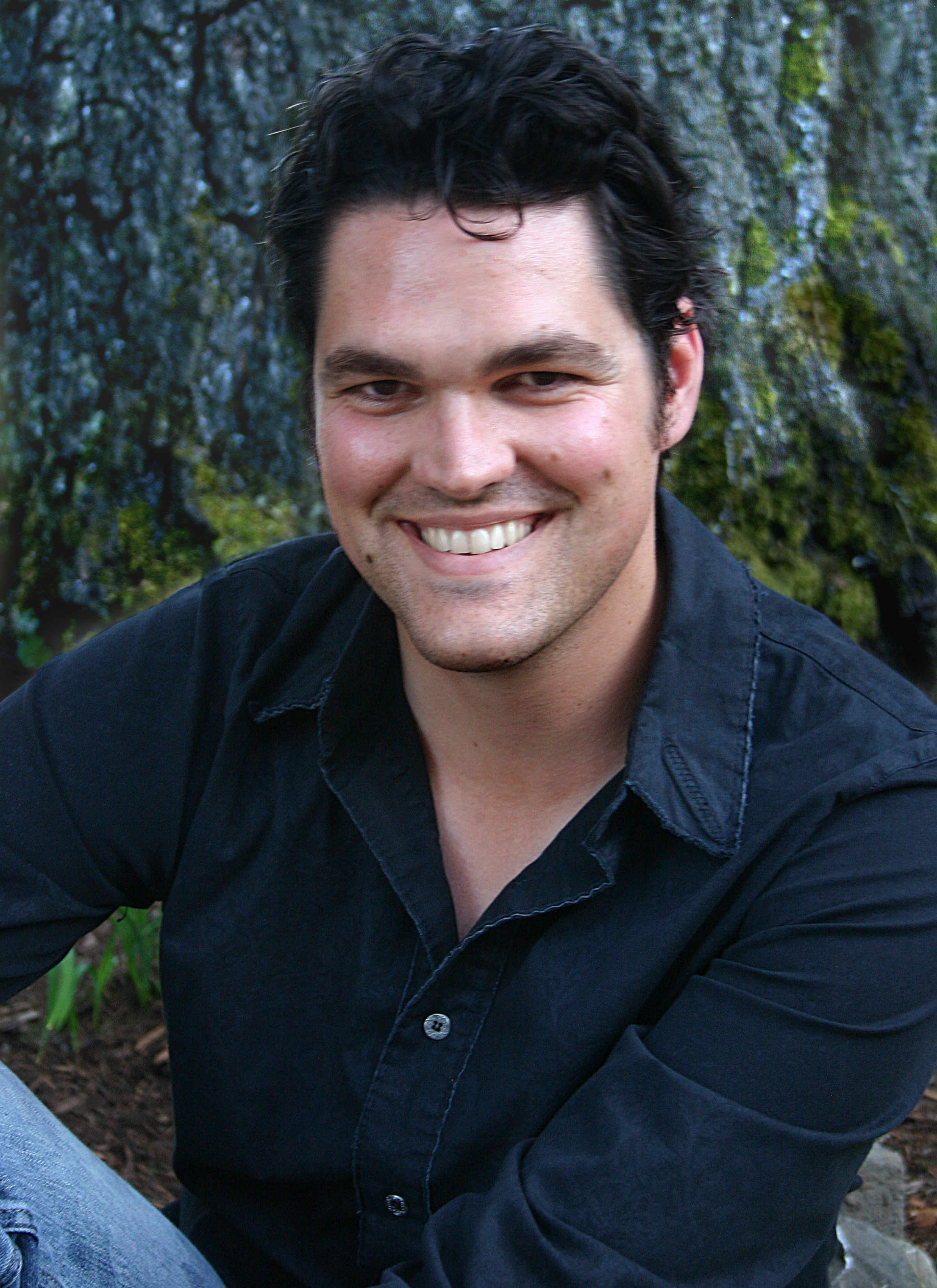
Jonathan Case, Creator of Dear Creature

Jonathan Case, Creator of Dear Creature

Jonathan Case writes and draws books in Portland, Oregon, as a member of Periscope Studio, the largest cooperative of comics creators in America. His work is featured in the Eisner award–winning Comic Book Tattoo, and has been lauded as some of the best show of new talent in comics. Dear Creature is his first book.
Steven Padnick, Editor at Tor/Forge Books

Steven Padnick, Editor at Tor/Forge Books

Steven Padnick edits graphic novels for Tor Books and writes for Tor.com. He has been working in book publishing for eight years. He lives in Brooklyn, NY.

CHRIS: First off, thanks for joining me! It’s great to have the both of you here to chat about Dear Creature. To start things off, Steven, I was really wondering what caught your eye about Dear Creature? How did it show up on your radar screen?

STEVEN: This is going to the most boring story in the world, actually. Jonathan’s very good agent sent it to me. I contacted Jonathan’s studio – Persicope – asking “Hey, is there anyone there with a graphic novel proposal?” and then a day later I got a call from Judy Hansen saying “I’m sending it over!” and it was done. Which is unusual for a graphic novel, since they are usually sold to editors at the pitch stage, and then someone spends a year of their life drawing it. But Jonathan had already done that. So I got a pretty much complete graphic novel. That catches your eye.

CHRIS: So you got both the script, and all of the art as well?

STEVEN: No, this was a one-man show. Everything was already done: there wasn’t a script, just the book, pretty much as you see it. And I read it, and it’s fantastic. Most of the book was done by the time I got to it, so if you want to know what caught my eye about the book the answer is…the book. It’s a fantastic story. I finished it off pretty quickly. Obviously beautiful. I was getting a lot of pitches at the time, and so many of them sounded the same – derivative. This was like nothing else. At all times the story took turns that were both totally naturally for the story, but surprised me. Which is the best situation. Usually we get great art. Or we get a great story. This was both, by someone I had never heard of. At all. Someone no one had heard of.

Every review has said the same thing: this book is fantastic and I cannot describe it to you. I found myself staring at this book that was perfect – as a book. As a selling item, by a new writer, doing a new concept, with a new character, with a really hard to describe plot, the thought was “Well, this is perfect. But it’s hard to sell. But it’s perfect.” In the end, the perfection argument won out, and made me get this book. Now.

CHRIS: So that difficulty in describing it, how has that translated into the publicity and promotional efforts to get the word out about Dear Creature?

STEVEN: There’s no magic thing we can do. We do what we do with any prose book that’s new: We send it to reviewers, we believe in our product, and we do our best. Except for our personal pleas to close friends to pre-order the book, there’s not much more we can do other than what we do for every book. I wish there was some secret like “Oh, we slip a twenty to the reviewer at Amazon” but no, we just do what we always do. Galleys help. That’s the most important thing. Getting people to review it, and hoping that great reviews and word of mouth sell the book.

JONATHAN: And I’ll chime in here, too. I think Tor has done a good job of giving me as a creator opportunities to reach out to a growing fan base with either guest spots on other blogs or interviews like this one. Bookstore signings, that kind of thing. And granted, they probably do that for their other authors in addition to sending books and galleys as well, but in comics, you don’t always find that support. So for me as a comics author, it’s gratifying to have that. I have been getting more exposure and more great reviews than I would have if I’d gone with a lot of the other options that were available to me when I was shopping the book around. It’s worked out well.

STEVEN: Thanks!

CHRIS: That actually raises another question. In sequential art today, creators have so many options for how to commercialize their work – whether crowd-funded indie books, serialized comics, webcomics, etc. What sort of drove you to do this as a graphic novel as opposed to packaging the story in some other format?

JONATHAN: Well, that’s a big question for me. I always wanted to do the sort of work that would take advantage of what I saw as my various strengths. I didn’t know that any one strength that I possessed as a creative person would have really allowed me to succeed. I’ve been drawing since I was two years old. I’ve just gone through reams of paper, and I love telling stories, I love acting and the performing arts. Comics is a way of doing all of those things. If you talk to anybody in my studio that not only draws books for clients but has their own creative thing flowing – whether it’s their own original graphic novels or short stories or whatever it is – almost all of them have an interest in acting. Or a background in acting. It’s really kind of surprising. Around college I graduated with a degree in performing arts, and I was thinking I was going to go to NY or LA. Then at a certain point my life just took a different turn. And I realized I really wanted to tell the stories that I wanted to tell now, and comics is a way for me to do that in a way that I might not ever have had the chance to if I had gone and tried to be an actor or a screenwriter or something. And comics is also just a great group of people. There’s a great community here in Portland that I really connect with on a personal level. Kind of a family business, it feels like.

CHRIS: So with that kind of background in drama, I have to imagine that informed the “crustacean chorus” in Dear Creature to some extent?

JONATHAN: Oh yeah. The whole thing really. The fact that I have a monster that speaks in iambic pentameter, really all of it. My dad started taking us to see Shakespeare plays when I was probably four years old. I couldn’t really appreciate it at the time, but I was steeped in it from an early age. But I also knew how overwrought it could be – how tiresome it could be if it wasn’t done well. And that was the main reason why I put the crabs in there. You don’t want just a bunch of flowery verse with no release valve. I needed to be able to poke fun at myself sometimes. The heart of the book for me is this character that has the sense of something divine. Shakespeare is like Grue’s Bible. It’s his code for living. Its archaic and anachronistic and kind of weird to his peers – like these little crabs that are saying “What are you doing with your life?” But I think anybody with a sense of the divine butts up against that. So that’s how I wanted to connect with this monster story. These grand themes, these personal themes, and the B-movie stuff. That kind of mash-up was interesting to me.

CHRIS: In the press release I saw for Dear Creature, it mentioned the story being somewhat inspired by experiences off the coast of Mexico. Did you run into a teen-eating atomic sea monster out there?

JONATHAN: Well, they have the diablo rojo out there – not the giant giant squid, but the mini-giant squid. That’s kind of monstery. But yeah, I spent some time in Mexico with my parents. They retired early. My dad had the dream of getting to the South Pacific and to New Zealand on a sailboat. And so he bought a sailboat. We never got to the South Pacific, but we did toodle around the Sea of Cortez in a Steinbeck style and met a bunch of different people from all walks of life. This was probably when I was twelve to sixteen. Pretty formative years. And that experience fed into the book, not only in terms of some of the isolation themes. I was the only kid in a vast sea of expats – you know, middle-aged people. But it was also an experience broadening my horizons. All these different people from all these walks of life and dialects. It was a very inspiring time, after I got over the frustration of being the only kid on the block or on that corner of the dock for a few years. The cabin that the leading lady in Dear Creature is holed up in is modeled after the cabin that I would hole up in myself, where I spent hours drawing and dreaming and figuring out a way to escape from paradise.

CHRIS: Speaking of Giuletta, she is obviously not your proto-typical love interest. What drove you to create such an interesting and atypical character?

JONATHAN: I knew it was going to be a hard-sell to do a romance with an Elizabethean-minded monster in a modern world. There’s going to be a quirky person at the end of that rainbow. So I was interested in the idea of matching him up with someone who had probably never had a great love in their life, they were probably a little set in their ways, or a little bit crazy. Just a good match for the insanity of this sea monster marching around with all of his idealism. And early on I had this vision of how I would do my take on the balcony scene from Romeo and Juliet. If I had this sea monster sitting in a tree outside of a Spanish mission’s window talking to an older woman and making a love of words to her. That was a powerful image that I wanted to get to. So that was the target, I guess. And I worked on the book to get to the point where that scene would make any sense at all.

CHRIS: That raises a question about process. And this goes for the both of you, actually. What were your processes in working on this book at various stages in its lifecycle?

JONATHAN: For me it started out as a play. I wrote a thirty minute play as a senior project in college. It was all in iambic pentameter, and it was about this monster who falls in love with a girl. And the girl reciprocates, instead of being taken aback in horror. That was the genesis of it for me. From there when I decided I wanted to do a comic, I really was coming at it from the standpoint that I wanted the script to be really solid before I started in on something that was probably going to be a multi-year process. I spent about a year off and on – part-time – working on the script, sending different revisions to a friend of mine in LA. His name is Alex Kamer, and he’s a guy who I enjoyed working with in the past on different projects. So before I had Steven, he was providing me with editorial feedback on a really consistent basis. And that was hugely helpful. I was also showing it around to different in Portland when I was just getting plugged into the comics scene. All this helped me refine and figure out what was working, wasn’t working, what I was passionate enough about to stick to my guns on, and then what things I could reconsider. I definitely didn’t work in a vacuum and that was important. By the time I got to actually drawing the thing, I had it all laid out, rehashed, and combed over pretty well. So I felt confident that it was something I could dedicate that time to. Comics just take a lot of time to execute, so that was sort of my process.

CHRIS: So that ultimately led to you having a finished, completed graphic novel for Steven. So what happened when you handed that off to him at Tor? What was that editorial process like from there on in?

STEVEN: Mostly I fixed typos. And I think we had one art change. Also there was a character who I thought might have been killed, who we clarified was not killed. Those were the notes.

CHRIS: So a fairly light editorial process then?

STEVEN: Yeah. Other than acquisitions, which itself is an important part, this was not my finest hour as an editor. It was more of an hour as an editor. Easy fixes, like “A period needs to go here” or “I think this character teleported, you need to fix that.” That was about it. Everything else was done.

CHRIS: I imagine that is different from the graphic novels and prose novels you might have worked on previously.

STEVEN: So far, all the graphic novels have gone through very different styles. Dear Creature was actually fairly close to the way first-time prose novels are sold because most first-time prose novels are completed by the time an editor looks at them. They should be pretty close to good enough to print for us to risk the money on them. So it’s very different from the way I’ve done other graphic novels, but it is very similar to the other prose novels I’ve worked on.

CHRIS: I also have a bit of a question for you, Jonathan, on some of the differences in your experience working on Dear Creature – which is entirely your project – and Green River Killer where you were collaborating. How did those two experiences compare for you?

JONATHAN: They were very different. In the case of Green River Killer, I was getting scripts in chunks. Jeff [Jensen] was working on it and he had a solid direction that he was headed in. He had a detailed outline he’d sent me, so in general I knew the story but I didn’t know the details of how it was all going to fall down. In a sense, I just had to learn to trust him as a storyteller. And trust my editor at Dark Horse that we were actually going to be able to land the plane because I was drawing twenty or thirty pages at a time, and then I would get more script in another week or two, and then do another twenty or thirty pages. And we’re talking final art, not layouts as I did with Dear Creature. With Dear Creature I laid the whole thing out before doing final art, but with Green River Killer it was kind of shooting from the hip. I would get scripts, I would thumbnail it out quickly, go through a lot of reference that was already provided to me by Dark Horse and Jeff. And supplement as needed and then start final art. I cranked through at a pretty good clip. I’m still happy with the work, but it was a completely different process. The freedom of that was really exciting: to be able to work on something where I hadn’t had to divorce myself from all of the preciousness that you get into when they’re your own characters and your own plot points. I didn’t have to kill any of my darlings because it was all laid out for me. So we got it done at a pretty efficient pace and I’m really pleased with the way the book turned out. They did land that plane, and I’m indebted to Dark Horse for releasing a book at about the same time as Dear Creature. That has really paved the way for me as an author, as another comics creator. The two books have really been cross-pollinating a little bit so that’s definitely good.

STEVEN: Yeah, that struck me as the funniest thing about the difference between the traditional prose publishing industry and the comic book publishing industry. We had a finished book of Dear Creature over a year ago, and then we went through the process of selling it to the bookstores, and getting publicity, and doing all this stuff for it. And in the time between when we had the gotten the finished book and published it, Jonathan drew an entire book that Dark Horse published before Dear Creature came out. The traditional prose publishing industry has ridiculously long lead times before books go on sale, and the comic book publishers have none. As soon as they’re done with the book, it is out the door and on the stands. And maybe somewhere between the two is the right answer to how long it should take for a book to come out. But we definitely had both extremes with Green River Killer and Dear Creature.

JONATHAN: It was very surreal.

CHRIS: What’s your perspective on the current environment of the comic book industry. It’s clearly an industry heavily in flux, with graphic novels, webcomics, and digital all changing the playing field. What’s your perspective on that industry today?

JONATHAN: Steven?

STEVEN: There are more people making better work today than there ever has been in the comic book industry. If we don’t limit ourselves to one particular format of comics, whether we’re talking about graphic novels or single issues or webcomics or manga. If you look at all of that, you see an industry at a creative height or maybe heading up a further creative slope. As for the industry as a money-making venture, I don’t know. DC had an amazing month with their re-launch of their individual titles. At the same time, Habibi and Hark! A Vagrant are bestsellers in the bookstores and there are new webcomics popping up every day. Which of these paths comics are going to take in the future? I don’t know. I don’t even have an iPad. Yet. But clearly that’s another route for comics to take, too. So flux is scary, but I believe in the talent that exists today and I think the comics industry is going really big places. Soon.

CHRIS: Jonathan, what’s your perspective from the creator’s side?

JONATHAN: It’s an exciting time, though scary in a lot of ways. I’m glad to see a lot more graphic novels getting produced with the amount of care that I think they should have. I think a lot of publishers are looking at them more and more as complete packages. And I guess I’m speaking of graphic novels in particular, not comics as a whole. But as we move towards this digital distribution model that we’re still trying to figure out, it makes sense to me that when you put something into print you really want an artifact. You want something that has a nice weight, a nice feel, and looks good on a coffee table. And that hasn’t always been the first priority with published comics. In both the case of Dear Creature and Green River Killer, they’re both really good looking books. People want that. People want a counterpoint to the lack of physical object that digital distribution presents. So I think that’s a good model. That’s my ideal model as we move forward. I don’t know if that will stand the test of time, but I’m glad to see that these art heavy books get an artistic presentation, and are marketed that way.

CHRIS: That raises another question about the artistic style you utilized for Dear Creature. It’s certainly very distinctive, especially when compared against what many people think of as the superhero default of the comics medium. What drove you to work in that particular style?

JONATHAN: I didn’t grow up reading a whole lot of comics. So I guess I’m not beholden to some of the same tropes that a lot of people are used to. I was sort of reinventing the wheel, maybe a little bit more than I even needed to when I was starting out with Dear Creature, but I knew that I wanted to emulate the style that people operated in during the ’50s and ’60s – the era when the book is set. So I worked oversized to have that grounding. I worked at 14×20 or 21 inches or some crazy thing. So the originals are huge. And a lot of people ask if I worked that big to get more detail, but the answer is not really. I worked that big because I wanted to emulate people like Alex Raymond and some of those classic comic creators. My hand likes drawing at that size, and I think that when you reduce it down or just when you present it next to other comics – you can’t necessarily put your finger on it, but you can tell that there’s a little something different going on. And I also wanted to get rid of cross-hatching. I made the aesthetic choice that I was just going to use stark black and white, and there are reasons for that which are probably boring for anybody but the artsy types. But it worked out for me. I like how the book looks, and even if there are some panels where it was more challenging to work in that mode, I think there is a readability to it. Your brain registers things quickly when you see an image that is well-composed with just black and white. And the emotional immediacy of it appeals to me.

CHRIS: Did you feel that by going with this aesthetic style you were giving anything up? Were there any trade-offs you were concerned about?

JONATHAN: Maybe a little bit. But when you give yourself a creative limitation like that, it tends to help your focus. So problems that I would have had five solutions to, suddenly I only had one or two. So when you’re working on a project of this size, sometimes that is helpful just for efficiency’s sake. You can always find a solution, no matter what mode you’re working in. It’s just a matter of having to think about it a little more on the front-end, which is something that I think is good for comics. When you think about something on the front-end as opposed to when you’re drawing it, it helps with your storytelling.

CHRIS: Now to wrap things up, a couple of questions à propos of nothing. First up, what are some of the stories you guys absolutely love? What are the stories that you wish that you’d had the chance to work on themselves? New, old, whatever.

STEVEN: Are we limiting this to graphic novels?

CHRIS: Oh no! Any stories whatsoever.

STEVEN: I wish I had written Casablanca.

CHRIS: Ok…

STEVEN: Just flat out that is one of the best scripts. Ever. I wish that I’d written it.

CHRIS: Any others? Or Jonathan, any thoughts on your end?

JONATHAN: I like how Steven is editorially concise.

STEVEN: I have go-to answers.

JONATHAN: I love Larry McMurtry’s Lonesome Dove. I love the characters in that book.

STEVEN: That’s a good one too.

JONATHAN: Yeah, it’s one of those stories where its reach almost exceeds its grasp. But you love it anyway. That’s definitely one of my favorites. Moby Dick, because that’s another weird book that works. I like weird things that work.

CHRIS: So what have you guys got on your nightstand now? Or on the top of your to-read stack?

STEVEN: This is going to sound like its self-promotion, but I actually read a lot of Tor books these days. I’m reading Ganymede, which is the third novel in Cherie Priest’s steampunk series – the Clockwork Century. The first one is Boneshaker, and the second is Dreadnought. They take place in an alternate history wild west where instead of lasting five years, the Civil War has now lasted twenty and shows no sign of stopping. And also there are airships, and also a disaster that destroyed Seattle and released a zombie plague on the US. They are fantastic, fun, rip-snorting adventures. The book came out a month ago, and it’s great.

JONATHAN: My wife makes fun of me for always having this copy of Don Quixote that I’ve never finished, the new translation. But I’ve been working on it, reading a little bit of it at a time pretty much ever since I’ve known her. And I’ve got this other book on grant-writing for artists that I’m reading through. Nothing too terribly exciting.

CHRIS: It’s actually funny that you should mention Don Quixote. Reading Dear Creature, I thought I was picking up a lot of quixotic elements in that story. As you’ve been working your way through Don Quixote, did you feel that filtering through into your work on Dear Creature?

JONATHAN: I was familiar with Don Quixote, but I hadn’t actually read the book when I started Dear Creature. But yeah, we have similar heroes doing similarly crazy things. They have their own ideas about what’s important and it doesn’t necessarily make sense to a lot of the world around them. So yeah, I can definitely see that connection.

CHRIS: Alright, so now what’s likely our final question: what’s some of the fun stuff you guys are working on now? What can we all look forward to seeing from you guys in the near future?

JONATHAN: Well, for my part, as we’re doing this interview I’m actually working on a page for Dark Horse Comics. I’m doing three different projects for them that are all starting up this month, which is kind of wild. Two of them are shorter pieces, and one is a longer piece that I’m doing with John Arcudi writing. So those will be some of my freelance projects. And I’ve got another book in the works that is another personal project, and doesn’t have a publisher attached to it. Nudging Steven in the ribs over the airwaves there. It’s kind of an adventure, getting back to things that I loved and appreciated when I was a little kid, a book geared to all ages, all audiences. So I’m excited about that. The stuff for Dark Horse, one is called House of Night and my little bit of it is Anthony and Cleopatra as vampires. The project with John Arcudi is called The Creep, which is a character he developed for Dark Horse Presents a few years back. Those are some of the things I’m working on.

CHRIS: How about you Steven? What’s got you particularly excited?

STEVEN: Out in stores right now, actually, are a couple of projects that I worked on. One is a graphic novel – written by Orson Scott Card and his daughter Emily Janice Card – called Laddertop which is a great all-ages sci-fi adventure. That’s out now – actually came out a month ago. Upcoming we’re collecting the webcomic Girl Genius in a very nice hardcover collection. It’s gorgeous, it’s going to be fantastic. After that there’s a graphic novel which I’ve had a lot more influence on called The Advance Team, which is written by Will Pfeifer who wrote Aquaman and Catwoman and is drawn by a Spanish artist named Germán Torres who drew Dr. Who and Speed Racer. The one sentence pitch is a young man discovers that his pop culture icons are in fact the advance team of an alien invasion and only he can stop them before the invasion happens, except while he knows that’s true, everyone else sees this young man going around murdering famous people.

CHRIS: Sounds fun!

STEVEN: He kind of has to somehow do this, and convince people he’s not crazy. It’s a lot of fun, total crazy action. Will has been plugging it pretty much once a week on his blog so you can already see some of the preview pages up. We got Tom Orzechowski to letter it, and the whole book looks fantastic.

CHRIS: Well, that’s pretty much it. It’s been great chatting with you, and thanks again for taking the time!

STEVEN: Thanks!

JONATHAN: Thanks, it’s been fun!

CHRIS: And as a final way of saying thank you, here’s the book trailer for Jonathan’s Dear Creature:

REVIEW: Lightbringer by K.D. McEntire


Title: Lightbringer
Author: K.D. McEntire
Pub Date: November 15th, 2011
Chris’ Rating (5 possible): 1 point 1 point 1 point
An Attempt at Categorization If You Like… / You Might Like…
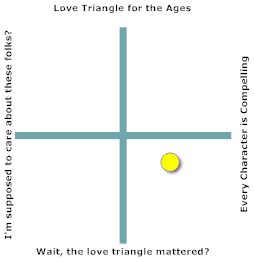
Reasonably compelling characters, but the love triangle was wasted on me.

What is it with contemporary YA novels and love triangles? Maybe I wasn’t quite the lady’s man I thought I was in high school (I’m sure my ex-girlfriends and my wife are all laughing right now), but it seems like everywhere I turn in YA today, I come across a heroine torn between between two opposed romances. Team Gale vs Team Peeta. Team Edward vs Team Jacob. Clearly, I must have missed out on a defining characteristic of the teen years since I didn’t have multiple women competing for my affections. Wendy, the heroine of K.D. McEntire’s debut YA novel Lightbringer, does not have that problem. She’s got two guys fighting over her…and one of them has been dead for a long time.

Lightbringer is an interesting YA paranormal mystery. It’s got the standard love triangle (are there YA books today that don’t?) but that’s actually the least compelling facet of the book. Two entirely different facets caught my attention about Lightbringer: McEntire’s mundane, living characters, and her take on magic and death.

The book introduces us to Wendy, a teenager facing some tough times. Her mother is in a coma, her dad has to travel all the time for work, and she’s responsible for her two younger siblings. And she sees dead people, who she is duty-bound to help move out of limbo into the Light (whatever afterlife that might imply). It’s a lot for a teenager to deal with, on top of school and boys. The plot’s primary engine is Wendy’s quest to find her mother’s not-yet-dead soul, which she believes is lost somewhere in the Never, the limbo-like afterlife that certain stranded ghosts get stuck in. If ghosts stay too long in the Never, they will gradually lose their vitality and fade into Shades. If they don’t want to fade, then there’s a straightforward solution: eat the Lost, the souls of children who haven’t yet moved on. Yeah, it’s a bit dark. And McEntire’s depictions of the Walkers (the ravenous ghost-eating zombies) are chilling. A band of teenage ghosts try to protect the children from the Walkers, though they seem to be fighting a losing battle. The Never makes for a particularly compelling setting, an interesting ghost-eat-ghost parallel world that McEntire skillfully depicts. Her descriptions have an eery, ethereal quality except where the action comes hard and fast. That juxtaposition of misty language for place-setting, and concrete viscera (literally) is a highly effective combination.

Wendy, despite her ability to see the Never and send ghosts into the Light, is entirely unaware of the Never’s social complexities. For her, ghosts are ghosts. She is convinced that by sending them into the Light, she is helping them. That they might have different opinions, or that the Never’s population represents different moral choices, she is utterly unaware. All of this changes, as her quest to find her mother’s lost soul takes her deeper and more aggressively into the Never. There, she meets Piotr – one of the Riders who cares for the lost children. I don’t think I’m spoiling anything (the cover copy makes it clear) by saying that he’s one vertex of that love triangle. Of course, life and love are nothing if not complicated: he doesn’t realize that Wendy is the “Lightbringer” – a monster who destroys ghosts.

While Wendy is looking for her mother, Piotr is trying to find some of the Lost Children, who have presumably been kidnapped by the walkers. This represents a menacing divergence from the walkers’ normal behavior: typically they just eat the kids in question. But now they seem to be acting with tactics and guile, perhaps at the behest of a mysterious “White Lady”. With his experience in the Never, it is natural that Wendy should look to Piotr for help in finding her mother. As the book unfolds, their respective quests remain superficially parallel but separate. It is only through Wendy’s experiences in the living world, through her flashbacks to her relationship with her mother and her friendship with Eddie (Piotr’s rival for her affections) that the reader develops a sense of linkage between the two quests.

Much as I loved McEntire’s depiction of the Never, it was the living characters who carried the story. I wouldn’t expect a teenager who can see dead people and who is essentially duty-bound to kill them to be "normal". And she isn’t: she has issues, and how she responds to her family situation is heartrendingly believable. A grown-up might look at how she is described and shrug it off by saying that Wendy is “acting out”, but her actions are realistic, deftly handled, and most importantly – McEntire skillfully avoids any sense of authorial condescension. Wendy is engaging, and her voice rings true. Her friendship with Eddie, and their complex and shifting relationship both resonated for me in a way that the Wendy/Piotr hookup didn’t.

As a character, Piotr is quite frankly bland. His heart is in the right place, which I suppose counts for a lot, but for most of the book he felt like a placeholder character. All of the ghosts – Piotr included – are one-note characters who were removed from different time periods (one’s a Native American, one’s a flapper, we have no idea what time period Piotr’s from, etc.). Their speech patterns are peppered with dialog idiosyncrasies, which helps to make them distinct, but it does little to really flesh them out as characters. If the ghosts’ flat natures were by design, then this is some clever storytelling on McEntire’s part. It would be an interesting statement about the depth of characters who hang on, rather than move on with their after-lives. But I’m not certain that was the point McEntire was going for: the Wendy/Piotr romance undermines that point.

Wendy’s relationships with the living people in her life are much more fully realized. The scenes involving her younger siblings, who are both wrapped up in their own problems, are incredibly touching. I wanted to see more of those relationships, and to get a better understanding of how Wendy’s family dynamic worked. I really enjoyed the way Wendy’s relationship with her mother is gradually uncovered as the book progresses. The flashbacks that show Wendy learning how to use her gift, and the past/present family dynamics are all presented very well. McEntire does a good job of leaving vital truths unstated: they might get intimated, but it is up to us to make the connection. If we do, then the eventual reveal becomes that much more satisfying.

Bravely, McEntire does not skirt the moral implications of Wendy’s actions. And by the end, the book avoids offering a prescriptive solution to her quandries. Which worked well for me: the dénoument does not tie off the story with a neat little bow. Whatever conclusions she will draw from her harrowing experiences will be unpacked over the course of years (likely years in therapy). There is nothing easy about that, neither in real life, nor in well-drawn fictional characters. And that sense comes through.

The weakest aspect of the book for me was the whole love triangle aspect of it. I admit, I’m inclined to believe that love triangles in YA fiction (in particular in YA paranormal fiction) are ubiquitous to the point of being overdone. But in this case, I don’t believe that the love triangle actually added much to the story. In fact, I felt that Wendy’s relationship with Piotr detracted from the relationships with her family and (living) friends. Perhaps I would feel differently about this if the love triangle had some sort of resolution. But instead of resolving it in some fashion, it ends with a plot hole that I was simply unable to leap across. Hopefully, that plot hole will get plugged/clarified in a sequel, but the lack of resolution in this one book weakened the experience for me quite significantly. If it weren’t for the fact that the love triangle fell apart without resolving, I would happily have given this book four stars on the basis of McEntire’s creative world-building, deft writing, and excellent characterization. It has all of those elements, but the love triangle just really didn’t work for me.

Overall, I think Lightbringer is solid YA paranormal romance/mystery. As this is publisher Pyr Books’ first foray into the YA market, I think it’s a fine title to start with. Artistically, their experiment is a reasonable success (though not a category-sweeper). Despite its one significant weakness, I enjoyed Lightbringer. While I might not recommend it for everyone, I think that folks who enjoy the YA paranormal romance category will find a lot to enjoy in this book. I’m looking forward to more books from K.D. McEntire (whether in the same world or not), and I’m curious to see how Pyr will develop their YA list in the future.

Leaping the Chasm of Imagination: Verisimilitude, Historical Fiction, and Speculative Fiction


The borders of genre are famously porous. Devices that start in one genre will get adopted, subsumed, and then modified in another. Then the cycle starts again, with the “new” device trickling back to its original progenitor. This tendency is why asking whether realistic or speculative fiction developed first is meaningless: anthropologists and fans can probably debate this ’til the heat death of the universe, and even then the answer won’t matter. But I’m curious as to how and why certain narrative techniques make this leap and others don’t.

Verisimilitude is the Heart of Storytelling

Every single genre – regardless of how speculative it is – relies on some degree of verisimilitude to enable comprehension. Sure, it’s theoretically possible to write a science fiction novel entirely in a made-up alien language with concepts for which there is no human analog…but who on this planet would actually read it? At the most basic level of language, we rely on mutually comprehensible words to communicate. This is the point where I call shenanigans on the pseudo-linguistic (read: intellectually irresponsible) school of critical theory that argues that text/words/language are inherently meaningless. If that were true, then we would not only never have fiction, we would also lose all written correspondence and spoken conversation. Community relies on communication: note their similar roots.

The sentence “John opened the door.” could appear in a hard science fiction story, an immersive secondary world fantasy, or in mimetic chick lit. Sure, we might need to replace the character’s name, and call John “Blaghosan” or something to maintain the illusion, but the act of opening a door can apply in any of these fictional modes. The richness of our lexicon and its corresponding flexibility enables us to assemble more complex, interesting, and layered sentences. But fiction (and any communication) relies on a shared ontological foundation.

At Viable Paradise (which I attended a couple of weeks ago), the amazing Teresa Nielsen Hayden said something utterly profound: “The subject verbed the object, and it was good.” The particulars might vary, but at the sentence level that basic principle underlies all communication, regardless of its realism. The fancy stuff (metaphors, similes, neologisms) that speculative fiction authors love is really a set of clothes hung on this incredibly flexible frame.

The Basic Devices of Fiction: Simile, Metaphor, and Neologism as Genre Markers

All writers use a certain basic arsenal in an infinite variety of combinations to communicate and manipulate their audiences. The most basic tools are such an indelible part of language, communication, and thought as to be near inseparable. But how we use them can actually be one of the markers of speculative fiction.

When we employ a simile (“John scuttled like an ant”) we are establishing a sense of apparency. The use of “like” indicates that John is not in actuality an ant. He merely acts with characteristics more commonly associated with one. Such a use of apparency can take place in any genre and is likely as old as language. Metaphor (“John was an ant scuttling across the floor.”) and neologism (“John the antyman scuttled”), however, are a little more complicated.

If we’re reading a work that is by definition realistic, then we recognize metaphor as a stronger way of evoking apparency. If we’re reading an F. Scott Fitzgerald novel, we know that John hasn’t actually become an arthropod. But if we’re reading something speculative than lacking other markers in the text, our hero John may have suddenly literally transmogrified into an insect (hey, it worked for Kafka, right?).

When we come across a neologism (“antyman”) we now have to decode the new word and incorporate it into our lexicon. Its semantic meaning may be unclear, and needs to be gleaned from context. In speculative fiction, that context may support fantastic concepts (antyman – the hybrid of a human and an ant) or merely extend our realistic lexicon (like Shakespeare coining terms like “assassination”).

This decoding process is part of what we love about science fiction, fantasy, and horror. Decoding where a given work’s fantastic borders are is an intellectual puzzle that gives us no small degree of satisfaction (whether escapist or otherwise). Traditionally, literal metaphor has been the plaything of speculative fiction writers. Realistic writers might have dallied in it a bit, but it is only with the relatively recent rise of magical realism and literary fiction’s “discovery” of science fictional devices that this technique has been fully appropriated. A similar process has happened over the centuries with narrative structures.

The Many Structures of the Novel

While many hardcore genre fans might disagree, I would argue that most innovative novel structures first appeared in “realistic” fiction. Whether it is the epistolary novel, the framed narrative, stream of consciousness, or non-linearity it probably appeared first in the realm of realistic mimetic fiction. There’s a good reason for that: like speculative fiction, innovative structures require effort on the part of the reader to decode and process them. To expect the reader to decode an innovative structure and process the speculative elements is likely expecting too much.

Consider the history of the epistolary novel. When it first grew to prominence in the seventeenth century (check out Aphra Behn’s Love-Letters Between a Nobleman and His Sister), we had to learn how to consume realistic epistolary novels before fantastical interpretations could flourish. As far as I know, it was not until 1818 that Mary Shelley’s Frankenstein or The Modern Prometheus successfully introduced early science fictional elements into the epistolary structure, and not until 1897 that Bram Stoker’s Dracula did the same for the nascent genre of horror. I suspect these novels owe much of their continued longevity and relevance to being early examples of speculative stories that made the imaginative leap and successfully appropriated a mimetic/realistic structure.

The pattern is quite similar for other innovative narrative structures. Could Delaney’s Dhalgren have appeared without the innovations of Kerouac? Or would Effinger’s When Gravity Fails have the same resonance without Raymond Chandler or Dashiell Hammett? As readers, we don’t need to have read the realistic taproot texts to experience and enjoy their speculative descendents. Because their structures are successful, they spawn a multiplicity of children: they become part of the cultural zeitgeist that soaks into our awareness.

This pattern actually holds even for the most basic taproot texts of literature. At the start of this post, I asked whether realistic or speculative fiction came first. And the answer is that they both appeared at the same time in the form of historical fiction. Wikipedia dates the first piece of historical fiction back to the 20th century BC. In those ancient days, there was little distinction between what today we characterize as “myth” and what they called “history”.

Even the earliest historical fiction had the same world-building challenges as speculative fiction. History is a foreign country we can never visit, and ancient Greece or Regency Britain are as foreign to our twenty-first century sensibilities as Middle-Earth or the Sagittarius Arm. The world-building techniques for the two genres are identical. Look at how Patrick O’Brian pulls us into his Napoleonic-era nautical understanding in his Aubrey and Maturin books. Then compare his methods to how Arthur C. Clarke introduces us to space-age technology in Rendezvous With Rama. The challenge is the same, and the craft to address it is the same as well.

Does the Pendulum Swing Both Ways?

With the rise of the modernists in the early twentieth century, we saw the fantastic get relegated to a pulp ghetto that we still struggle to escape. Yet even then, there were some “mainstream” authors who looked to fantastic fiction as a source of inspiration (Kingsley Amis and Shirley Jackson both come to mind). The last several decades have seen fantastical techniques gain acceptability within the realistic fiction community (provided they’re labeled “magical realism”). With post-apocalyptic texts like Cormac McCarthy’s The Road or blatantly science fictional novels like Charles Yu’s How to Live Safely in a Science Fictional Universe: A Novel being published as “mainstream literary fiction” we may be living through the pendulum’s reversal as we speak.

Which are the fantastical devices that will now hop back over that imaginative chasm? What are – and what will – contemporary “realistic” writers learn from their speculative peers? That the cycle will keep going I have no doubt, but I’m curious what lessons realistic authors are learning from those of us who like to mess about with elves and space ships and zombies. Regardless of the genre, my own predilections suggest that writers who want to innovate structurally should read widely and extensively across genres to internalize others’ innovations wherever we come across them. T.S. Eliot nailed it when he said “Mediocre writers borrow. Great writers steal.”

What should we be stealing nowadays?

Why Process, Criticism, and Theory Can Be Good for All Writers


What’s the fastest way to start an argument with…
The Professor? Advocate an analytically-driven, engineered writing process.
Chris? Advocate process-less, instinctive writing (“Just write!”)

Obviously, this is one subject on which my wife and I disagree. Sometimes quite vehemently. And this is also an argument that I’ve seen writers manifest in the perennial debate over outlining, writing synopses, or just seat-of-the-pantsing it.

Why Seat-of-the-Pants vs Outline is a False Dichotomy

That question, beloved of the interwebs, is bogus. For a story to be effective, it must be coherent on one or more levels. And coherence in narrative results from having a plan. If a story didn’t have an underlying plan, it would be stream of consciousness and word association. And while some few (*cough* James Joyce *cough*) may have pulled it off, most of us won’t. The real question is one of timing, worldview, and brain wiring.

Let’s posit two (obviously extreme) writers: Jane Outline and John Pants. Obviously, Jane likes to map out the events of her story before sitting down to pen some prose. John, by contrast, sits down and lets his characters tell the story. Both John and Jane still execute on a plan. The real difference is when each prepares that plan.

Jane, with her spreadsheets, notes, and color charts front-loads a great deal of the work. Before she writes her opening sentence, Jane knows what her characters will do at each stage of her story. She knows what motivates them, and how they will react to the situations she puts them in. For her, the act of writing is more a question of finding the words to best express actions that she has already mapped out. The events of her story will rarely surprise her, but her execution might.

John, by contrast, sits down with a character, a voice, or a sentence. He has a hook that brings him into the world of his story, but beyond that he doesn’t know much of where the story is going. After he writes that first sentence, or the first paragraph, he lets the character/voice guide him. The story that unfolds might surprise him, though he counts on his facility for language to express that story as it makes itself apparent. If John has a plan, he makes it up as he goes: he knows what will happen in the next sentence, the next paragraph, or the next scene. But he might not necessarily have an end-goal in sight. His plan is gradually uncovered in parallel to the story.

Both plans come from the heart of storytelling in our souls. Those of us wired like Jane might consciously try to tap into that wellspring, while those like John might have to negotiate access on a moment-by-moment basis. But if we want to write at a professional level, we need to develop the capacity to touch that heart of storytelling whenever we need to. Waiting for the elusive muse, or relying on some ritual, is counterproductive and inhibiting. And that is something that the Professor and I agree on. So how can writers – regardless of whether they plan ahead of time or not – develop the capability to build stories? While at its most basic level the answer is practice (or as the Professor tells me constantly: Just write, dammit!), I think the more complete answer depends on how our brains are wired.

Creative Tools for the Analytical Writer

I’m a fairly analytical fellow by both nature and training. I see patterns and systems just about everywhere (whether they’re really there or not). When I sit down to write, I try to think of it in terms of systems and processes. This isn’t to say that I write by the numbers, but I find that I will always try to build a conceptual framework around whatever writing project I’m working on at any precise moment. Sometimes, that conceptual framework manifests itself in an outline, other times in a synopsis, and sometimes (usually when I write short fiction) it stays in my head. But the quality of those conceptual frameworks, and the tools that I can apply to them are actually the result of critical theory and extensive analytical reading.

I try to read as much critical theory as possible. And since I write primarily in the speculative genres, I also read heavily in genre theory. If your only exposure to critical theory has been Derrida (ick) or most of the other post-modernists, then I strongly suggest you take a look at some of the more formalist schools of thought: there’s a lot of value to be found there. I’ve found that useful critical theory expands my conceptual vocabulary, and gives me a way of thinking about story structure, character archetypes, and narrative techniques. Unlike how-to-write books or blogs (which can also be helpful), most good theory isn’t didactic. It’s diagnostic: it describes what the investigator sees in the field, rather than what a practitioner should do.

Why is this helpful? It explains what other authors, schools of writing, or genres have done. If I’m writing a fairy tale, I find that I keep Vladimir Propp’s Morphology of the Folktale close to hand. Not because I slavishly stick to the plot constructions he describes, but because he has laid out a time-tested architecture for fairy tale storytelling. I might choose to diverge from his framework, but if I do so, I do so consciously: I know where I’m diverging and why. When I write fantasy, I keep in mind Farah Mendlesohn’s categories of fantasy (from her excellent Rhetorics of Fantasy). Doing so does not limit my writing, but it expands my awareness of where my story might go.

Analytical reading is a way of consciously constructing my own conceptual vocabulary. When I read a story, in particular when I’m reading something for review consideration, I’m always asking myself what techniques the author used to manipulate the reader’s perception. I examine their effectiveness, and the reasons driving it. In essence, I’m creating my own internal critical theory that then informs my writing and affects how stories get constructed in the deeper recesses of my brain. A big part of this blog is actually my attempt to further systematize this nebulous personal critical theory and deepen my conscious awareness of it through its articulation.

“Theory is Boring, Didactic, and Risky,” says the Instinctive Writer

Our theoretical John Pants (and The Professor, and a who’s who list of amazing writers) would probably disagree with everything I just said above. They would say that theory can be inhibiting, leading us to write by the numbers. And yes, this is a real risk. Just consider all of the dross produced on the back of the Campbellian monomyth. Instead, they would probably suggest that people should just read extensively and analytically, and write, write, write.

And that is absolutely true. But extensive reading (whether consciously analytical or not) has the same ultimate effect as reading theory. Have you ever found yourself reading extensively in a particular time period, or genre, and discovered that you’ve picked up habits (sentence construction, pacing, plot) from your reading? Even if we don’t consciously dissect our reading material, the act of reading still builds our internal critical theory. Consciously, analytically, or through osmosis, the act of reading assembles our conceptual vocabulary whether we want it to or not. Whether we can ever consciously articulate that theory or not doesn’t matter: it’s still somewhere in our brains. And it percolates there, and then leaks out to flavor our writing. And the more extensive our internal critical theory, the wider assortment of narrative tools we have in our writing workshop.

I admit, I’m not one of these instinctive writers. But I suspect the biggest challenge for such writers is to work through the moments in their writing when their limited conscious plan peters out. “Where do I take the story from here?” is a question I suspect many struggle with at some point. Which is why they say Broadway is paved with excellent first acts. The exhortation that writers force themselves to write, come hell or high water, is designed to train us to smoothly access our conceptual vocabulary – whether we’re conscious of the process or not. And the wider our reading, the broader and deeper that conceptual vocabulary becomes. This then lets us avoid such dead-ends, or to more easily identify them so we can backtrack to fix them.

Process vs Ritual: The First is Good, the Second is Bad

We writerly types are fairly idiosyncratic. Like athletes, we all have our little habits that put us in the zone. Whether it’s a particular chair we love to write in, or a particular time of day to write at, or a particular process that we go through before setting fingers to keyboard, we’ve all got our little rituals. And rituals are bad. They’re crutches that over the space of a career are just not sustainable. Because life generally is not conducive to ritualized work processes. Sooner or later, our favorite chairs break, mugs get lost, schedules get all mixed up. Life just gets in the way. And if we’re beholden to our rituals, then our writing will suffer.

Imagine if John Pants lands a three book deal, with a national book tour (okay, I realize this isn’t likely in the modern world – but for illustrative purposes only, bear with me). He’ll be on the road for eight weeks plugging the first book in his trilogy, meanwhile his deadline for book number two is rapidly approaching (if it hasn’t already passed). If he’s addicted to his favorite writing chair, or to his cat lounging on his feet, he’s going to have a lot of trouble finishing book two while on tour.

I find that I struggle with a variety of rituals in my writing. For example: when I sit down to write a short story, I like to write a complete draft in one sitting. Silly, but it’s just a little ritual or idiosyncrasy that I’ve got. Or if I’m working on a long form work, I like to write a complete scene, or a complete chapter. As far as rituals go, this isn’t that bad (the upside is I usually finish the stuff I start). But it still means there will be times when I decide not to write because I know I won’t have time to get far beyond a single sentence or paragraph. If I don’t have an hour or two to focus, I might just wait for later. And that’s an inhibiting habit that I’m working on breaking. It’d be nice to be able to write effectively at any time of day, whether I’ve got five minutes or an hour to do so. With the Professor’s exhortations (and mockery) I’m working through this, but it’s something that takes – and will continue to take – work.

But there is a difference between ritual and process. Process is an outgrowth of how our brains are wired, and so if we need to write an outline to tell a story, then I say go for it! But we cannot let ourselves become slaves to that process. An outline is one process that is particularly suited to those of us with an analytical mindset. There are others (synopses, notes, mind-maps, and yes – even just winging it, etc.). If we say we absolutely need an outline to write, and then we get stuck in the outlining phase, that might mean our process has broken down for a particular project.

If our process has become a ritual, we might get stuck. But if we have the flexibility to switch to a different process, the odds of bogging down fall dramatically. The last three long works I’ve drafted (one fantasy novel, one graphic novel script, and one alternate history novel) all used a different process. The first had a detailed outline before I ever started writing it. The second had a loose synopsis. And I winged the third until I got about halfway through it, then built a detailed scene-by-scene outline from there. Much as I like process, it can be a crutch. And here my wife’s aversion to analytical writing is dead on: At some point, crutches always break. Which is why having the widest possible assortment of processes in our writing toolkit makes good analytical sense. It is always good to push our own boundaries as writers, to play and experiment with different tools, techniques, and methods.

So what processes work for you in your writing? What techniques would you recommend? What techniques have you tried that didn’t work for you?

Why do we love science fiction, fantasy, or horror?


Over on the Absolute Write Forums, GreenEpic posted a fairly thought provoking question:

Does anyone have a theory as to why science fiction and fantasy are so popular?

While the thread there has a bunch of really good answers, most of them tend towards the anecdotal. And as this is the Internet, and I have a generalized opinion, I figured I’d share it for public consumption. Here’s what I think:

Science fiction, fantasy, and horror are all marketing categories. They loosely describe a set of fictional conventions that can be expected within a given work. Does a story have robots? Odds are it is science fiction. Does it have magic? Most likely fantasy. Does it have undead monsters out to eat your flesh? I’d guess horror. Of course, this is a gross over-simplification. As a lot of my earlier posts on genre observations suggest, the reality is a heck of a lot more complicated. But your typical reader or movie-goer isn’t terribly concerned with the minutiae of genre theory (which I think is unfortunate, but I’m both nerdy and pedantic). Why do so many respond – in one fashion or another – to speculative storytelling?

Psychological, Physiological, and Neurological Levels of Storytelling

Rational, Emotional, Physiological, and Neurological Responses to Storytelling

Levels of Response to Story

Experiencing a story affects us on both psychological and physiological levels. Have you read stories that put you on the edge of your seat? They tugged on your subconscious emotions to increase tension. That sensation of your palms sweating or your heart beating faster? The story, and the tension it engendered, elicited a physiological response. Or have you ever fallen into a story so lovely that the world around you and the passage of time faded into mere background noise? The story produced a neurological trance-state, not unlike meditation or hypnosis. Have you ever read a book and realized you might be wrong about something? The story’s rhetoric affected your rational thoughts and values.

There’s a connection between our brains and our bodies that good storytelling can powerfully manipulate. It is simultaneously a positive and negative feedback system, where if a story affects one aspect of our beings it has ripple effects that impinge on every other aspect. When a creator manipulates this system skillfully, the effect is transparent and immensely powerful. And here’s why this is important: a story’s marketing category has no bearing on the audience’s response.

That’s right. Whether we’re reading mainstream literary fiction, watching Blade Runner, or flipping through a comic book, our brains and bodies will still respond to the underlying story. When we participate in ludic reading (reading for pleasure), we are looking for a certain configuration of those four responses. Of course, we can’t possibly articulate what that configuration might be (I can’t imagine anyone looking for a story that produces a 40% emotional, 30% physiological, 20% neurological, and 10% rational responses). And the components of those configurations are likely to have fairly fuzzy borders, because they are greatly affected by our state of mind/body at the time of the experience. But when we experience a satisfying story, when a story has elicited a satisfactory configuration of responses, we know it. We say “That was a good story” or “That was fun” without trying to really take it apart and understand why. And a story’s marketing category does not affect how it manipulates our responses. Instead, it describes the conventions appropriate to correctly interpreting its plot.

Basic Modes of Storytelling

Put away your Northrup Frye. I’m talking about something much more essential than mimesis or myth. If we just focus on a story’s plot and how that plot is constructed, we find several different modes of storytelling. Each of these modes relies on a certain configuration of those responses I mentioned above.

For example, an adventure story is going to produce a certain kind of physiological response. Our heart rate might increase, our breath might grow short, we might be eagerly looking to see how the hero will get out of a particular jam. But a mimetic (for the sake of simplicity, let’s call it a representative or slice-of-life) story is unlikely to produce that kind of response. Instead, it is more likely to be quieter, slower.

Basic Modes of Storytelling, with Realistic & Fantastical Examples

Basic Modes of Storytelling, with Realistic & Fantastical Examples

These responses have nothing whatsoever to do with whether a story has fantastical elements or not. Consider two adventures: Alexandre Dumas’ The Three Musketeers and Steven Brust’s The Phoenix Guards. They make for an interesting comparison, in that the latter is explicitly modeled on the former. But while Dumas’ most famous work has no fantastical elements to speak of, Brust’s novel is replete with them. Yet both stories produce similar responses in the reader, particularly if we are familiar with both works.

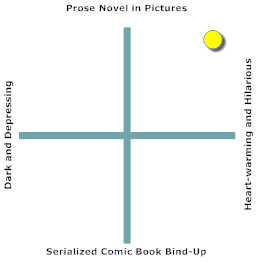
So if a story’s fantastical elements (or the lack thereof) has no bearing on the mode a story is told in, then why do some folks prefer speculative fiction over realistic fiction?

Gateway Drugs, Sense-of-Wonder, and the Multitudinous Genre

I believe that fantastical storytelling has an inherent advantage over realistic storytelling. There are no boundaries on what we can do with it. If a concretized metaphor (*cough* the one ring *cough*) adds value to our story, then why not run with it? Just because it isn’t realistic does not mean such images or metaphors are valueless.

Realistic storytelling is actually a subset of fantastical storytelling: by design, it chooses to limit its images and narrative devices to those which can be found in real life. If we love good storytelling, then it’s perfectly natural that we would love the speculative genres. Like Whitman, they contain multitudes. Every single realistic story, from Shakespeare to Joyce, can be presented using fantastical imagery. That a particular execution of a story remains realistic is merely the consequence of an authorial decision as to its ideal presentation.

Yet despite the fact that good stories do not need fantastical devices to remain good stories, plenty of folks out there read exclusively in the fantastic genres. Why? If they can find equally enjoyable stories among the “realistic” shelves, why stick with SF/F/H? I suspect it is because of a positive feedback loop imprinted on our brains early on. When we first consciously encounter storytelling, we look for patterns. It’s a consequence of our highly-developed simian brains. So if in those formative years, we learn that science fiction, or fantasy, or horror is statistically more likely to produce a particular configuration of responses that satisfies us, we treat it like a drug. We learn to love it, and to equate that particular marketing category with the pleasure it produces. And then sometimes, we never stray beyond that gateway.

This gate swings both ways, of course. The same holds true for many readers of realistic fiction, or for many movie-goers who never pick up a book. It’s all about the positive feedback loop that gets imprinted on our neurons at a formative age. I suspect (on the basis of absolutely zero neurological knowledge) that this imprinting can be changed as our experiences change us, but it remains a powerful driver of our experiences.

I suspect the tough-to-pin-down “sense of wonder” is actually a consequence of this gateway drug. If we are adequately self-aware, we learn to recognize (through a meta-cognitive experience), the response we are seeking. That recognition produces that scintillating sense-of-wonder fans of SF/F/H use to justify our genre habit. Speaking for myself, I can elicit that same sense-of-wonder reading outside of genre (Patrick O’Brian’s books come to mind, as do Yasunari Kawabata’s). I don’t believe wonder is genre-specific, although the experience is statistically more common among the fantastic shelves.

And this brings us to the core reason why the speculative genres are so popular: they are a marketing category that encompasses all of the basic modes of storytelling found in realistic fiction. You’ll notice there is no such marketing category as “realistic fiction”. If we want to balance “SF/F/H” we would need an equally broad “realistic fiction” category. But instead, the “realistic fiction” section is fragmented into literary fiction, thrillers, romance, mystery, historical fiction, etc. If you want to find a realistic story told in the romantic mode, well your odds are pretty small looking under literary fiction. If you want a piece of mimetic fiction that deepens your understanding of the human condition, you should probably avoid the thriller shelves.

Yet all of these storytelling modes can be found side-by-side in the science fiction, fantasy, and horror section. Fans of genre fiction need never wander outside of those shelves to find stories that satisfy their every need. And that’s why, as a marketing category, it is so popular. It contains multitudes. And those increase the odds that a story from that marketing category will produce a satisfying response. Of course, much as I love fantastical fiction, I still think folks should read outside of their beloved genres every now and again. But if they don’t, well that’s fine, too: speculative fiction’s got a lot to love.

What do you think? Why does speculative fiction push a lot of our buttons and keep our attention the way it does? Why does it produce such fervent loyalty on the part of readers and viewers?

REVIEW: Dear Creature by Jonathan Case


Title: Dear Creature
Author: Jonathan Case
Pub Date: October 11th, 2011
Chris’ Rating (5 possible): 1 point 1 point 1 point 1 point 1 point
An Attempt at Categorization If You Like… / You Might Like…
An excellent, heart-warming and hilarious novel told through sequential art.

So in my brain, I had a great blog post all planned out for today. It was going to be a nice and meaty post about different schools of writing process, and the dangerous temptation of superstitious totemic twaddle that so many of us fall prey to. But then I went through my mail from last week, and found a review copy of Jonathan Case’s debut graphic novel Dear Creature. And then my plans went the way of all those of mice and men. I cannot stress enough how excellent this book is, as a work of sequential art, as a story, and as an exercise in writing.

I didn’t even mean to start reading it: I intended to put it on my to-read shelves, and to get to it maybe sometime in the next couple of weeks. But somewhere in the twelve feet between opening the envelope on my kitchen table and putting it on a shelf in my library (probably because I “just took a peak” at the first couple of pages), Case’s story sucked me in like a whirlpool. Dear Creature is the literary, quirky, heart-warming, and deliciously pulpy love story (yeah, I know, right?) of an atomic sea mutant named Grue. Living in a sunken nuclear sub, and to the chagrin of a crustacean chorus, Grue is no longer content to devour lustful beach-going teenagers. With his eyes and heart opened by pages of Shakespeare’s plays found in soda bottles, the lonely sea monster naturally tries to seek out whoever has been sending out these messages.

It’s tempting when reviewing a graphic novel to start with the art. After all, the art is intrinsic to a graphic novel’s storytelling. But what really set Dear Creature apart for me was the writing. While many people who write sequential art are uncomfortable drawing distinctions between comic books and graphic novels, I’m afraid I’ve never agreed with Douglas Wolk’s claim that the sole difference is their binding. A true graphic novel – like Dear Creature, or Gene Luen Yang’s Level Up – is paced and constructed very differently from a bound-up collection of serialized 24 – 32 page comic books.

Most prose novels, whether we’re talking about Dickens, Calvino, or Ian Fleming, cannot be split up into neat episodes without losing some degree of their resonance or storytelling unity. But a graphic “novel” that began life as a series of smaller comic books, like Allan Moore’s Watchmen, Frank Miller’s The Dark Knight Returns, or Garth Ennis’ Preacher can never be more than the sum of its parts, however good those parts may be. That’s just the nature of the beast. But Dear Creature, while it is divided into chapters, coalesces by its very nature into a resonating, cathartic story that draws us in, makes us laugh, and satisfies us only when we have experienced its entirety. Case does not construct his individual chapters the way a comic book writer constructs particular issues: he constructs them the way a prose novelist constructs chapters, relying on the story’s over-arching flow, compelling characters, and emotional narrative to carry us along.

Case builds his characters through a flawless union of art and dialog. Grue, his lovelorn atomic sea monster, speaks in iambic pentameter entirely oblivious to its idiosyncrasy in 1962 California. With all of the book’s focus on Shakespeare, it’s tempting to try to find models in the Bard. But really, I trace Grue’s antecedents more to Cervantes than Shakespeare. Grue is like a modern day Don Quixote, in that for him the high drama of Shakespeare has applicability to every facet of his contemporary life. And if it doesn’t? Well, then by God it should! Case captures this touching quixotic earnestness in Grue’s every pose, centering our attention on his larger-than-life actions whether dramatic or comedic.

Grue is accompanied by a Greek crab chorus used to great comedic effect. If Aeschylus’ Oceanids in Prometheus Bound represent a “perfect audience’s” reactions to the Titan’s plight, then what do Case’s crabs represent? It’s not like they’re sympathetic to Grue’s concerns. Instead, they poke fun at the beleaguered monster and exhort him to return to feasting upon human flesh.

And Grue’s Dulcinea del Toboso? Like Aldonza Lorenzo, the woman who captures Grue’s deep and soulful heart with torn pages of Shakespeare sent into the briny deep is not your stereotypical love interest. First, she’s crazy, as in violently agoraphobic. And she is old (well, middle-aged) in the same way that Aldonza is plain. But just as Quixote looks past the simple truth in the interests of his higher truth, so too Grue simply does not notice. The love that forms between a man-eating atomic sea monster and a middle-aged agoraphobe is poignant, touching, and tragic.

Artistically, Dear Creature is equally clever. Case chose to draw it in a style that made me instantly think of Will Eisner’s The Spirit. Like Eisner, Case uses solid black shading to add depth to his panels, while relying on iconic lines to draw his heroes. This quasi-homage seemed most apparent and appropriate in the case of Henry Craw, a retiring policeman who particularly reminded me of an aging Denny Colt.

By combining excellent character development with superlative dialog, and a heartfelt emotional arc, Case has written one of the best novels I have read in years. And yes, that is novels as opposed to graphic novels. Yet since this book is structured so much like a prose novel, and with characters and writing that clearly trace their lineage back to classic literature, it did raise a question as I was reading it: does Dear Creature need to be sequential art to tell its story? Similar love stories, characters, quirks, and pulpiness have all been captured in prose by other authors before, and in particular this book made me think of A. Lee Martinez’ great books. But what did Case gain through choosing to tell this story visually? I think the answer speaks to Case’s prodigious and multifaceted skills and talents: by writing Dear Creature as a graphic novel, Case was able to get out of his own way. The use of sequential art in this book obviates the need for exposition. By relying on the art to show us what is happening, the dialog is able to stand on its own and remind us of Shakespeare, Cervantes, and classic drama undiluted by descriptive text. Which makes the story tighter, and in some ways purer, than it would otherwise have been.

I commend Jonathan Case for this excellent graphic novel. It is very rare to find a storyteller who is able to write something that is at once literary and meta-textual, while remaining touching and hilarious. To then combine that ear for dialog and prose with artistic talent is even rarer. If you enjoy sequential art, then hands down, you should pick up Dear Creature.

And I think that it should be on everybody’s short-list for the Eisner award.

REVIEW: Down the Mysterly River by Bill Willingham


Title: Down the Mysterly River
Author: Bill Willingham
Pub Date: September 13th, 2011
Chris’ Rating (5 possible): 1 point 1 point 1 point
An Attempt at Categorization If You Like… / You Might Like…

I’ve been a fan of Bill Willingham’s writing for years. His work on Vertigo’s Fables? Hands-down the best comic book writing out there. I’ve particularly appreciated the structure he brings to his sequential storytelling: sweeping, complex plots that more closely resemble epic fantasy than standard super-hero fare (most of which I can no longer stomach). Several months ago at BEA, I managed to snag a review copy of his new middle-grade fantasy novel Down the Mysterly River, which Tor Teen/Starscape just released a couple of weeks ago.

Down the Mysterly River follows the adventures of a young boy named Max who wakes up in the woods one day with no recollection of how he got there. Thankfully, Max is a Boy Scout and so is better prepared for such situations than I ever could be. As he tries to figure out where he is and how he got there, he makes friends with a talking badger, a tyrannical tom cat, and a friendly bear. All four of them are in the same situation, and together they must figure out what brought them to this place. But they must do so while fleeing from the Blue Cutters, a band of sword-swinging fanatics who want to re-create our heroes according to their own ideas of what makes people good. Obviously, Max and his friends are not particularly interested in being forcibly molded.

The book is generally structured as an adventure story, and blended with mystery. Our plucky band of heroes must sneak and fight their way free of the Blue Cutters while piecing together the mystery surrounding their appearance in this unfamiliar world. The book is written in omniscient third, but with a relatively narrow focus on Max. With his self-professed experience at detection, Max eagerly goes about solving the mystery and we are drawn into it in his wake. While Max may proceed with little fear, Willingham expertly uses ominous suggestions to raise tension for the reader. Within minutes of meeting Branderbrock the Badger, for example, we learn that he remembers his own death, suggesting that both he and Max are already dead.

I found the contrasts between positive and negative to be the book’s strongest aspects, and such contrasts show up repeatedly in Willingham’s character development. While our four heroes are drawn sympathetically, three out of the four have darker (or at least more negative) sides: McTavish the Monster (the tom cat) self-identifies as evil and selfish, but evidences unswerving loyalty when put to the test. In many ways, he reminds me of Doli from The Book of Three: on the surface, brash and self-centered, but heroic nonetheless. Walden the Bear is portrayed as dull-witted and lazy, but is giving and capable of great violence when roused. Max, with his capacity for introspection, teeters on the edge of making certain choices that may align him with the Blue Cutters’ morality. His struggles with his own conscience and justification lend the book its moral depth. Of the four heroes, Branderbrock is the only one who does not have a dual nature or conflicting desires. Together, our adventurers are offset by the Blue Cutters, who are depicted with haughty brutality. They are vicious and cruel, and their implacability in particular makes them frightening villains.

Willingham concretizes these contrasts in his battle scenes, where he does not shy away from violence. While I don’t think this weakens the book at all, I think it is particularly notable for its genre and intended audience. Most MG fiction – and even most YA – tends to steer clear of blood-in-the-mud battle scenes. And middle-grade heroes almost never kill human villains. Even in The Hunger Games, which is targeted towards a YA audience and is considered by many to be a particularly violent novel, Katniss Everdeen only directly kills one of the other twenty three tributes. But in Down the Mysterly River, intended for a younger audience, we not only watch our heroes become grievously wounded on several occasions, but we see the Blue Cutters torturing innocent animals, and watch Max actually kill one of the Blue Cutters.

This violence is depicted in a matter-of-fact fashion, and though I was surprised to see a MG novel with this degree of it, I found that it did not draw away from the story. In some ways, the violence lends a visual dynamism to the book: reading along, I imagined sequential panels visualizing the action as if I were reading a comic. This kind of stylized violence brings excitement to a graphic medium, but in prose I found that its implausibility diminished its realism. Yes, the book is violent. But it is no more violent Adams’ Watership Down, the story of Robin Hood, or Brian Jacques’ Redwall series.

Thematically, the violence was also treated seriously. Throughout, our heroes engage in violence defensively. They do not take the attack to the Blue Cutters: they are just trying to get away from people who are intent on torturing and killing them. And Willingham justifies our heroes’ violent response by showing us exactly how vile the Blue Cutters really are, and by making it clear that our heroes are significantly outnumbered. And, perhaps most significantly, he does not let our heroes off the hook: their actions have consequences, and Max is shown to struggle with his choices. That his actions to defend himself and his loved ones are justified in no way diminishes the poignancy of his guilty conscience. And, interestingly, the book seems to suggest that offensive action against the Blue Cutters is an adult right: one that twelve year-old Max is not ready to either understand or undertake.

The world-building is well-executed. Willingham’s cosmology – which lies at the heart of the mystery – is particularly interesting and appealing, though to explain why would unravel the mystery Willingham painstakingly sets up. Readers of Fables will no doubt recognize certain archetypes that show up in his world-building, but they are put to a very different use in Down the Mysterly River. The characterization and how it ties into the world-building is also particularly well done, with non-human heroes who we can understand and believe in despite their fantastic natures.

The writing itself is competent, but I found a number of areas where it could have been tightened. The first quarter of the book tends towards stilted descriptive sentences. At BEA, I asked Willingham about the difference between writing a prose novel and a comic script, and he pointed towards exposition. The book’s beginning clearly shows where Willingham struggled with this: his early descriptions tended to flow more like visual notation for an artist rather than descriptions of ongoing action. However, the text remains functional and his skilled characterization is able to overcome the exposition’s choppiness. And as the book’s plot accelerates, the flow improves and Willingham loses the stilted declarative style that predominated early on. By the book’s mid-point, sentences and paragraphs are flowing smoothly.

The other weakness that stood out to me in the writing was an occasional tendency to over-write. Honestly, I see this as less of a failure on the part of Willingham’s writing as on the part of his editor’s line-editing: good MG/YA editors should know to look out for this and trim it out of the book before it ever goes into production. Yes, this is a book for children. But kids are more perceptive than we stodgy grown-ups like to give them credit for. Even ten year-olds don’t need to have a rhetorical question defined and explained for them: if they don’t know the word, then they’ll pick it up in context. I found this tendency most jarring when it occurred at the end of certain chapters, throwing off the rhythm and dramatic resonance of the chapter’s conclusion. Next time, I would hope such extraneous and unnecessary sentences were just cut: part of what makes great MG fiction great is that it challenges the reader. And kids are especially sensitive to condescension in their reading.

Despite these weaknesses, I found Down the Mysterly River to be a fun adventure. The answers to Max’s mystery were robust, and the characterization and story arcs that Willingham takes us down are immensely satisfying.

For parents who may be concerned about the violence: it’s handled well, and if you have concerns about it, read the book yourself first, and then decide if your kid is ready for it. There’s no universal rule. I found that the violence was tasteful and well-executed. At nine or ten I know that I would’ve enjoyed the book. Whether the same holds true for your kid, well, that’s your call. Grown-up fans of Willingham’s comic book writing will probably enjoy it, provided that they remember that it is not a Fables book. Comic book retailers – who I’ve heard had trouble selling Willingham’s earlier prose novel in the Fables universe – may find that Down the Mysterly River is a great transition book for kids who read books like Owly and might now be ready for more grown-up fare.

I really enjoyed Willingham’s first foray into his own prose fiction, and I hope to see more books like this from him.

REVIEW: With Fate Conspire by Marie Brennan


Title: With Fate Conspire
Author: Marie Brennan
Pub Date: August 30th, 2011
Chris’ Rating (5 possible): 1 point 1 point 1 point
An Attempt at Categorization If You Like… / You Might Like…
A risky undertaking that is more than half-successful.

A while back, I received a review copy of Marie Brennan’s With Fate Conspire, the fourth in her Onyx Court series. Now, let me start with a confession: before receiving my copy, I hadn’t read any of the earlier books. I know, I know – alternate/secret history set in various periods in London’s history? Liking historical fantasy as much as I do, one would think I had devoured this series from the first book up to now. But for whatever reason, I missed it until finding its fourth volume in the mailbox. Holding the book in my hand, I faced a choice: I could either catch up on the previous three books, or I could just dive into the fourth. Doing so would be a risk: would I miss vital backstory or world-building? I didn’t know. But I justified my decision with the fig leaf of “someone else might pick up the fourth book first, right?”

With Fate Conspire is set in an exceedingly well-researched late nineteenth century London. It features two primary viewpoint characters: the mortal Eliza O’Malley, a poor woman of Irish descent living in the London slums and Dead Rick, a faerie skriker (a Lancashire name for a lycanthropic faery who is an omen of death – more commonly known as a Black Dog) living in the Onyx Court’s Goblin Market. When we first meet Eliza, we quickly learn that she is desperately seeking a way to track down the faerie who kidnapped her lover seven years prior. When we first meet Dead Rick, we find him brutally forced to work as a slave, enforcer, and errand-boy for Nadrett, a criminal kingpin in the Goblin Market. Connecting both perspectives is the accelerating industrialization of London: the rise of iron-based industry and the development of the London Underground Railway are destroying the faerie city.

When we first meet both characters, they already have interesting pasts. Eliza’s lover was kidnapped by faeries and she foiled a faerie terrorist attack on the London underground. Dead Rick’s past is more mysterious, but it somehow put him at the mercy of Nadrett. At first, I assumed that these histories were the backstory that I had missed by not reading the earlier books. But then I realized that A Star Shall Fall is set more than a century before With Fate Conspire – which means that their backstories could not possibly have been in the pages I’d skipped.

When I picked up the fourth book in the series, I risked missing out on vital backstory. But writing the fourth book in the series, Brennan took a similar risk: she placed the moment of displacement – the point where Eliza and Dead Rick’s adventures start – off-screen. This is a particularly risky approach: by not allowing us to participate in her protagonists’ displacement, Brennan risks our investment in the characters and their world. I really enjoyed the structure and courage that this showed, but I found that the risk was only partially successful.

Dead Rick is modeled as a hero (see my post on A Theory of the Hero). We are shown his desperation to survive the Onyx Court’s imminent collapse, and his willingness to commit violence, but there remain lines he refuses to cross. He is a moral character, despite the self-loathing we see. He is an aspirational hero who wants to survive while still doing what he feels to be right. He may not always succeed, but he continues to aspire. He is used to show us the lawless underbelly of the Onyx Court, and the amoral brutality of some faeries. The challenges he face are existential: will Nadrett kill him? Will he survive the imminent destruction of the Onyx Court? Will he become like Nadrett to do so?

The portrayal of Dead Rick and faerie society were the high points of the book for me. First, I always enjoy well-drawn heroic characters. The challenges which Dead Rick faces are packed with drama. On an individual level, the unflinching depiction of Nadrett’s brutality and Dead Rick’s desperation make him particularly sympathetic: I cringed to see his experiences and wanted everything to work out for him. At the same time, his story becomes a microcosm of the Onyx Court’s story. Dead Rick’s experiences concretize the drama of the Onyx Court’s collapse by showing us the little guy’s perspective. Dead Rick is no chosen hero, capable of saving the Onyx Court from London’s industrialization. He can barely keep himself alive, let alone save the faerie city. But it is his courageous struggle against insurmountable challenges that makes his story a page turner. In Dead Rick’s case, Brennan was able to successfully skip his backstory: the sympathy he engenders, his emotional stakes, and his relationship to the Onyx Court’s broader struggle were enough to earn my investment.

By contrast, I found Eliza to be the far weaker character. If Dead Rick is defined by his rough moral code, then Eliza is defined by her obsession with tracking down Owen Darragh. This is not an existential challenge. The worst-case scenario for Eliza is that she never finds him. But because we did not get her backstory, we are not as invested in her quest as she is. Brennan tries to make Eliza sympathetic using tools parallel to those used for Dead Rick: Eliza is a poor costerwoman of Irish descent. Her experience of London is that of the down-trodden and the discriminated. While this works to make Eliza somewhat sympathetic, her story lacks the emotional tension of Dead Rick’s. The dilemmas she faces are not moral in nature: she rarely needs to choose between right and wrong, or the lesser of two evils. Short of killing innocents, she’s happy to cross almost any line in her quest. Her challenges are almost always tactical, and they fail to mirror or concretize those of broader mortal London.

In Eliza’s case, skipping of the backstory did the character a disservice. It made it impossible for me to really invest in Eliza’s travails. This problem is especially apparent when compared against Dead Rick’s storyline. Eliza’s difficulties and choices are inconsequential when set against Dead Rick’s primary problem (the catastrophic collapse of the Onyx Court).

That the faerie perspective is more compelling than the mortal one probably should not be a surprise. The Onyx Court is the primary constant throughout the (surprise surprise) Onyx Court series – which in and of itself is an interesting structural feature. Most contemporary fantasies that deal with the world of faerie tend to be either portal or intrusion stories where the focal lens is a human who finds themselves caught up in the magical world. In those stories where a human isn’t our lens, we often see through the eyes of a faery who – for all intents and purposes – tends to be indistinguishable from a super-powered mortal.

When writing a series, most authors take the safe approach of following one set of characters as they progress through events that can be encapsulated within a mortal lifetime. But Brennan takes a different path. Rather than give us characters to follow over the course of a single escalating adventure, she instead opens a window onto a particular time in the history of the eternal Onyx Court. The effect is like tuning into a long-running TV series mid-episode, mid-season. By nailing the faerie perspective – and lending it continuity throughout the series – Brennan is able to diminish the impact. Yet the relative weakness of her mortal character (Eliza) underlines the fact that the faeries – and how the Onyx Court deals with the challenges it faces – are the author’s primary concern. I am curious whether the mortal characters in the earlier books are as weak as Eliza.

Despite Eliza’s weakness, With Fate Conspire remains a very good book. Dead Rick’s story is – in my opinion – enough to carry it, and ultimately make it a satisfying experience. The world-building and research stand out for the level of detail and the skill with which they are woven into the story. The book’s pacing was fairly solid, providing moments of rising tension and breaths where I could assimilate the plentiful skulduggery and intrigue. Fans of “London Above / London Below” fiction along the lines of Kate Griffen’s Matthew Swift novels (see my earlier review), Neil Gaiman’s Neverwhere: A Novel, or China Miéville’s King Rat will likely enjoy With Fate Conspire, as will fans of painstakingly researched and imagined alternate/secret histories like Bruce Sterling and William Gibson’s The Difference Engine, Susanna Clarke’s Jonathan Strange & Mr Norrell: A Novel, or Jonathan Stroud’s Bartimaeus trilogy.

Perhaps the strongest recommendation I can offer is that after finishing With Fate Conspire, I went out and bought the preceding three volumes. Brennan took a significant risk structuring this book as she did, and while she may not have succeeded as well as I might have liked, neither did she fail. I applaud her courage, and her skill for getting it more than half right. I’m looking forward to the preceding three books.

A Theory of the Hero: Tragic and Anti-tragic Heroes (part 3 of 3)


NOTE: This is the third and final installment in a three-part series on heroic characters. This post will focus on how narrative timing and character choice determines the difference between tragic and anti-tragic heroes. The previous two posts respectively focused on agency, voice, and character sincerity and heroic story archetypes.

This past week I’ve been writing about heroic fiction, particularly focusing on heroic characters and their story archetypes. Every heroic story must take place within a moral universe (i.e. a universe where actions have implicit or explicit consequences). If the story’s setting were not moral, then it would be impossible to demonstrate the character’s heroic nature. But given that moral universe and the character’s heroic nature (which is intrinsically concerned with their value system), what makes some heroes “tragic” and others…not?

Can Tragedy Exist without Heroes?

No. Next question?

Okay, seriously: there are probably as many definitions of tragedy (in fiction) as there are critics. And I suspect that every one of them – from Aristotle to Hegel to Nietzsche – is probably right. But what most fail to point out is the simple fact that tragedy only happens to heroes. When we think of the characters who we would call “tragic”, all feature the same central concern with the hero’s value system. Whether it is Sidney Carton in Dickens’ A Tale of Two Cities, Moorcock’s Elric, or The Incredible Hulk‘s Bruce Banner: every tragic hero is centrally concerned with moral questions.

While every tragedy involves a heroic story, the converse does not apply. There are many heroic stories which both focus on heroic characters and adhere to the three primary heroic archetypes, but which we would nonetheless be hard pressed to call tragic. Consider Lewis’ The Lion, the Witch and the Wardrobe or Patricia C. Wrede’s Dealing with Dragons. Both stories deal with heroic characters, the former applying the aspirational archetype and the latter adhering more to the observational. Yet nevertheless, none of the heroes in either story can rightly be called tragic.

Choice: Making a Tragic Hero through the Exercise of Agency

Both Aristotle and Hegel (in particular) pointed out a key tenet of the tragic story: for tragedy to occur, the hero has to undergo some sort of reversal of fortune. That reversal may be externally mediated, the result of an opposing ethical force (a hero of different values, for example) or it may be an internal reversal (motivated by the hero’s evolving awareness or shifting passions). But in order to evoke catharsis, the hero has to reverse either some aspect of their nature or the trajectory of their experiences. That is exactly what heroic characters do when they transgress against their moral codes.

In heroic storytelling, the events of the plot, the story, and the character’s progression all come together in the hero’s choice of “right” or “wrong”. This choice may be shown baldly (e.g. Luke refusing the Emperor) or it may be concretized through dramatic action (e.g. Sidney Carton’s sacrifice). But if the hero makes the “right” choice (according to their own value system), the cathartic dénoument becomes a breath exhaled, the satisfaction of good triumphing over evil. If the hero makes the “wrong” choice, then we lament hypothetical paths not taken.

Because the hero is defined by his agency (see last Tuesday’s post), much of the tension in heroic stories stems from the question of how that agency gets exercised. Both aspirational and consequential archetypes are centrally concerned with the question of choice, though they derive their tension and their tragedy through entirely different methods.

The Tension of Expectations in Aspirational Storytelling

As they progress, aspirational stories derive their tension from uncertainty as to whether the hero will act in accordance with his moral code or transgress against it. In the moment of climax, when Katniss must choose between Peeta’s life and her own (in Suzanne Collins’ The Hunger Games) or when Valjean holds Javert’s life in his hands, the hero teeters on a knife’s edge. Make one choice, and they stay true to their own ideals. Make the other choice, and they throw those ideals to the wind. And while that moral choice drives tension in the reading experience, it does not determine tragedy.

Consider two very different aspirational heroes: Frodo Baggins and Sidney Carton. From the beginning of Frodo’s story in The Lord of the Rings, we face the question: will Frodo have the strength to destroy the One Ring? As the story progresses, we watch him struggle with the Ring’s influence and triumph (barely and not without hardship) over Sauron and the Ring’s evil. But it is at the last moment, when he is standing above the Crack of Doom – when he is actually in a position to fulfill his quest – that he faces the climactic choice. And he fails. Frodo allows the Ring to corrupt him, and decides not to destroy it. Of course, the world is saved anyway because Gollum (Frodo’s mirror-image) bites Frodo’s finger off and falls into the flame. But regardless of that eucatastrophic moment, at the culmination of Frodo’s aspirational story, he transgresses against his own value system.

Sidney Carton, by contrast, represents an inversion of Frodo Baggins’ story arc. Throughout A Tale of Two Cities, he fails to live up to his own value system. From his story’s beginning, we watch Carton’s self-loathing rise in parallel to his love for Lucie Manette. And it is only at the story’s end, when he chooses to sacrifice himself for Charles Darney, that Carton’s acts finally align with his moral code. At the climax of the story, he chooses to do what is “right” – unlike Frodo, who chose to do what is “wrong”.

Yet despite the opposite trajectories of their respective aspirational stories, both remain tragic heroes. The source of that tragedy rests on an underlying tension between natural human meta-ethics and the consequences represented in the story. As social creatures, we are preconditioned to believe that doing what is right benefits us. While every grown-up would readily admit that life is more complicated than that, deep within our souls there remains a conviction that if we play nice, eat our vegetables, and go to bed early, our lives will be better. Aspirational heroes turn tragic when their experiences invert that expectation.

Frodo Baggins does wrong. He fails, and knows it. The fact that his failure is justifiable in no way diminishes the fact that at the last moment, he choked. In our hearts, we expect that a hero who fails and acts evilly should get what’s coming to him. Which is not to be accorded the highest honors of the land, or the love and respect of all the peoples. Yet that is precisely what Frodo gets. He failed: it is only through Gollum’s avarice that the world was saved. If it was up to Frodo, Sauron would have won. Who, really, could ever trust him with something momentous after that? Though he is exactly its opposite, he receives all the accolades of the conquering hero. He does not get what was coming to him.

Sidney Carton, by contrast, rises to the occasion. When it comes down to it, he does his “far, far better thing”. But what does his nobility get him? We want Carton to live. We want him to get the girl, and to find happiness. Instead, he earns himself a short trip to the guillotine.

Carton and Frodo are both tragic heroes because the consequences of their choices stand in direct opposition to our expectations of justice. Carton earns a respect that he never gets to experience. Frodo earns opprobrium that he never has face. This produces a disconnect between our experience and our desires which rests at the heart of aspirational tragedy. We want heroes to get what they deserve. And it becomes tragic when they don’t. Which – not insignificantly – is often how real life works.

Facing the Music: Dealing with the Consequences of a Choice

Consequential tragedy is produced in an entirely different fashion. Aspirational stories start far in advance of the hero’s moral choice, which comes to represent the climax of the story. In consequential stories, the moral choice has either already happened (e.g. most Elric of Melniboné stories) or happens very early in the events of the story (e.g. Shakespeare’s Macbeth).

Macbeth knows that it is wrong to murder Duncan, but he does it anyway. His actions may be inconsistent with his values, yet his value system remains unchanged. By choosing to act against his own moral sense, Macbeth exercises his agency to tragic effect. Macbeth is a loyal soldier scarcely interested in power. The witches dangle the prospect of regency before him, and he makes a morally bankrupt choice. The remainder of the play then deals with the consequences of that fatal decision. In order to maintain his grip on power, Macbeth has to constantly escalate and revisit his choice: the murder of Banquo (and the attempt on Fleance), the slaughtering of MacDuff’s family, etc. Macbeth becomes a tragic hero because his capacity for good gets dragged deep into the mud following his regicide. He knows his acts are evil, and that evil tortures him, but the die is cast and he is locked into his inevitable doom. Of course, the murdering SOB “deserves it” – but he still retains all the nobility of spirit with which he began the play.

Moorcock’s Elric of Melniboné is in a similar boat. His Faustian bargains with Antioch and the demon-sword Stormbringer represent fundamental transgressions against his value system. The self-loathing that follows becomes the focus for Elric’s tragedy, and even though he wishes to be free of both, his entire saga depicts the gradual destruction of all that he loves at his own hands.

While consequential stories in particular lend themselves to tragic heroes, not all consequential heroes need be tragic. In particular, consequential heroes that are redemptive in nature avoid the trap of tragedy. Consider Jeffrey Ford’s hero Cley (from his amazing Well-Built City trilogy, starting in The Physiognomy). Initially, he is an evil (or at best, ignorant) man. But as the book and series progresses, he recognizes that he is not acting in accordance with his own implicit values, and sets out to seek redemption. His quest for redemption makes him a poignant and bittersweet hero, though one that never falls into the tragedy of his companion Misrix.

All this being said, I do not know if it would be possible to write a consequential story that is neither tragic nor redemptive. Where would the dramatic tension come from, if the character initially makes the “right” choice and no negative consequences follow? Seems like it would be a pretty dull story to me, though I suspect if someone were to pull it off they’d be sitting on an award-winner.

The Tragic versus the Anti-Tragic Hero

Have you ever wondered what the opposite of tragedy is? I sure have, and somehow “comedy” just does not cut it in my book. It has too many connotations of humor or slapstick. The Pevensies in The Lion, the Witch and the Wardrobe, Taran in the Chronicles of Prydain, and the Brothers Grossbart in The Sad Tale of the Brothers Grossbart are all heroic characters. They have agency, the narrative voice is compelling, and their moral values remain consistent throughout their stories. Yet none of them could rightly be considered tragic, nor could any of them be adequately described as comedic.
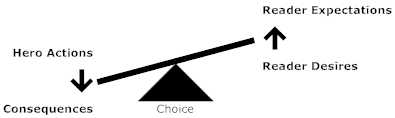
Which makes me long for something that is the opposite to the tragic hero, something I’ve taken to calling the anti-tragic hero for lack of a better term (yeah, I know…it’s a little ungainly: does anyone have any better suggestions?). Anti-tragic heroes can be found in any of the three heroic archetypes: aspirational (the Pevensies), observational (the Brothers Grossbart), or consequential (Cley). Some may be redemptive (Cley or Edmund Pevensie), but that is not at all necessary (e.g. the Brothers Grossbart or the remaining Pevensies).

The anti-tragic hero can be characterized as getting what we the reader believe they have earned through the exercise of their agency. Anti-tragic heroes generally behave according to the precepts of their value systems. The Pevensies’ values align well with standard Western values for good. The Grossbarts’ align well with standard Western values for bad. Cley – once he begins his redemptive quest – also aligns more with our concept of good. In each of these stories, the anti-tragic hero gets what the reader believes they deserve. The Pevensies, by their right and noble actions, become great kings and queens of Narnia. The Brothers Grossbart end up locked in a tomb – presumably for all time. Cley manages to make peace with his past sins and be reborn. Their fates align with our sense of justice, which may well be different from their own.

The Essence of Heroic Stories: Expectations, Values, and Choice

And this, I think, really distills the heart of what heroes and heroic fiction are all about. At the most basic level, heroic stories are all about values and expectations. When characters’ actions relate to their own value system, they become heroes. They may live up to their own expectations, aspire to the better parts of themselves, or struggle to live with their own choices. But they do so with the degree of drama and moral focus that defines them as heroes. Their actions elicit expectations on our part as readers: we want something good, bad, or ugly to happen to these heroic characters because we believe their actions have earned some measure of response. And the tension between the hero’s actions and their consequences within the story determines whether that hero becomes tragic or anti-tragic.

The Essence of Heroic Fiction

Works Mentioned / Used in this Post

Below is a list of the authors and titles that I found helpful in putting this together. It’s a list of pretty cool and interesting books, and I strongly recommend each and every single on of them for insight into the hero:

Non-fiction Fiction

A Theory of the Hero: Story Archetypes for Heroic Characters (part 2 of 3)


NOTE: This is the second in a three-part series on heroic characters. The previous installment discussed how agency, voice, and sincerity are used to determine heroic characters, while the third installment focuses on narrative timing and the tragic and anti-tragic hero.

This past Tuesday, I wrote about how narrative voice, and a character’s agency and sincerity determine whether they can be considered heroic. But in order for those three components to mean something, they must be embedded within a larger story and then expressed through the plot. Any heroic story – whether Tolkien, Howard, or Nabokov – is principally concerned with the hero’s value system. I see three primary archetypes for a heroic story, and makoto (a character’s sincerity to their own values) is central to each:

Heroic Story Archetype Description
1 Aspirational Will the hero live up to their own values? Or will they fail and transgress against them?
2 Observational How will the hero apply their values within a particular set of circumstances?
3 Consequential How will the hero face the consequences of their choices?

Different Strokes for Different Folks, and Different Stories for Different Heroes

The archetype that applies to a particular hero need not be the archetype that applies to the overall book/film. We talk about books having “a story” but really each hero gets their own story. Some books might have no heroes (Franz Kafka’s The Metamorphosis), others might have one (Nabokov’s Lolita), or many (I count nine in Les Miserables).

As a quick example to start off, let’s consider Star Wars (the original trilogy, naturally). Han Solo’s journey is entirely different from Luke Skywalker’s: though they share many experiences (though they go through the same plot), the choices, subtext, and meaning is different for each character. Darth Vader likewise has his own story. Luke’s is aspirational: will he stay on the Light Side or go to the Dark? Solo’s story – particularly in The Empire Strikes Back and Return of the Jedi – is observational: how will he apply his values under trying circumstances? And Vader’s story is consequential, focusing on themes of redemption and the consequences of choices he made before the events of the original trilogy. Each of these characters could be the “star” of the trilogy: that Luke’s arc gets the focus merely reflects the creator’s choice.

The hero’s story archetype determines the emotional arc of the story, the subtext that drives us to invest in the characters and keeps us tense. The hero’s value system and their behavior relative to that system determine the story archetype and set us up for the Aristotelian catharsis at the story’s climax.

Aspirational Stories: Portal/Quest Fantasies and Children’s Fiction

The Encyclopedia of Fantasy has a great entry on heroes and heroines which outlines a pretty extensive (though not exhaustive) typology of heroes. Looking at this list, however, it is clear that not every type of hero can support an aspirational archetype.

The classic model of an aspirational heroic story is the coming-of-age tale. Since so much of middle-grade and YA fiction is about helping characters negotiate and articulate their value systems, it should come as no surprise that children’s literature is rife with aspirational heroes. Taran the Assistant Pig-keeper in Alexander’s The Book of Three, Garion in Eddings’ Pawn of Prophecy, or Wart in White’s The Once and Future King are all great examples of aspirational heroes.

Hidden monarchs, ugly ducklings, changelings, and people who learn better are classic character models for aspirational stories. What is essential to this archetype is an evolution in the character’s choices. Unlike the observational archetype (see below), these characters’ are still struggling with their value systems. The “right” and “wrong” of their story is implied in the text: the reader understands what Taran must do, the reader knows what choices Garion must make, but the character does not. As the plot unfolds, the character gradually catches up to the reader and becomes able to articulate and act on their implicit value system.

Portal/quest fantasies are the most frequent structure for aspirational stories. The plot’s quest becomes the device by which the hero explores and articulates their choice. Frodo’s quest to destroy the Ring is inherently tied up in his value system. The crux of his story hinges on the question of whether he will allow himself to be corrupted by the Ring, or whether he will stay true to his values and destroy it. The climax of this archetype is the moment when the hero makes that final choice: when they decide whether they will do right or not. That climax is the moment of maximum tension within the story, and it defines the hero’s success or failure.

One of the most satisfying aspects of aspirational heroes is that they often make the “right” choice. Aragorn, Luke Skywalker, and most heroes in MG/YA fiction all ultimately make a choice that more-or-less aligns with most readers’ moral codes. But that success is not necessary. So long as the hero’s moral code remains unchanging, whether he succeeds or fails to live up to that code has no impact on the story’s resonance. Failure can be just as strong a resonator as success.

For example, Frodo Baggins is a failure. Yes, he remains a hero, but standing over the Crack of Doom, he allows the Ring to corrupt him, and he cannot bring himself to destroy it. Tolkien’s use of eucatastrophe (Gollum’s convenient attack on the invisible Frodo) is the device by which the author wrenches a positive ending out of his principal hero’s failure. This does not weaken the story – in fact, I think it enhances it by adding a tragic dimension to the character of Frodo Baggins. Everything does not work out, certainly not for Frodo. For the rest of his life, Frodo will have to bear the knowledge that at that last desperate moment, he blinked. If Frodo’s story is aspirational, then at the end of the day he fails in his aspiration. Yet his story still resonates.

Observational Archetypes: The Classic Heroic Story

When we use the words “heroic fantasy” most of us automatically think of muscle-bound heroes along the lines of Beowulf, Conan of Cimmeria, or Fafhrd and the Gray Mouser. We think of the stories written by Robert E. Howard, Michael Moorcock, Glen Cook, etc. Typically, these are immersive fantasies where the world of the story is assumed as a given. The heroes in question already fully live in their worlds, and their value systems are fully-formed and clearly articulated. However, what sets these stories apart from their aspirational counterparts is that they focus less intensely upon the hero’s moral code.

The climax of an aspirational heroic story hinges upon whether the hero will or will not live up to their values. But in an observational story, the hero will always live up to their values. These values are typically idiosyncratic when compared to those of other characters. Whether we’re dealing with loveable rogues like Han Solo, utter villains like the Brothers Grossbart, or introspective brooders like Elric of Melniboné, the hero’s value system always features some difference to those of the book’s other characters. Reading these characters’ stories, we are less concerned with will they or won’t they stick to their guns, and more concerned with how they will do so.

Observational heroes tend to be what The Encyclopedia of Fantasy calls Brave Little Tailors, Duos, or Temporal Adventuresses. Many fairy tale heroes, in particular the “Ivans” of Russian fairy tales or the “Jacks” of the British variety, fall into this camp. So would most of Robert E. Howard’s Conan stories, where his sword-swinging Cimmerian broods and simmers…but always acts according to his (admittedly sometimes rough) moral values.

The typical observational hero never ages: he or she is almost always portrayed in the prime of their youth, as the story’s momentum hinges upon their ability to act with physical or magical strength. Aspirational heroes and their stories tend to deal earnestly with stark moral black-and-whites. Observational heroes, however, tend to see more shades of grey. For Frodo Baggins or Taran the Assistant Pig-keeper, there is no middle ground: either they do right or they fail. For Conan, or Leiber’s Fafhrd and the Gray Mouser, their moral codes and the choices they face are more ambiguous, allowing for compromise.

This ambiguity creates a great degree of space for humor in observational stories. Whether it is Fafhrd and the Gray Mouser, Conan, or Han Solo, the ambiguity of the hero’s moral code and their situational application offers the opportunity to inject irony and sarcasm into the narrative. This kind of humor tends to be quite infectious, because it perhaps deals with moral choices more accessible to the average reader than those common in high fantasy. The choices our heroes face, while expressed in outlandish fashions, tend to have fewer world-changing or soul-destroying consequences than those found in aspirational stories.

Duos in particular are a common type of observational hero. While I have already mentioned Fafhrd and the Gray Mouser, I think a far better set of examples can be found in the mystery genre. Sherlock Holmes and Dr. Watson represent the classic ur-duo, and their stories clearly show the application of Holmes’ rational worldview. In Dashiell Hammett’s The Thin Man, Nick and Nora Charles have a clearly ideosyncratic, “us-against-the-world” value system which they apply consistently. As in so many mysteries, the morality of their philosophy is not the focus of the story: instead, the focus is on how that philosophy is actively applied within the plot.

Generally, heroic stories whose narrative focus is on the action of their plot tend to skew observationally. These are the stories that are more exciting than earnest. Bullington’s The Sad Tale of the Brothers Grossbart is a fun exploration of how a set of villainous moral codes can be applied across a variety of trying situations. Super-hero comic books in particular are another great example of this kind of storytelling: the hero’s moral code (remember Truth, Justice and the American Way?) is always a given, but decades of continuity explore how the hero applies that code to all manner of situations.

Consequential Archetypes: Living with Choices

The third and final story archetype for heroic characters returns to deal with the moral choices more earnestly than in most observational stories. Consequential stories focus on the hero’s actions after a moral choice has been made. By its very definition, this archetype tends towards the Aristotelian and the tragic. Typical heroes that fit this mold are the Knight of Doleful Countenance, or the sinner seeking redemption.

Often, the hero’s nobility is established off-screen before the events of the story. We know Macbeth is a noble hero because Duncan, his men at arms, and the sergeant tell us so before we ever meet the thane of Glamis. But Macbeth transgresses against his own moral code by killing his king, and the rest of the play focuses on him living with and facing up to the consequences of his evil act. Robert E. Howard’s Solomon Kane stories do something similar, where we first meet Solomon Kane as a puritanical zealot obsessed with meting out stern justice and stamping out whatever he considers evil, regardless of danger. Through the stories’ subtext, we gradually get the sense that Kane’s obsession is redemptive: that by stamping out evil, he may purge his own soul of whatever past sins may stain it. In Michael Moorcock’s Elric of Melniboné stories, the hero must live with the guilt of feeding souls to his demon-sword Stormbringer.

Consequential heroes and their stories may be redemptive or tragic. Darth Vader’s is a redemptive story, where he is able to return to the Light by betraying the Emperor. Macbeth or Othello, by contrast, are tragic: no amount of contrition on their part can ever expunge their guilt. Typical of consequential stories is a constant revisiting and escalation of the hero’s original choice: Macbeth is forced to one-up his betrayal of Duncan with the murder of his friend Banquo, followed by the slaughter of MacDuff’s family. Elric has to feed ever more souls to Stormbringer so that he can do what he feels is right.

By their very nature, consequential heroes and their stories are tragic: if aspirational stories end on “and they lived happily/sadly ever after” then consequential stories are what happens in the ever after.

Story versus Story and Mixing Archetypes

Like so many aspects of storytelling, the borders between these archetypes can be blurred. For example, Moorcock’s Elric of Melniboné combines aspects of the consequential archetype (the exploration of Elric’s guilt) with the observational (constantly re-visiting his moral choices in new circumstances). It is also possible, though very difficult, for a single hero to progress from an aspirational story, to an observational story, and then to a consequential story. I know of few examples of this kind of progression, but those that do come to mind are almost always some of my favorite stories. Lloyd Alexander’s Westmark trilogy shows us Theo’s aspirational story in its first book, and then follows the pattern of a consequential story in the second and third.

In Hugo’s Les Miserables, Valjean’s story opens as aspirational, proceeds to observational, and ends as consequential. In Hugo’s case, this masterful progression is strengthened by pitting Valjean’s moral code against opponents who are elsewhere along the archetypal progression. When Valjean’s story is in its aspirational phase, his antagonist Javert is in an observational mode. By the time Valjean has entered the observational phase of his evolution, Javert has “regressed” to the aspirational phase. When Valjean is in the consequential phase of his life, Marius Pontmercy is in the aspirational phase of his.

Hugo is arguably the master of this kind of complex hero construction: reading his works (in particular Les Miserables and The Hunchback of Notre-Dame) I suspect that every single hero archetype and every combination of their oppositions, tragic and anti-tragic, can be found. The next installment of this series (on Tuesday) will focus on this aspect of heroic storytelling. In particular, I will focus on how narrative timing affects tragedy in heroic fiction, and on the differences between tragic and anti-tragic heroes.

NEXT: Come back on Tuesday for the third and final installment which focuses on how narrative timing affects tragedy in heroic fiction, and for a discussion of tragic heroes and anti-tragic heroes.