I spent last week in London on business. I love London, even in chilly, misty, drizzly January. One of the reasons why is because it is home to Forbidden Planet, the world’s largest and (to the best of my knowledge) only chain (though technically a pair of chains – see update below) retailer specializing in science fiction, fantasy, and horror products. The London megastore sits on two floors, stocked to the gills with action figures, comic books, graphic novels, trade and mass-market books, and DVDs: if it is genre, odds are you can find it there. Split between two somewhat-related separate companies (Forbidden Planet and Forbidden Planet International), the Forbidden Planet brand name offers twenty-five different locations in the United Kingdom. If the United Kingdom – home to sixty two million souls – can support twenty five chain outlets, why can’t the US – with five times the population – do the same?
UPDATE: Just a word of clarification since the above might not be clear: Forbidden Planet and Forbidden Planet International are in fact two separate companies. The former has nine stores in the UK, while the latter has thirteen branded outlets in the UK, one in Ireland, one in New York, and two other associated (though not branded) stores in the UK. While the two were related in the past (per Wikipedia), they are now operated as two completely independent companies. However, this fact does nothing to detract from the main point of this post: where are our genre chains in the United States?
Both countries have their share of general media retailers: the United States is home to Borders, Barnes & Noble, and Best Buy. The United Kingdom is home to W.H. Smith and Waterstone’s. Despite the ever-present moans of indie media outlets (whether booksellers or comic book shops), both have reasonably vibrant indie communities. I find it unlikely that the UK has a larger number of genre fans as a percentage of the population than the United States. If that were the case, then the UK would host a far greater number of genre publications (pro, small-press, and amateur) than it does.
Forbidden Planet (at least the London megastore, which admittedly may not be a representative sample) knows the genre business far better than its more general counterparts. The store is clearly divided by product type. Action figures, novelty items, and gaming are in one area. Anime, graphic novels, comic books, and regular books are in another. The book section is impressively stocked and organized along broad genre lines. Each section is consistently sub-divided, with its own “New Releases”, a “Chart” section where top-sellers are shown face-out with shelf talkers, and a general stock alphabetically arranged by author. This structure makes navigating the shelves a downright pleasure. Identifying what is new, and spotting what is performing well within a given category is very easy – whether you’re familiar with the genre or not.
This type of organizational scheme would be unimaginable at a general retailer. However, it is not a product of the stocking teams’ deep knowledge of the genre. Instead, it is the product of solid operational management. While visiting the store on a Tuesday mid-afternoon, I got to watch shelves being re-stocked. The stocking teams used netbook computers with bar code scanners to control inventory and shelf placement. This makes it possible for even new employees without genre familiarity to stock shelves properly. Forbidden Planet earns a gold star in shelf management in my book, especially when compared to recent experiences at (the admittedly beleaguered) Borders.
Several weeks ago, I was looking for a copy of Scott McCloud’sUnderstanding Comics: The Invisible Art. I went online, and the Borders web site told me that it was “likely in store” at my local retailer. I drove on over, and proceeded to check the in-store computer. It told me to check in the graphic novel section, where I was patently unable to identify any organizational method. Seeking help from an employee, I was told that it was in fact in stock, and that it would be in the criticism section. Of course, it was not. I checked with a different employee, and was told it would be in with the art books. And of course, it was not. Contrast this ordeal with the simple process of stopping by Forbidden Planet, wandering through the graphic novel section, and finding it precisely in the “M” section of independent graphic novels. I would expect to find this title in both stores, but the operational management of Forbidden Planet left me a satisfied customer while Borders failed me.
The United States has its share of specialist booksellers. Whether it is Borderlands Books in San Francisco, or Pandemonium Books and Games in Cambridge, Massachusetts, many offer a fine selection and deep understanding of genre style and history. However, as a general rule these bookstores are independent one-location operations. This is not a criticism, merely an observation. With so many genre fans in the US, perhaps we, too, could support a chain of specialist media stores like Forbidden Planet? Economies of scale would help with profitability (the interminable lament of the indie bookseller), while technology would make operations and quality-control easier across a network of locations. On an early Tuesday afternoon, the London store was reasonably full of shoppers and needed two cashiers to service the line of customers waiting to buy. Why doesn’t America have something comparable?
While eating delicious (and incredibly over-filling) holiday meals this weekend, I found myself thinking about Google Labs’ new Ngram Viewer. In my day job I deal with statistics, semantics, ontologies, and computational linguistics all day long. Which makes the Ngram Viewer a really, really fun toy. It allows us to look at the frequency with which particular words and phrases were utilized across all books in the English language for the last 500 years.
Which is really cool.
So with such a tool at my finger tips, I thought I would have a little bit of a fun. What can the Ngram Viewer tell us about language in genre fiction? What can it tell us about the genres themselves? To attempt a semi-serious answer to this question, I got out my trusty copy of Brave New Words and flipped through it find some of the tasty neologisms that science fiction has given us over the years. And having written them down, I started banging away at the Ngram Viewer. Here’s what I found:
The Rise and Fall of Cyberpunk, The Fall and Limping Recovery of Space Opera, and the Gradual Climb of Alternate History
Science Fiction Sub-Genres, 1900 - 2008
So the late ’80s and early ’90s saw cyberpunk explode, rise to meteoric heights and then begin a gradual decline that still seems ongoing. Cyberpunk hasn’t seemed to eclipse any of the other major science fiction sub-genres, although it did seem to coincide with a gradual decline in space opera and future history. It’s also neat to see a visual representation of alternate history’s slow growth over the last 40 years.
Sword and Sorcery vs. Epic Fantasy, Paranormal Romance vs. Steampunk and Urban Fantasy
Fantasy Sub-genres, 1900 - 2008
Looking at fantasy, we can see the response to J.R.R. Tolkien‘s popularity. Looking at the 1970s and 1980s, we can see the impact of Terry Brooks, Stephen Donaldson, Michael Moorcock and Roger Zelazny. Then the 1990s show us the rise of Robert Jordan, Terry Goodkind, George R.R. Martin and the other kings of the Chihuahua-killer tomes. But what I think is most interesting is the relationship between steampunk, urban fantasy, and paranormal romance.
Steampunk has been getting a lot of buzz recently, leading some authors (most prominently Charles Stross and Cat Valente) to complain that it eclipses everything else going on. But this somewhat unscientific chart at least shows that while steampunk may generate buzz, that buzz is disproportional to the volume of published work. Of course, those complaints are recent and Google’s data only goes up to 2008. It’d be interesting to see if in 2009 and 2010 steampunk really did eclipse other sub-genres of fantasy and science fiction. Looking at the data through 2008, the trend looks pretty steady and in line with urban fantasy. The data actually suggests that paranormal romance is the sub-genre really breaking out. At least by 2008.
Some Fun Genre Tropes
And since I am – technically – on vacation this week, I want to go out vacation-ing in a few minutes, just three last fun charts. The charts above track some of the sub-genres, but what about some of the most-common science fiction, fantasy, and horror tropes? Some fun:
Space Travel Tropes, 1900 - 2008
Hard science fiction and space opera both have their share of tropes, including (typically) some means of traveling at or near the speed of light. Of course, technology changes all the time so how have those tropes changed over the years? For one thing, the generic (and typically ill-defined) “hyperdrive” seems to be eclipsing anything with real science behind it. The equally fuzzy “warp drive” looks to have peaked around the turn of the century, while scientific or pseudo-scientific also-rans like the ramjet and gravity drive seem to be holding steady. Probably the most noticeable (and interesting) phenomenon was the brief but intense plateau of solar sails, which came to be pretty common right around the mid-1980’s before settling back down into a slow upward trajectory in the late ’90s.
Fantasy Tropes, 1900 - 2008
Out of the stereo-typical fantasy tropes, dragons seem to be holding pretty steadily, but what’s notable is the rise of “wizard” in the late 1990s. Do I detect Harry Potter‘s wand at work?
Horror Tropes, 1900 - 2008
And here we can clearly see the impact of Anne Rice and her Lestat as the progenitors of the vampire craze. Vampires are clearly the monster of last thirty years, and by 2008, they still have nothing to fear from either werewolves or zombies.
There’s a new top-selling vocalist in the J-Pop genre: Hatsune Miku’s voice has been featured on gold-selling albums with Japanese bands like Supercell and Livetune (all links are to web sites in Japanese). Her singing has graced anime credits, and she has her own video game out from SEGA, and perhaps most impressively she’s performed live before crowds of 25,000 screaming fans. Of course, compared to the likes of Lady Gaga or Hannah Montana that’s not terribly impressive. But there’s a big difference between those standard pop-stars and Hatsune Miku: Hatsune Miku is not alive. She’s software. Think about that for a second: software, singing “live” to thousands of (real life) screaming fans. Don’t believe me? Take a look at the video:
Designed by Crypton Future Media, Hatsune Miku is the most popular of a type of software called vocaloids. These are programs designed to work with Yamaha’s vocaloid (vocal + android) software to synthesize human song. However, Hatsune Miku is more than the lines of code and signals that make up her synthesized voice. Her basic “look” was designed by the illustrator known as Kei, and features visual sensibilities familiar to fans of anime and manga. With this visual design and a distinctive (synthetic, mind you) singing voice capable of expressing complex emotions, Japan’s vibrant dojinshi music sub-culture soon developed the MikuMikuDance software to design 3D dance animations and music videos. The result is a complex community of lyricists, composers, illustrators, and choreographers/animators who collaborate and compete to create songs using their shared “instrument”.
The Consensus Mythology of Hatsune Miku
I freely admit, it is difficult for me to understand much of the nuance of this sub-culture as I (alas) don’t speak Japanese. However, from what I’ve been able to gleam from several hours of Internet research, Hatsune Miku is the logical meeting point of many Japanese sub-cultures. Her visual roots lie in manga and anime, but her initial genesis lies in the dojin music community. From there, Miku has spawned manga, anime, prose, itasha, and figures.
In the dojin music community, Miku is seen as an instrument first, not a character. And rightly, songwriters like Ryo (Supercell) are the true artists, since Miku sings what they write. Songwriters have utter control over every aspect of her performance: when she sings a note, she will always sing it the way the songwriter wanted (emotion included!). In this, she is no different than a keyboard or a guitar. The community collaborates through video and file sharing services, posting their work and soliciting feedback from other creators and fans. When Japanese media discusses Hatsune Miku artists, the focus is always on the songwriter: rarely the instrument.
But outside of the dojin music community, this “instrument” begins to resemble more popular manga, anime, and aidoru trends. With the plethora of (popular) dojin manga and fan-fiction, creators and fans build a consensus mythology around the character. Her history, her personality, all is built through the multi-faceted strands of her fan-base. Like many aidoru, she has publicized (and authorized by Crypton Future Media) measurements, the content of her songs is (in theory) limited by the license the creators agree to when using the software, etc. While it started with songs and videos, the Hatsune Miku community now creates stories, manga, and video games (Sega Hatsune Miku: Project Diva for PSP) that make use of this shared character.
Is Hatsune Miku William Gibson’s Rei Toei?
Fourteen years ago – long before the vocaloid technology was even close to possible – William Gibson wrote Idoru, the second novel in his Bridge trilogy. Set in an early 21st century Tokyo, Idoru examines a variety of cyberpunk themes, most particularly the relationship between artificial life and humanity which he explores through an artificially intelligent pop-idol construct named Rei Toei (after the Toei Company, one of Japan’s leading film and music studios).
In Gibson’s cyberpunk vision, Rei Toei is a self-actualizing adaptive composite intelligence. The point is that there are as many versions of Rei Toei as there are fans. Each fan builds a personalized album, songs, videos, performances, photographs, etc. of Rei based upon his or her particular preferences. When Rei performs in public, her style represents an averaging of the individual preferences across each fan in the audience, effectively becoming a consensus character. In a very real sense, Rei Toei represents the ur-idol: an “artist” with a perfect collection of traits that allow her to appeal to every single person in general, and to appeal to each fan in specific.
The parallels to Hatsune Miku are obvious. Like Rei, Hatsune Miku is a composite character: with the plethora of dojin songs, videos, and manga fans can gravitate to and select the content that specifically appeals to them. Don’t like a particular style? There are plenty more to choose from. In this sense, Hatsune Miku’s fans can consume their own concept of Hatsune Miku, selecting for a mythology and set of characteristics that appeals to them. No two Hatsune Miku fans will have the same preferences, but both can be equally pleased with what they get. In terms of predicting technology capabilities and the fan-base’s reaction, Gibson nailed it.
However, the differences between the two characters deal directly with some of Gibson’s (and cyberpunk’s) primary themes. Gibson painted Rei Toei as being strictly overseen by her owners. While her style and persona may be adjusted to the tastes of individual fans, it is the mega-corporation who enforces constraints on her choices. They provide her with the songs to perform and determine the types of behavior she can get into. Very purposefully, Gibson took the classic aidoru model of circumscribed managers, handlers, and controllers and applied it to an AI character. While the details of her public persona may be crowd-sourced and the personal consumption of her products personalized, the shared foundation for Rei Toei is prescribed by developer edict. In response, much of Gibson’s book focuses on Rei’s attempts to break free from the constraints imposed on her by the mega-corporation. Hatsune Miku, by contrast, is already free.
Every aspect of Miku’s “behavior” is determined by the distributed community of her creators. There is no single overseer who cashes in on her performances. Even Crypton Future Media – Miku’s ostensible “creators” and the owners of her code – do not try to limit the ways in which Miku can be expressed. As a result, Miku’s performances and behavior become just as crowd-sourced as her fan experiences become personalized. In dojinshi world of music, anime, manga and fan-fic there are no practical limits as to what Hatsune Miku can do.
Yet despite this freedom, Rei Toei is adaptive and self-actualizing, meaning that she represents an actual artificial intelligence that responds to human interaction, can converse freely, and can make independent decisions. She has become an emergent intelligence, capable of (seemingly) independent thought and action. Hatsune Miku – at least today – does not have any such properties. Modern technology has so far been unable to create emergent intelligence and as a result, Hatsune Miku is patently unable to choose her own destiny. Every choice is made for her by an individual and distinct creator.
The Ethics of Consensus Character Emergence
Is Hatsune Miku any more free than Rei Toei? On the one hand, Rei Toei is a perfectly adaptive self-actualizing AI. She is partially constrained by outside forces (her owners/creators), but she retains freedom of choice in certain limited arenas. Gibson’s book suggests that this represents slavery, despite Rei Toei’s artificial nature. Hatsune Miku, however, is perfectly constrained. She is not adaptive, not self-actualizing, and so is technologically unable to make any choices for herself. As a result, her creators maintain complete and utter control over her.
At first blush, this might seem like more oppressive slavery than what Rei Toei is subjected to, however I think the reality a little more complex. As anyone can create anything using the Hatsune Miku character, her range of effective choices is far broader than Rei Toei’s. She can do anything, so long as someone tells her what to do. This is at once more liberating and constraining, as it places the onus on the fans to determine who their consensus character will become. Many creators have a vested interest in the Hatsune Miku character, whether they are songwriters, music labels, authors, or publishers. The well-funded, well-organized creators have a far larger megaphone than the individual dojin working on their home computers. Will they hijack the Hatsune Miku character? Will they enforce their vision on her mythology? On the one hand, this may help popularize the Hatsune Miku character by making her more accessible to everyone. On the other, it will constrain the emerging consensus. Which would be better for art involving the character? What would be better for the fans?
I don’t have any answers, but I think we’ve entered a fascinating future where questions like this become practical concerns. When William Gibson wrote Idoru it was pure science fiction, set in a relatively near future, but involving technology so far beyond 486 processors and 32 MB of RAM that it was scarcely imaginable. But today, that science fiction has become very real. As a result, the questions that Gibson raised in 1996 have become much more relevant. How we answer them will affect the relationships between art, technology, and society. I don’t know if Gibson is aware of Hatsune Miku’s existence, but I hope he is. And I’d love to know what he thinks.
If you’re like me, then you probably haven’t started your holiday shopping yet. If that’s the case, then let me borrow from Douglas Adams and offer some advice: DON’T PANIC! (I hope those letters are friendly on your display). Regardless of what holiday you’re celebrating, buying stuff for loved ones into science fiction, fantasy, and horror can often be difficult. So this week, I want to offer a little holiday gift guide to help you shop for those folks in your life who love genre:
We’ve seen what happens when the re-animated dead hunger. We’ve seen blood, and guts, and above all braaaaaiiins. But have we ever considered the zombies’ perspective? Have we ever wondered what it’s like to be part of that maligned, feared underclass in American society? American Zombie is a fun and creative documentary that follows the lives and dreams of several zombies living (un-living?) in Los Angeles. Fun, intelligent satire on our fascination with the walking dead.
The zombie lover in your life probably thinks about the coming apocalypse pretty frequently. They might have escape routes, fortification schematics, weapons caches, the whole nine yards. If that’s the case, or even if not, this book makes a very practical addition to your loved one’s library. With easy to follow guidance, it is sure to keep your loved ones safe. After all, at 10″ by 7.4″ and 160 pages, it could do some damage in a pinch.
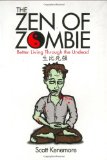
This self-help book is a perfect distillation of the zombie ethos. With a practical twelve-step guide to zombiefication, and lessons to learn about adaptability and being your own boss, this book can make your loved ones more satisfied with their life and happier in the work.
Movies and books aside, the gift that keeps on giving might be a good idea. Your zombie-phile loved ones will definitely appreciate a sturdy, 15″ double-edged (straight on one edge, and saw-toothed on the other) machete perfect for slicing and dicing anything out to eat some brains. Also makes a great companion gift to The Do-it-Yourself Guide to Surviving the Zombie Apocalypse
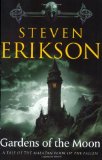
If they haven’t read Steven Erikson, this is a gift guaranteed to blow the mind of any epic fantasy fan: a 10-book, doorstopper-sized epic fantasy series that actually finishes! Unlike most epic fantasy series that go beyond three (let alone six) books, Erikson and his publishers have consistently delivered books more-or-less on-time. The last book in the series (number 10) is currently set to be released on March 1, 2011 and Amazon is already taking pre-orders for it. With great writing, well-textured world-building, and fun characters Erikson’s Malazan books of the fallen are probably the best epic fantasy written in the last twenty years.
Alright, I admit it: I myself am not that big a fan of WoW. However, I know that lots of people (and lots of epic fantasy fans especially) are. So if the epic fantasy fan in your life enjoys WoW, or MMORPGs, or RPGs then they’re likely to enjoy the new world-changing experience of Cataclysm.
The essential guide book for anyone setting out on a fantasy adventure. Written by Dianna Wynne-Jones, who has taken many an intrepid tourist on a fantasy vacation, this book offers practical advice for navigating the wilds of fantasyland, the etiquette of interacting with the locals, and helpful guidance on what to bring, what to wear, and how to get about. Be sure to get an edition that is Dark Lord Approved!
Okay, I know I talk about this book a lot on this blog. But it really is one of the best vampire novels ever written. Dark, frightening, and leaves you faint and reeling at the end. Isn’t that what a good vampire should do?
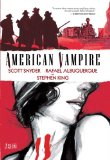
With stories written by Stephen King and Scott Snyder and illustration by Rafael Albuquereque, American Vampire offers some grisly blood-sucking fun set in the Wild West and 1920’s Hollywood. An entertaining read, with restrained illustration capable of exploding into bloody viscera where and when needed, this graphic novel will be appreciated by those of us who enjoy evolving vampire myths.
John Malkovich and Willem Defoe star as F.W. Murnau and Max Schrek (of silent movie fame) respectively in this fictionalized account of the filming of Nosferatu. Of course, in this version, Max Schrek in fact is a monstrous vampire, who preys on the cast and crew of the movie.
A second steampunk anthology edited by the inestimable Ann and Jeff VanderMeer, this book collects twenty three short stories, two essays, and one roundtable interview that delves into the vagaries of steampunk literature. The fiction makes this anthology worth it, with some really great stories from authors like Jeffrey Ford and Tanith Lee.
Credit where credit is due, I actually found this concept on the STEAMED! blog. This is a great gift for any mad scientist who likes to experiment in the kitchen. The only advice I would have is to make sure your test tubes are properly labeled. It is – alas – all too easy to mistake strychnine for salt, after all.
While this military manual dates from 1941, your loved ones are sure to appreciate the detailed specs on flying and maintaining airships found in this treatise. Sure it’s dry and full of engineering and pilot jargon, but if your loved ones want to pilot an airship, shouldn’t they do it right?
A very practical guide to building and utilizing a robot army for dealing with the myriad dangers lurking just around the corner, including (but not limited to) ninjas, aliens, Godzilla, and great white sharks. Written by Daniel Wilson, who holds a doctorate in robotics (no fooling!), the book is firmly grounded in science. With its sections on using robots against the zombie hordes, this might make a great cross-over gift for the zombie-lover in your life as well!
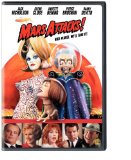
This wonderfully sweet, heart-warming family movie directed by Tim Burton and starring the always even-keeled Jack Nicholson will reach out and touch the heart of any alien aficionado. Also, the sweet dulcet tones of Slim Whitman are sure to appeal to any science fiction music lovers!
It should go without saying that you want to keep your loved ones safe from aliens. And if the cat on a hot skillet yowling of Slim Whitman is too much for you, thankfully M. Night Shyamalan shows us an alternative alien-bashing weapon: good old-fashioned H2O. A couple drops of this stuff, and those aliens will go the way of the Wicked Witch of the West! Of course, why hydrophobic aliens capable of interstellar travel would come to a planet 70% covered with the stuff, only Shyamalan could possibly tell us (I can picture the aliens’ reasoning now: what a world, what a world…).
What are some other gifts out there for those of us who love science fiction, fantasy, and horror? I’m certain there are tons of other ideas out there, and I’d love to hear some of them (whether serious or not).
Whew…I’d forgotten how exhausting Comic Con can be. This weekend saw Comic Con return to New York City for the first time in 18 months, and this triumphant return saw several improvements over the previous show:
The floor space was doubled. Artist Alley and Autograph Alley seemed significantly larger, and there were more exhibitors.
Comic Con was held parallel to the New York Anime Festival. What could be more fun than comics, science fiction, fantasy, video games and anime?
Massive gaming stations (for multiplayer computer games as well as tabletop gaming) were added if you were so inclined.
Unfortunately, I think the organizers underestimated the number of people interested in comics, video games and speculative fiction. This has been a chronic problem with the NYCC, dating back to several years ago when the fire marshal had to kick people out. By Saturday afternoon, this year’s show had sold out, and crossing from one end to the other was a 45 minute battle against a rising tide of costumed humanity. Next time, rather than squeeze another booth into every last square inch the organizers just drop one row of exhibitors and expand the traffic aisles so that the crowd can have better flow. It will make the experience a lot more pleasant for everyone.
That being said, there was a lot to do at Comic Con. Between walking the booths, talking to people, demo’ing upcoming video games and trying to grab a couple of panels it was a wild and exhausting couple of days. I tried to divide my explorations into some specific categories, and so here are the highlights that I walked away from the event with:
Literary (books, as opposed to comics)
I spent quite a bit of time wandering around the book publisher aisles. I had some general observations and some specific comments:
General Observations
The expanded floor space gave the publishers the opportunity to really stretch their space. Most of the big publishers had large booths (double, triple or quadruple booths seemed the norm).
The publishers relied less on ARC’s (advanced reader copies) and galleys to pimp their titles: most (even the big houses) were making visitors purchase their books to a far greater degree than I remembered.
I saw far more mass-market titles than trade, which while not terribly surprising was a little disappointing.
Most publishers (large and small) offered good author signings. Standard practice was for an author with a new title out to be signing copies of a previous book that the publisher was giving away. A handful of publishers dropped the free give-aways and instead made people buy the books.
There were several significant genre publishers whose absence was notable for me:
Scholastic. This is a shame considering their excellent line-up of middle-grade and YA books (especially strong in the paranormal teen romance and quirky science fiction). While the other publishers there were all pimping their YA lists/imprints, Scholastic’s absence really stood out.
Pyr did not have a booth. Considering the impressive list that they have put together and their excellent blend of commercial and literary appeal, I was really surprised. This audience would have eaten their stuff up like there was no tomorrow.
Night Shade Books did not have a booth. This is not really surprising, considering their size: NYCC would have been an expensive proposition. But there were a bunch of other smaller-press publishers doing a brisk trade at the event, and considering what Night Shade’s list looks like, I’m sure they would have benefited from a presence.
Genre magazine publishers were completely absent. Again, not a surprise considering the cost of exhibiting. But I can guarantee that most of the people on that floor are completely unaware of the existence of magazines like F&SF, Asimov’s Science Fiction, Strange Horizons, Apex, etc. I’m not sure if it’ll ever happen, but they may want to consider banding together and sharing a booth in the future if for no other reason than for mutual promotion. Couldn’t hurt and may help expand the audience.
Specific Observations
Tom Doherty Associates (Tor/Forge) had the best-organized booth layout, keeping it simple and classic and always having it manned by well-informed publicists, marketing reps and the occasional editor. The booth itself wasn’t terribly large, but the displays were thoughtfully set up and very well managed. On display were a handful of books from their 2010 lineup and book plates for titles on their 2011 list. I was a little disappointed by the paucity of their author signings however, as they only had a handful of authors there (their major headliner being Brandon Sanderson).
HarperCollins had the weakest booth of the lot. That’s not to say that they have weak books – but their event management just sucked. They had some interesting looking books displayed, but the booth was so understaffed that I couldn’t ask anyone about them. I was there all day on Friday and Saturday and spent quite a lot of time in the vicinity of their booth, but only saw one (rather beleaguered) person manning it both days. The displays themselves were not terribly well done, typically displaying only a handful of copies of select titles. The impression I had was that they were not really serious about marketing to the NYCC crowd, which is somewhat surprising considering the popularity of their competitors’ booths.
Penguin Group had a rather sizable showing. The staff were generally knowledgeable, friendly, and had decent displays. Their primary strength was their large number of author signings (including Jim Butcher, Seanan McGuire/Mira Grant, etc.) but the downside was that you either had to bring the authors’ books to the signing or buy them beforehand on the other side of the booth…about 30 feet away. That might not seem bad, but it’s really crappy event management: traveling 30 feet at Comic Con is a challenge, and having to do so after spending 15 minutes in line and then spending another 15 minutes in line after the purchase is quite annoying. It wouldn’t have been that hard to have a stack of books at the signing and tell people to pay for them after they’ve been signed. First Second Books (a smaller graphic novel press) managed that type of setup quite well and if Penguin had tried it, things would have flowed smoother and far fewer people would have been frustrated.
Random House had by far the biggest showing of the lot. They practically took up two whole sections of one aisle, although all of their imprints were basically doing their own thing. I didn’t have too many notable comments on the Random House crowd, other than a general observation that they seemed to have fewer author signings than the other publishers.
Video Games
Video games seemed to occupy a third of the floor space (that’s not a complaint). There were far too many upcoming games for me to comment on all of them, so instead I’ll just focus on the ones that most appealed to me:
James Bond 007: GoldenEye for the Wii. I loved the original Goldeneye game on the N64, and they have made an awesome new version of it for the Wii. Gameplay will be instantly recognizable to anyone who played the N64 version. The graphics have been updated (though seeing this on an Xbox-360 or PS3 would be even cooler), and the multiplayer is awesome as it ever was. Don’t know how the single-player mode runs, but multiplayer was great.
Disney Epic Mickey for the Wii. This game looks awesome. Set in a dark and twisted world of rejected cartoons, you play as Mickey trying to bring some brightness with a magic paint brush. The graphics are great, the gameplay looks fun (I didn’t get a chance to play myself, alas), and the story is just dark and twisted enough to be awesome.
Captain America: Super Soldier for every system out there. If you loved Batman: Arkham Asylum, odds are you’ll love Captain America: Super Solider. The gameplay looks very similar (they weren’t letting anyone play the demo, but the videos and the in-person demo’s by the reps looked identical). I loved Arkham Asylum and I’m definitely buying the new Cap game as soon as it hits the shelves.
Dead Space 2 for all the major systems. Looks like the original, only with some cool new gameplay features thrown in (jetpack!). The fun part seems to be what they’re doing with the story, basically giving Isaac a little more character and initiative than he had in the first game.
Manga/Anime
It is incredibly unfortunate that the New York Anime Festival was relegated to a single room in the deep underbelly of the Javitz Center. I found it near the end of my second day at the Comic Con, when I only had the strength to dash through the aisles pretty quickly. It seemed to be primarily full of anime artists and cosplay fans – which on the whole seemed neat – but its location was unfortunate. I wanted to find more dark, interesting anime/manga (Naruto is not my scene) but I was too late getting there to have the patience to find any. Maybe if it were better positioned, I would have thought to spend more time there sooner and found something cool. Maybe next time.
Panels
I attended (or tried to attend) several panels that I thought might be cool, but again the organizers let me down. The first panel I tried to attend had a neat title: “The Search for Humanity through Utopias and Dystopias”. Just the kind of dorky little panel that I find fascinating and fun. The panel started thirty five minutes late because of technical blunders. By that point, boredom had set in and the presentation didn’t help. Maybe I’m spoiled by corporate presentations and research papers from my day job, but I know people in the comic book industry can present well. Unfortunately, the organization of this panel was atrocious and the content ended up uninteresting.
The second panel I went to – “Editors on Editing Comic Books” – actually came off without a hitch. I found it really interesting and informative. On stage were veteran editors from the three big houses (DC, Marvel and IDW) and they basically told the audience the truth about breaking into the business. It was refreshing to see the editors pull no punches. They told the packed room that each editor has writers, pencillers, letterers, inkers and colorists who they have worked with successfully in the past, and that these colleagues are looking for work. Translation: if you want to break into the business, you need to be technically better than the current professionals, and overcome the “relationship advantage” that your entrenched competition already has. That’s a tall order, and I saw a lot of disappointed faces in the crowd. But hey, that’s the truth of it. Probably the truth of it in any medium. Those creators who internalize that message will do better work because of it, and invest the time (often years) needed to build relationship in the industry.
The organizers dropped the ball on the third panel I tried to attend as well. It was the fantasy writers’ panel, and it sounded like it would be a lot of fun with Joe Abercrombie, Brandon Sanderson, Naomi Novik and Peter V. Brett. But alas, the organizers shoehorned the event into a tiny room far off in a distant corner. By the time I got there (fifteen minutes before the panel was due to start) it was standing room only. I was three people away from the door when the organizers said “No one else! Get out of here!” and shut the door. Did the organizers think that comic book fans wouldn’t be interested in fantasy? They should have given this panel one of the larger rooms available.
Comics
I have become so disillusioned over the writing in comic books over the years, that I have to admit they’re last on my list. That’s ironic, considering that I spent about twenty hours wandering amidst the crowd of the New York Comic Con. But it was really telling that when listening to comics editors speak about their work, they openly admit to focusing entirely on the art and not caring so much for the writing. That’s understandable, considering that good art is a must-have for a decent comic book, but it’s still sad to hear editors (editors!) say “I’m in comics so I don’t have to deal with words.” There are a few exceptionally-well-written comics out there (Fables?). I tried to find some more, but alas no luck. Oh well.
I’ll definitely be looking forward to NYCC next year. Mark your calendars for October 14 – 16, 2011!

 and flipped through it find some of the tasty neologisms that science fiction has given us over the years. And having written them down, I started banging away at the Ngram Viewer. Here’s what I found: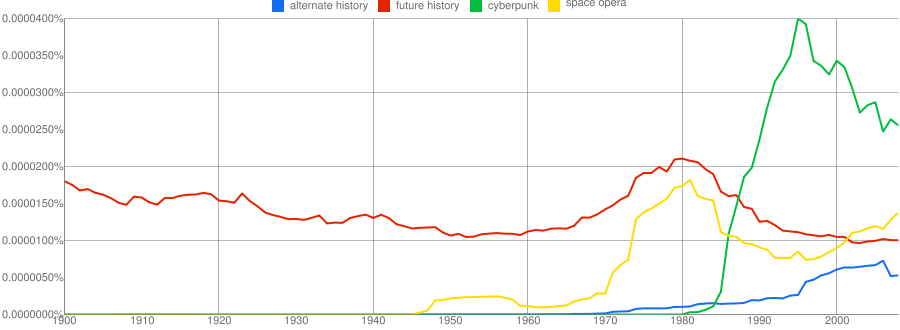


 ‘s wand at work?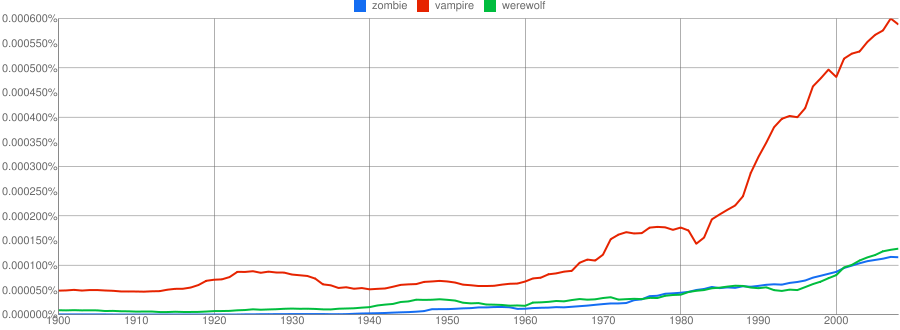
 ) that make use of this shared character.
 , the second novel in his Bridge trilogy. Set in an early 21st century Tokyo,











 . Of course, in this version, Max Schrek in fact is a monstrous vampire, who preys on the cast and crew of the movie.









 for the Wii. I loved the original Goldeneye game on the N64, and they have made an awesome new version of it for the Wii. Gameplay will be instantly recognizable to anyone who played the N64 version. The graphics have been updated (though seeing this on an Xbox-360 or PS3 would be even cooler), and the multiplayer is awesome as it ever was. Don’t know how the single-player mode runs, but multiplayer was great.
 for the Wii. This game looks awesome. Set in a dark and twisted world of rejected cartoons, you play as Mickey trying to bring some brightness with a magic paint brush. The graphics are great, the gameplay looks fun (I didn’t get a chance to play myself, alas), and the story is just dark and twisted enough to be awesome.
 , odds are you’ll love Captain America: Super Solider. The gameplay looks very similar (they weren’t letting anyone play the demo, but the videos and the in-person demo’s by the reps looked identical). I loved Arkham Asylum and I’m definitely buying the new Cap game as soon as it hits the shelves.
 for all the major systems. Looks like the original, only with some cool new gameplay features thrown in (jetpack!). The fun part seems to be what they’re doing with the story, basically giving Isaac a little more character and initiative than he had in the first game.
 ?). I tried to find some more, but alas no luck. Oh well.








 The King of Elfland's Second Cousin