Skip to content

Posts from the ‘Genre Observations’ Category

Liking Little Things: Dissecting Short Stories and Flash Fiction


This past Friday, @tordotcom tweeted a fun challenge asking for six-word fantasy stories. Like all such challenges, it’s inspired by (what I consider to be) the best short story ever written (supposedly by Ernest Hemingway to win a bet):

For sale: baby shoes, never worn.

This challenge got me thinking about what it takes to write a great short story or flash piece, which I think is especially relevant to anyone writing in the science fiction, fantasy or horror genres. Basically, if we write short stories or flash fiction, odds are we’re writing in genre for the simple reason that there aren’t many markets outside of the genres for us to sell to. The literary journals are few and far between, literary anthologies tend to reprint old stories written by past masters, and there just don’t seem to be that many places for us to place something that isn’t a genre story. So given all of this, what does it take to write a great genre short story?

If they are successful, shorts can pack the emotional punch of a novel into a space one tenth the size. I find it hard not to appreciate the economy – the discipline – that demands. If you’re bumping up against your publisher’s 2000 or 3000 word cap, every single word matters. Of course, we like to think that every word in a novel matters too…but the fact is they don’t. They should, but with the reality of deadlines and the challenge of completing the novel-writing marathon, some poor constructions just squeak through the editorial cracks. It happens to every writer, good and great included. It’s just the way it works. But short fiction – whether short stories or the relatively nascent form of flash fiction – does not have that luxury.

Artistic Techniques of Good Short Stories

The Reader’s Investment Our reader is always going to be less invested in a ten-page, 2000-word story than the two-hundred page, 100,000-word novel they’re halfway into. If at any point our short story loses their interest, our reader might say “Screw it, this story sucks” and go back to playing Fallout. What have they lost? With a short story, a very small amount of time. Short stories are a lot less forgiving as a form, in relation to their length. As I write, I always try to remember:

  • Writing is re-writing. Revise the story with the eye of a zealot. Trim all of the fat we can find.
  • Big things are made of smaller things. For each act, each character, each paragraph, each sentence, we should ask ourselves: is this really needed? Can we say this more economically?
  • Don’t fear the delete key. It can be tough to cut something we’ve written. But whatever tightens the story, strengthens it.

Limited Cast of Characters We’ve all read the massive epics that require a dramatis personae either before or after the text to keep track of the cast of characters. Ever seen a short story with one? I always try to think about this in terms of:

  • Purpose. Any character (certainly any named character) in our story has to serve a specific thematic or plot purpose. He or she needs to perform some action, and every action adds words to our length. To keep it tight, we should limit these characters and their actions to that which is essential to the story.

Limited Perspective Each time we shift perspective, we have to pull the reader out of the character they have already invested in and convince them to re-invest elsewhere. Sometimes, this is necessary. But it should be used very judiciously. I usually think about:

  • Speed. Perspective is the key to getting our reader invested in our character and the world we create. We should grab our reader quickly and hold onto him or her throughout the story.
  • Narrative Voice. Who is our narrator? Can we tell the story from a first-person perspective? Can we give our narrator a distinct voice, spicing it with opinions/values to rapidly build our world around our reader?
  • Use of the First-Person. A great trick for maximizing speed is to tell our story from a first-person perspective. When we read something from an “I”-perspective, it instantly puts us in the character’s head, instantly builds the character’s world around us.

Limited Plot I love Byzantine side-plots, with twists and turns and double-agents and triple-crosses and all that fun stuff. Unfortunately, we just don’t have the space to cram a lot of that complexity into our short stories.

  • Choose your battles. Pick the plot arc that is most important to our story and its themes. Stick with that.
  • High stakes yield high emotion. If we want our reader to be invested in our story, the stakes at play must matter to our characters. If they don’t care, if they are not invested, why should our reader be?

The Ongoing Dialog in Letters Every editor is looking for stories that are “new” and “fresh.” Genre fiction pre-supposes some reader familiarity with its history and tropes. Back in January, Jo Walton posted a great piece on Tor.com about the concept of “reading protocols”, which should be required reading for anyone writing or editing in genre. For our short story to be fresh it has to be one step ahead of what the best writers are producing today. To figure out what that is, we need to:

  • Know our markets. This is more than just reading submission guidelines carefully. It means following what the best writers are producing today.
  • Track trends. What are the over-saturated sub-genres in the marketplace? Seeing too many vampires, too much steampunk, too much “insert-trope-here”? Use what we see to stake a new claim.
  • Learn editorial preferences. Each editor has different tastes. By reading her submission guidelines, by tracking what else she buys, and by submitting different stuff of our own to her, we can (over time) learn what her tastes are.

The Rise of On-screen Reading As the markets for short fiction increasingly go online-only, odds are people will read our short story on a screen rather than a page. This fact has tremendous implications for how we construct our story: have you ever tried to read a 200-word paragraph on screen? Did you get through it all? Reading on screen is (for better or for worse) different than reading on paper, and it does affect how we should write our stories:

  • Use shorter paragraphs. They are easier to read on-screen, and they force a certain economy of thought into our writing, thus contributing to the story’s overall tightness.
  • Use clearly delineated sentences. This is another trend in English literature championed by Hemingway. Clarity in sentence construction is also a more economical use of words, and contributes to shorter paragraphs.
  • Avoid typographic chicanery. I love the poems of ee cummings. But in today’s short prose markets, there is precious little demand for typographic tricks of that nature. It takes a lot of work for a publisher to make complex typography display consistently across multiple different devices, browsers, screen resolutions, etc. Which is why if our story relies on typographic sleight of hand, it’ll be a much tougher sell.

The Economics of Good Short Stories

Competition in the Short Markets Two facts contribute to increased competition in the short fiction markets:

  1. The number of markets paying professional rates has shrunk. New markets are increasingly cropping up online, however the majority of them can afford to publish 2 – 4 short stories per month (as opposed to the 8 – 10 stories the old print magazines used to run).
  2. Computers and the Internet make writing easier. Everyone has one, and everyone (myself included) thinks they have a story or two in them. This means that slush piles today are larger than they were thirty years ago.

Thus, there are more stories out there fighting for fewer publishing spaces. And that’s just if we’re talking about slush: let’s not forget many published stories are solicited, by-passing the slush piles entirely. This makes short fiction an extremely competitive market, and it means that in order to break into the space we need to:

  • Write better.
  • Not give up.
  • Know what the markets we’re submitting to like to buy.
  • Write better.
  • Network: meet the people (online and offline), because people buy from people.
  • Write better.
  • Keep at it.

Less Money in Short Fiction The last ten years have seen a huge shift in how short fiction gets paid for (at least in science fiction, fantasy and horror). A quick glance at the listings on Duotrope suggests that a majority of short fiction markets paying professional rates are now online-only, and donation-funded. This introduces revenue uncertainty and irregularity for the publishers, which drives down what they can pay for stories, and limits the number of stories they can buy/publish. If an editor can buy two powerful (but shorter) stories for the price of one longer story of similar resonance, which would make the most sense? This is one of the main factors that is driving the increased call for flash fiction (short shorts < 1000 words, though definitions/preferences vary).

The Art of Implication

So given all of the above, what makes Hemingway’s six-word story so damned good? Why does it resonate so well? Because it adheres to all of the principles outlined above, while packing a tremendous emotional punch in only six short words. How does he do it? He employs what I call “the art of implication”. It’s a theory that Hemingway himself outlined in Death in the Afternoon and which since has come to be called the “iceberg theory”.

In a grossly over-simplified version, the theory says that the reader will fill in the blanks if the author leaves things out of the written story. The author can leave out events, characters, opinions, plot, etc. If what remains is written well enough, if there are enough context clues embedded in the text, the reader should be able to intuit or imagine what was left out. Each reader might intuit something different, but that would not detract from the overall emotional resonance of the story: if anything, it would strengthen the story by making it more resonant across a broader range of readers. That short, six-word sentence is a perfect example of this theory in practice:

For sale: baby shoes, never worn.
The Reader’s Investment This story is six words long. Hemingway is asking us for a very small investment of time. Who wouldn’t invest the time to read six short words?
Limited Cast of Characters This story – ostensibly – lacks characters. The characters are implied by the text. Who is the narrator? Who is selling these shoes? Is it the baby’s mother? The father? Some other relative? A stranger? A neighbor? Each of us fills in this blank for ourselves, putting a character into the story that they we will identify closely with.
Limited Perspective This is one of the very few stories I can think of that has no perspective. No matter how hard I try, I cannot read that sentence and determine (based on the evidence in the text) who is speaking. It does not feel like an omniscient narrator, but there is no evidence to the contrary. There is no hint of first person narration in the text itself, but (to me) it feels like there is. There is only one perspective in this story, and that perspective is whatever we put into it.
Limited Plot This story lacks a plot. That’s not a bad thing: some of the best stories lack a classic plot. In this case, the plot, the conflict, the events of the story are also implied. They take place in a time leading up to those six little words, and whatever occurred is something we intuit or imagine.
Economics

The urban legend states that Hemingway put this six-word story together to win a bet. He didn’t sell it anywhere, it wasn’t published anywhere, it is just one of the many anecdotes that follow legendary writers. Of course, it’s impossible to state definitively whether it would sell today. I doubt there’s an editor working in the English language today who isn’t familiar with this story.

However, if we’re looking to make a living writing six-word stories, I’d suggest we reconsider: while it’s an interesting exercise, there isn’t terribly much commercial demand for it. While stories of this length are clever, and can be momentarily satisfying, the investment and payoff are not – in and of themselves – quite satisfying enough. It’s a nice entre cours, but what readers are looking for is an plat principal with a little more meat on its bones.

So what do you think makes short stories work well? What kind of structures do you like to see? What are some of the best six-word stories you like? If you want to see the stories people came up with in response to Tor.com’s Twitter challenge, just do a Twitter search for #sixwordfantasy (or today’s #sixwordscifi).

And in case you’re wondering what I came up with:

#sixwordfantasy:

Murder! Hungry witch roasted by kids!

#sixwordscifi:

Traveler constructs her own quantum fates.

Nowhere near as good as Hemingway’s, but hopefully fun.

The Grisly Anatomy of Horror: Methods in Horror Fiction


Halloween is upon us, and I can’t think of a better season to consider the anatomy of the horror genre. I’m not looking for a definition of the genre (most definitions run along the lines of “the horror genre generates a feeling of terror or horror in the audience” – DUH!). Instead, the ghouls and ghosts and ninja pirates outside my door ravenously seeking my candy inspire me to ask the following questions:

  1. What kinds of emotional response can be evoked by the horror genre?
  2. How does the horror genre evoke that emotional response?

Terror, Horror, and Identification/Realization

Of course, all writing is manipulative to a greater or lesser degree. But horror especially plays on our ethos to achieve the author’s goal: eliciting a strong emotional response. This is the case whether we’re considering:

Horror makes use of three primary modes:

Terror (Dread) The fear of predicted or anticipated events. The fear of what is to come.
Horror (Revulsion) The fear of events or facts that have already happened/been shown. Revulsion at what is perceived.
Identification (Realization) Lingering terror or horror at the conclusion of a story that relies upon internalization of the story’s themes.

Any particular work of horror can (and often does) utilize all three modes at different points in the story. I won’t bother commenting much on the first two (Terror vs. Horror) because a lot has already been said about that. If you’re looking for some of that discussion, a good starting point is the Wikipedia entry on Horror and Terror.

I would, however, like to spend a moment discussing the concept of identification. This is not horror in the “what’s that behind the door” (terror) or “my god that’s disgusting” (horror) variety. Instead, it is a thematic horror that lingers after the book has been closed. This type of horror relies on the reader’s self-identification with the story elements that had – until the climax – been the object of terror/horror. It is fundamentally the realization that “The monster is Us” and is often used in the most memorable horror stories. It is that sensation at the end of a horror story that leaves you feeling like:

  • you could see yourself as the monster, and/or
  • you would behave as the (doomed) protagonists were you in their shoes.

While the entire horror genre uses terror, horror, or both, I believe that the most-memorable horror also relies on this third mode for its resonance. Matheson’s I Am Legend would be unremarkable if not for its use of realization. Poe’s The Masque of the Red Death is powerful precisely because we identify with the doomed revelers.

So how does the horror genre evoke these three emotional modes? Just as with any genre, horror has its share of tropes. But I believe there are two tools which are universal across all of the sub-genres of horror (intrusion horror, zombie horror, vampire horror, etc.) and all of the mediums of horror (books, film, comics, etc.): uncertainty and horrific imagery.

Uncertainty: The Gasoline in the Horror Plot

Every story – regardless of genre – relies to some extent on uncertainty. We (the reader) are uncertain of what our hero is going to do next, or of how a situation will resolve itself, and so we keep turning pages. In the horror genre, our uncertainty is typically shared by the hero. The hero is uncertain of the monster: is it real? What is it? What are its weaknesses? What does it want? While on the journey with our hero, we share that uncertainty. Good horror is frequently written in either first-person narration or close-perspective third person. This is done specifically to put us in the hero’s head, to understand his perceptions of his situation. If the hero (and the reader by extension) were certain of the situation, then there would no fear, and thus no horror.

From a plotting standpoint, resolving this uncertainty gives the story its forward motion. It’s the gasoline that powers the story’s engine. Consider Stephen King’s Needful Things. In that novel, Sheriff Pangborn tries to unravel the mystery of why Castle Rock’s residents are suddenly killing each other. He is uncertain of Leland Gaunt’s intentions, and initially of his guilt. Similarly, Dan Simmons’ Drood is propelled by Dickens’ and the narrator’s desire to uncover the mystery of Edwin Drood. In James Cameron’s Alien, the uncertainty rests around if and how Ripley and the rest of the crew will escape the xenomorphs. In the 1997 film Event Horizon, the uncertainty stems from the Event Horizon‘s appearance and its strange gravity drive.

How the characters respond to these uncertainties elicits the sensation of dread (terror) or revulsion (horror). Just as your characters’ reaction to magic systems makes them believable in fantasy, so the characters’ reaction to uncertainty generates fear in the reader. This effect can be enhanced through the use of horrific imagery.

Imagery: The Keys to Horror

Effective horror imagery manipulates that part of our brain which our ancestors used to identify (and fight or flee) from threats. I believe that there are five principle types of horror imagery, each of which has different components and different effects:

Imagery Typical Effect, Method, & Examples
Mood
  • Establishes the mood of a story.
  • Puts the reader in a receptive frame of mind.
  • Builds a feeling of palpable anticipation (dread).
Manipulates our limbic system (that reptilian part of our brain that controls the fight or flight response). Dark, chilly rain forests replete with mysterious sounds still make us wary, despite the fact that most of us left the forest floor millenia ago. A fog-covered city street in the dead of night automatically puts us on our guard because our brain knows that “unnamed threats” can lurk in the mists. If your setting is built with imagery that can hide or hint at monsters, it can be used to make your audience receptive to the sensation of dread you’re seeking to instill. It can be a subtle effect, gradually building through layers of disconcerting and slightly shadowed images. Look to Poe or HP Lovecraft for great examples of how this can be done.
Pin-point Terror
  • Elicits a sense of immediate threat.
  • Places the hero and reader in a state of perceived jeopardy.
A more direct type of horrific imagery used to “jump start” the limbic system. If layering horrific imagery throughout your story produces the appropriate mood, throwing in explicit imagery of your monsters can be excellent punctuation. Be careful not to over-do it. You want to show enough of your monster to terrify your audience, but leave enough uncertainty for them to keep jumping at shadows. The classic image that comes to mind is eyes glowing in the dark. It makes us think of wolves in the night, monsters whose eyes you can see without any idea of how large or dangerous they are. This combination of immediate danger while maintaining uncertainty is a great way to up your audience’s heart rate.
Repugnance
  • Generates a sense of revulsion.
  • Explicitly describes what the reader would rather not see.
The explicit description of the repugnant (cannibalism, gore, viscera, etc.). Repugnant imagery is straightforward and understandable: it is the pulling back of the curtain on the uglier sides of fantasy; showing the reader things they would rather not see.
“Wrongness”
  • Generates a sense of revulsion.
  • Describes something impossible which our mind rejects as contrary to our sense of right and wrong.
“Wrong” imagery takes an image that the reader is intimately familiar with (e.g. the human body) and twists it, placing it at odds with the reader’s accepted norms. Think of the grotesque, hunched physique of Mr. Hyde in Stevenson’s The Strange Case of Dr. Jekyll and Mr. Hyde, or horror film’s usage of twisted body shapes (head-spinning in The Exorcist or the contorted “spider-walk” in many horror movies), or the shambling, broken gait of the walking dead. These are images which when our eye sees (or imagines) them our brain instantly classifies them as wrong: incorrect and unnatural.
Cultural Legacy
  • Uses cultural tropes to evoke an emotional response.
  • Relies on cultural background (folk tales, pop culture, etc.) for the audience to “fill in the blank”.
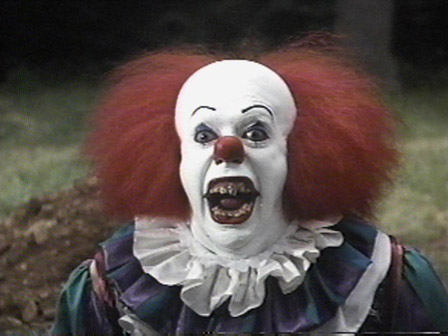
Every culture has its ghost stories, folk tales, and frightening myths. Devils, demons, cannibals, etc. lurk somewhere in every zeitgeist. George A. Romero’s living dead are a recent addition. These images can be utilized by creators as a short-hand for all of the other imagery. The very word “zombie” conjures certain images in the reader’s mind, and creators can use that cultural legacy either to “shortcut” some narrative or to “level-set” the reader’s mind-set. Or consider Stephen King’s usage of the clown Pennywise in It. While this is a useful (and often powerful) tool, it should be used judiciously as over-reliance can leave the work feeling trite or comedic in nature.

So as you lie in wait for monsters to come trick or treating to your door, try to think a little bit about the horror genre. What makes it good? What makes it horrific? Maybe you can add a little more horror into your Halloween? And please, let me know if you can think of any other tools that creators of excellent horror utilize. I’d love to add them to my ghoulish toolkit.

With that being said, and in the spirit of Halloween, allow me to leave you with an image I have always found fun and terrifying. Happy Halloween!

Pennywise the Clown from Stephen King's It

Pennywise the Clown from Stephen King's It

Explaining World-building: Magic Systems, Monsters and Technology


Over in another corner of the blogosphere, I’ve been enjoying Brandon Sanderson and Brent Weeks’ interesting discussion on magic systems in epic fantasy. While they agree that one must balance world-building with the audience’s sense of wonder/fear, their discussion leaves an important question unanswered: how should creators strike that balance?

Any fantastic media – be it a fantasy novel, a horror movie, a comic book, etc. – contains by definition something fantastic. It might be magic. It might be a monster. It might be new whizz-bang technology centuries beyond our current means. When we create a fictional world, we take some pains to ensure that it is a believable world, that functions within the parameters we set for it. Even if we are writing (like John C. Wright in his Golden Age Trilogy) about humanity after the singularity, we need to put limits on our heroes. A system of magic (or a technology) that had no limits would render its practitioner omnipotent, thus negating any conflict. But as Brent and Brandon both point out (when talking about epic fantasy), if you dissect the magic too much you risk it dying on the table.

All good creators (including Brent and Brandon) would probably agree with that. But spotting the risk is only the first step to addressing the problem. So how to identify the stopping point? When is enough explanation, in fact, enough? Brent does it, Brandon does it, the vast majority of other awesome creators do it. So how? I think there’s a very specific answer: it depends on the character(s) your story is about.

Consider three very different novels:


Mistborn

by Brandon Sanderson

Dracula

by Bram Stoker

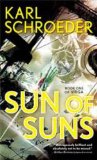
Sun of Suns

by Karl Schroeder

  • Epic Fantasy
  • Main protagonist is Vin, a thief who must learn to use her tremendous magical powers.
  • Contemporary, published in 2006.

  • Horror
  • The monster is Dracula, a vampire.
  • A classic, first published in 1897.

  • Science fiction
  • The action takes place in a fullerene sphere which contains multiple artificial suns.
  • Contemporary, published in 2006.

On the face of it, each of these three books has a completely different type of “magic”. Mistborn has an epic fantasy system of magic built around a small group of people (the “Mistborn”) who are able to ingest and utilize the powers inherent in eight different kinds of metal. Dracula is a horror story (arguably, one of the most classic horror stories) where the “magic” is limited to the monster: Dracula himself. Sun of Suns deals with a far-distant future and is set in an artificially-constructed world (a fullerene sphere) with rules of physics that are particular to that setting. No commonality, right?

What’s shared between these books – and what I believe is shared across all good fantastic literature – is the method by which the authors introduce their magic or science. The paragraph above provides a pretty clinical explanation of the “magic” in each of those books. Somehow I doubt it will earn me any Nobel prizes. If Sanderson, Stoker, or Schroder (I must be on an S-kick today) just provided an info-dump and clinically explained how their worlds work, readers would yawn and move onto the next book. Instead, all three authors provide a drip-feed of information – both explicitly and implicitly – that draws the reader into their world. By the time a reader is through the first fifth of any of these books, they either buy into the magic or they never will. The rate of this drip-feed is controlled by the perception of the viewpoint characters.

In Mistborn, Sanderson introduces us right away to our heroine. A plucky young thief named Vin, she inhabits a world where magic is commonplace. She does not – on the face of it – goggle at the practice of magic, because she expects it. When the book opens, she is entirely untrained but has talents of her own and she (and we the readers) are aware of it. Everything Sanderson shows us of his world is shown through her eyes. Her credulity, her acceptance of this system of magic gets absorbed by us when we read. Her knowledge (and ignorance) of the rules of magic that govern her world is shared with us through:

  • her perception of the world and other characters,
  • her perception of the consequences when she bends or breaks the (known or unknown) rules of magic,
  • the reactions of other characters when she bends or breaks the (known or unknown) rules of magic.

Because she as a character is vivid and engaging, we are willing to believe her initial perceptions and buy into the world that Sanderson creates. As she learns about magic, we learn with her. This accelerates when she gains a teacher. This teacher or school of magic (who in some books may be benevolent, in others evil, in yet others a little of both) is an often-used device in epic fantasy that gives the author the ability to provide the protagonist (and the reader) with a crash course in magic. Yet throughout the book, Vin is subject to the rules (limits) of Sanderson’s system of magic: even when she and the reader are ignorant of those rules.

In Dracula, Stoker does something very similar to entirely different effect. Dracula himself is not a system of magic. He is a monster, whose existence and functioning are constrained by the rules that Stoker applied for the vampire. Dracula is somewhat more complicated than Mistborn due to the epistemological nature of much of the book and the multiple protagonists who it follows, but fundamentally our understanding of Dracula, his genesis, his powers, etc. is developed through the understanding of the protagonists. The sense of dislocation, fear and wonder of Stoker’s contemporary reader (who wouldn’t know what Dracula is by the title alone) would have developed in parallel to that of Jonathan Harker. We learn (through Harker) that Dracula is a monster, and the nature of his monstrosity. As the book progresses, we meet further characters (Van Helsing, Renfield) who provide more elucidation on the rules of his existence. Van Helsing especially plays the role of the teacher, explaining the “system of magic” to the other characters (and so to the reader).

In Sun of Suns, we are placed squarely in the world of Virga, where the rules of physics that we are familiar with apply…differently. We meet the primary character (Hayden Griffin) and he is so entrenched in his world, such a product of the culture and setting that created him, that at no point (as far as I can remember) are we told that Virga is a fullerene sphere. For Griffin, artificial suns and orbiting asteroids are the world. He does not perceive them or the odd physics they produce as strange. How could his world be any different? Griffin’s acceptance of the setting and the slightly-shifted physics of Schroeder’s world help to draw us into that setting and to accept it.

The above three books are just three simple examples. I can come up with many more. Pick any zombie movie (of any particular kind) that has been made in the last 50 years. If it is a decent zombie movie (or even if it is a B-zombie movie), we believe in the zombies based on what the heroes learn about them. Sometimes, as in 28 Days Later we are shown the genesis of the epidemic even if our heroes don’t know it. This type of prologue divorced from our heroes is a different form, but it is simply a means to provide backstory. It rarely provides essential insight into the system of magic or the constraints under which the monsters or the world behave. Instead, it serves to foreshadow and set up the dominoes for whatever follows in the story. Then, once we meet our protagonists we learn about the monsters (specifically, how to kill them and how they can kill us).

So it seems given the above, that if you’re wondering how to explain your system of magic to your audience, I would simply say don’t. You (the author) don’t want to explain anything. Instead, let your characters show your reader how your world works:

Guideline Suggestion
1 Your character is the lens through which your reader sees your world. Unless your story is written in distant omniscient third person (and that seems to be an increasingly tough sell these days) or your narrative frame demands it, your narrator should not break the fourth wall to explain how your world works. That’s really what “show, don’t tell” means.
2 Whatever your character accepts as commonplace will also be accepted as commonplace by your reader. Let’s say you were on a bus with a friend. Would you point out to your friend that everyone else on the bus has two eyes and two ears? Of course not. Then why would your character remark on the commonplace? She might make factual observations but I doubt she would explain them (The sun glinted on his pendant… rather than He wore a magical pendant that would …).
3 How your characters respond to the magic of your world informs your readers on your system of magic. If using her magical abilities tires out your heroine, the reader will figure it out based on her perceptions. A follows B follows C: our brains are literally wired to make these connections without being explicitly told that they exist.
4 When your character learns about your world, your reader is learning alongside them. Many, many, many books either have the trope of a benevolent teacher (fantasy) or helpful scientist (science fiction) who is there to teach the hero something they need to know. This can be done well, but it can also be a crutch. Make sure that the lessons move the plot forward and are interesting for the reader.
5 Don’t underestimate your reader’s ability to infer meaning. If your hero observes the villain drawing a pentagram on the ground and a demon exiting it, we can probably make the connection without being told that the pentagram opened a doorway for the demon.

The above guidelines rely on reader inference. Some might say they assume reader familiarity with the devices and tropes used in fantastic art. I disagree. I think even an inexperienced audience will be able to connect the dots. It’s how our brains work. As creators, we just need to make sure the dots are there to be connected. Otherwise, we’re left with deus ex machina, which if used injudiciously can punch the reader out of your story. And we don’t want that.

The Secret to Great YA Science Fiction & Fantasy Characters


The other week, my girlfriend brought Suzanne Collins’ Mockingjay home from work. I did what any reasonable fan would: I grabbed it out of her hands and locked myself in the family room to read it cover to cover in one sitting. Needless to say, I love Collins’ dystopian future, her characters, themes, the whole gripping plot. I think Mockingjay is the best YA science fiction published in the last several years. But this begs the question: why? What makes the Hunger Games series so good, when other “giants” of epic YA failed to grip me?
Read more

Is Steampunk the New Gothic?


Is steampunk the new Gothic? On a recent trans-Atlantic flight I started to reread Michael Moorcock’s brilliant Wizardry and Wild Romance and was struck by the following passage:

[Gothic romances] did not merely look back to “romantic, antique days”…they added something novel in the emphasis given to natural (if often idealized) scenery as a means of expressing the moods of the characters…The popularity of the Gothic rose as the impact of the Industrial Revolution increased, reflecting, symbolizing and even explaining the anxiety felt by those who witnessed radical changes in the world they knew.

Now fast forward a hundred some-odd years. Is steampunk simply the modern incarnation of the Gothic novel? The more I thought about it, the more I realized that it probably is. This raises several questions:

  1. How does steampunk resemble Gothic?
  2. How does steampunk diverge from Gothic?
  3. What lessons can we draw from Gothic’s history and apply to steampunk’s future?

Read more